
With 16 of 22 state universities already functioning without vice-chancellors, the number is set to rise to 18 by August amid a prolonged government-governor standoff over appointment powers.
Tamil Nadu’s higher education sector is facing an escalating leadership crisis, with two more state universities expected to lose their vice-chancellors in the coming months, taking the number of institutions without permanent academic heads to 18 out of 22.
The growing vacuum follows a prolonged deadlock between the Tamil Nadu government and former Governor R N Ravi over the appointment of vice-chancellors. The dispute stems from legislation passed by the state government seeking to transfer the power of appointing vice-chancellors from the governor, who serves as chancellor of most state universities, to the government.
Currently, 16 state-run universities are functioning without vice-chancellors, raising concerns about governance, academic administration and institutional decision-making. The situation is expected to worsen by August when the extended tenures of vice-chancellors at Alagappa University and Manonmaniam Sundaranar University come to an end.
The leadership vacuum has persisted for more than three years as legal challenges surrounding the constitution of search committees and appointment procedures remain pending before the courts. Since the governor serves as chancellor for 20 of Tamil Nadu’s 22 state universities, the dispute has effectively frozen the appointment process across much of the higher education system.
Recent developments have further highlighted the severity of the crisis. The tenure of the vice-chancellor at Tamil Nadu Open University ended earlier this year without an extension, while Tamil Nadu Dr. M.G.R. Medical University is currently functioning under an in-charge vice-chancellor following the completion of the incumbent’s term in May.
Academicians warn that the absence of permanent leadership is affecting critical university functions. According to former University of Madras Vice-Chancellor S P Thyagarajan, delays in faculty recruitment, promotions, research approvals and financial decisions are hampering institutional growth and academic progress.
Higher Education Secretary V Arun Roy said the government is exploring legal options and is awaiting a court hearing scheduled for June 29. Officials indicated that further decisions on resolving the vice-chancellor appointment issue will be taken after the hearing.
With nearly four-fifths of Tamil Nadu’s state universities lacking permanent academic leadership, concerns are mounting over the long-term impact on governance, research, accreditation and the quality of higher education in the state.
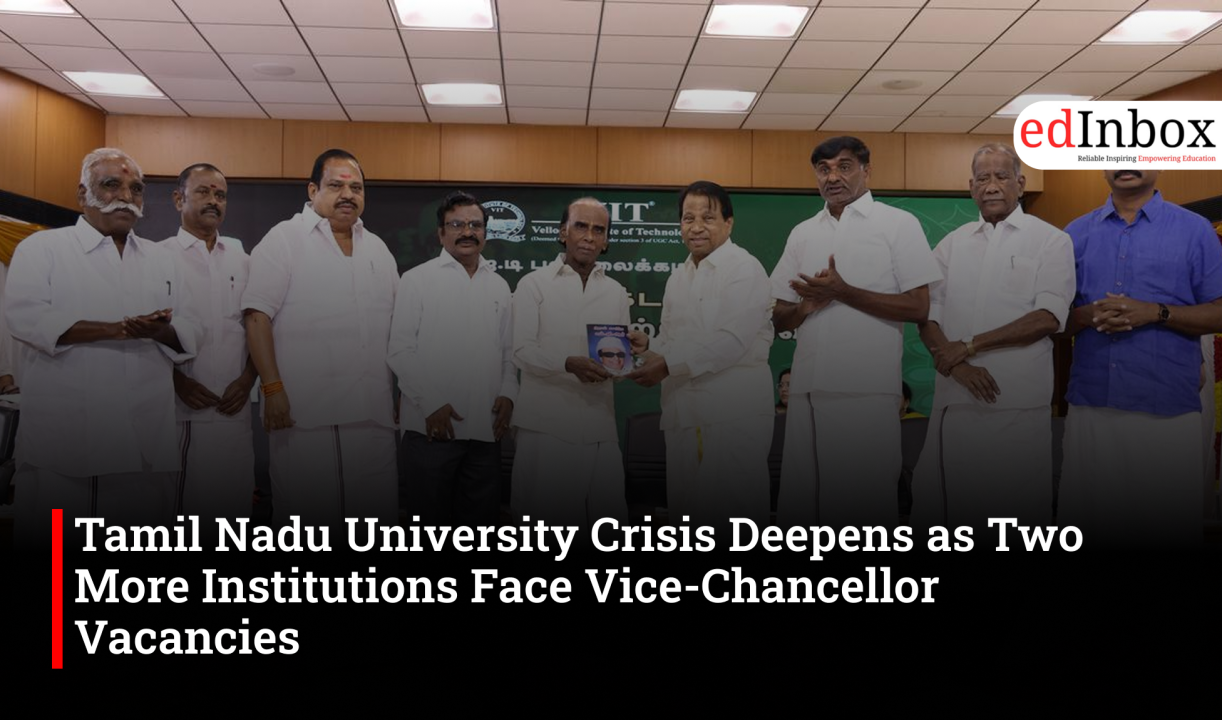
Tamil Nadu University Crisis Deepens as Two More Institutions Face Vice-Chancellor Vacancies
Typography
- Smaller Small Medium Big Bigger
- Default Helvetica Segoe Georgia Times
- Reading Mode