
In an age dominated by artificial intelligence, data analytics and sophisticated supply chains, one of the world's most admired business models continues to operate with remarkable efficiency using bicycles, trains, handwritten codes and human coordination. The story of Mumbai’s dabbawalas is no longer just a lesson in logistics—it has become a living classroom for marketing, management and customer experience.
For students participating in immersive learning programmes across India’s ports, factories and local markets, the dabbawalas offer a powerful case study in how a simple service can evolve into a globally recognised brand.
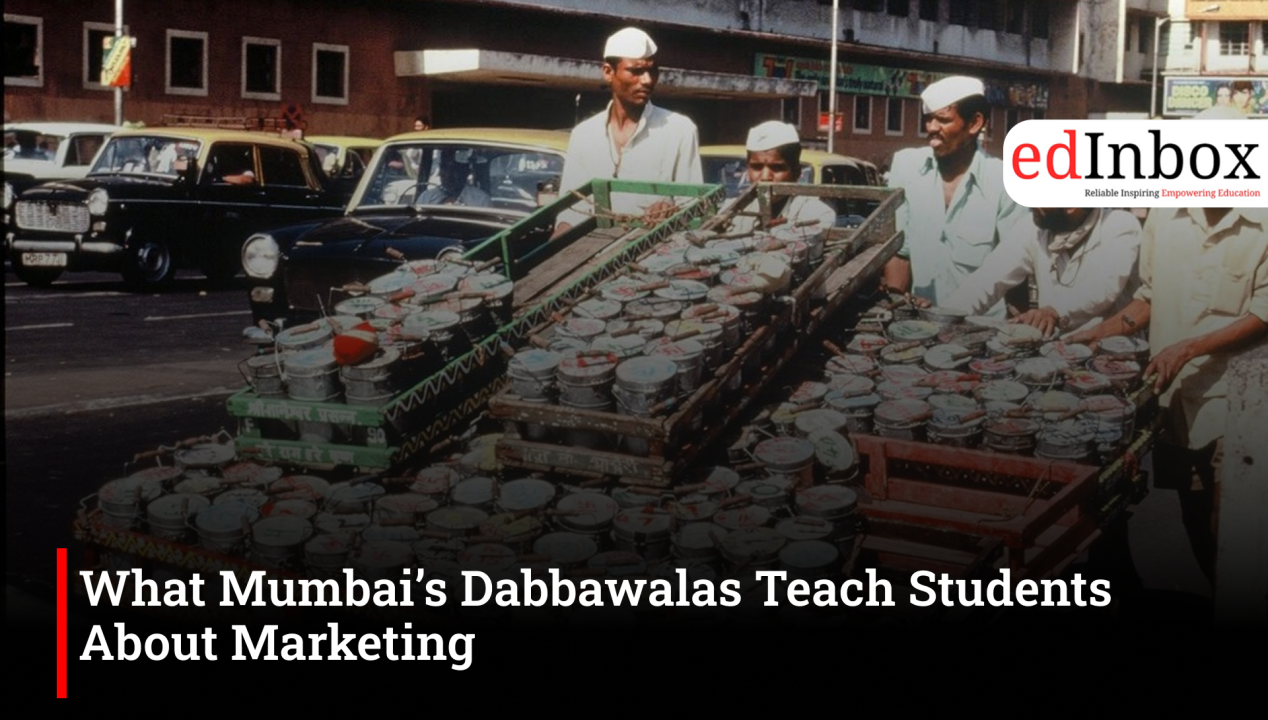
Every working day, around 5,000 dabbawalas collect, sort and deliver thousands of home-cooked meals across Mumbai. What makes the system extraordinary is not merely its operational efficiency but its marketing success. Without large advertising budgets, celebrity endorsements or digital campaigns, the dabbawalas have built one of the strongest brands in India through trust, consistency and word-of-mouth promotion.
From a marketing perspective, the dabbawala model demonstrates the power of understanding customer needs. Their service solves a clear problem: providing office workers with fresh, home-cooked food at the right place and the right time. By consistently delivering on this promise, they have created deep customer loyalty spanning generations.
The dabbawalas also illustrate the importance of brand positioning. In a crowded food delivery ecosystem, they occupy a unique space—reliable, affordable and culturally rooted. Their identity is so strong that business schools worldwide have studied their operations as examples of customer-centric service.
Another valuable marketing lesson lies in relationship management. Dabbawalas maintain direct connections with customers, creating trust that many modern companies struggle to achieve despite advanced technology. Their reputation has become their most powerful marketing asset.
For students exploring real-world business environments, the dabbawala network highlights how marketing extends far beyond advertisements. It encompasses customer experience, service quality, reliability and community trust.
As educational institutions increasingly transform cities, markets and industries into experiential classrooms, Mumbai’s dabbawalas stand out as a reminder that some of the most effective marketing strategies are built not in boardrooms but on the streets—through consistent value creation and an unwavering commitment to customer satisfaction.
Their success proves that a strong brand is not defined by how loudly it speaks, but by how reliably it delivers.
What Mumbai’s Dabbawalas Teach Students About Marketing
Typography
- Smaller Small Medium Big Bigger
- Default Helvetica Segoe Georgia Times
- Reading Mode