
In the twenty-first century, global societies are facing unprecedented environmental, social, and economic challenges. Climate change, biodiversity loss, resource depletion, and social inequality have intensified the demand for leaders who can navigate complexity with ethical
responsibility and emotional resilience. Sustainability education has emerged as a crucial discipline for developing such leaders. However, traditional sustainability curricula havelargely focused on scientific, technical, and policy-oriented competencies, often overlooking the psychological and emotional dimensions of leadership. Integrating mental health curricula into sustainability education is therefore essential for cultivating resilient eco-leaders capable of sustaining long-term environmental and social transformation.Mental health is no longer regarded merely as the absence of illness but as a fundamental component of individual and collective well-being. In the context of sustainability education, mental health literacy, emotional regulation, stress management, and psychological resilience are indispensable skills. Students preparing for careers in environmental management, social development, and sustainable entrepreneurship frequently encounter high-pressure environments, ethical dilemmas, and prolonged exposure to ecological crises. Without adequate psychological support and training, these individuals may experience burnout, anxiety, and disengagement. Consequently, embedding mental health curricula within sustainability education frameworks is vital for ensuring both personal well-being and professional effectiveness.
The Psychological Dimensions of Sustainability Leadership
Sustainability leadership demands more than technical expertise. It requires empathy, moral courage, adaptability, and long-term vision. Eco-leaders often work in uncertain contexts where progress is gradual and setbacks are frequent. Climate-related disasters, policy resistance, and corporate inertia can generate emotional fatigue and feelings of helplessness. This phenomenon, commonly referred to as “eco-anxiety” or “climate distress,” has become increasingly prevalent among young environmental professionals. Mental health curricula can address these psychological challenges by equipping students with coping mechanisms and reflective practices.
Courses in mindfulness, emotional intelligence, positive psychology, and trauma-informed leadership can help future eco- leaders maintain psychological stability while engaging in demanding work. By fostering self- awareness and emotional literacy, sustainability education institutions can nurture leaders who are not only environmentally competent but also mentally resilient.
Mental Health Curriculum as a Core Component of Sustainability Education
A comprehensive mental health curriculum within sustainability education should encompass several key domains. First, it should provide foundational knowledge of psychological well-being, including stress physiology, cognitive-behavioural patterns, and emotional regulation. Second, it should emphasise preventive strategies such as resilience training, time management, and healthy lifestyle practices. Third, it should encourage help-seeking behavior and reducing stigma associated with mental health challenges. Integrating these elements into existing sustainability programs can take multiple forms. Universities may introduce interdisciplinary courses combining environmental studies with
psychology. Workshops on mental health awareness can be embedded into leadership development modules. Peer-support systems and counseling services can be aligned with academic programs. Such holistic approaches ensure that mental health is not treated as an
auxiliary service but as an integral aspect of professional development.Furthermore, experiential learning activities—such as community engagement projects, ecological restoration initiatives, and social entrepreneurship programs—can incorporate reflective practices and psychological mentoring. These activities allow students to process
emotional experiences constructively, reinforcing resilience and ethical commitment. Implications for Psychology Careers and Professional Development The growing emphasis on mental health in sustainability education has significant implications for psychology careers. As educational institutions and environmental organizations recognize the importance of psychological well-being, demand for professionals trained in mental health counselling, environmental psychology, and Organizational psychology is increasing.Graduates specialising in psychology can contribute meaningfully to sustainability initiatives by designing mental health programs, conducting behavioural research, and providing counselling services to eco-professionals. Environmental NGOs, government agencies, and corporate sustainability departments increasingly require mental health experts who understand both ecological challenges and human behaviour. This convergence has created new interdisciplinary career pathways that combine psychology and sustainability. Psychology career benefits in this context are multifaceted. Professionals gain opportunities to work in socially impactful fields, contribute to global well-being, and engage in interdisciplinary collaboration. Careers in mental health counselling, particularly within sustainability-focused organisations, offer long-term professional stability, intellectual fulfilment, and ethical purpose. Counsellors who specialise in climate-related stress, workplace resilience, and community well-being are positioned to play a critical role in shaping sustainable societies.
Building Institutional Capacity and Policy Support
For mental health curricula to be effectively integrated into sustainability education, institutional commitment and policy support are essential. Educational policymakers must recognize psychological well-being as a core learning outcome. Accreditation bodies can incorporate mental health competencies into sustainability program standards. Funding agencies may prioritize research and curriculum development in this interdisciplinary domain.
Faculty development is equally important. Educators must be trained to address mental health issues sensitively and competently. Collaborative teaching models involving Psychologists, environmental scientists, and social scientists can enhance curriculum quality. Digital platforms and blended learning approaches can further expand access to mental health resources, particularly in regions with limited professional infrastructure. Additionally, partnerships between universities, healthcare institutions, and environmental organizations can strengthen support systems for students and professionals. Such collaborations facilitate internships, mentorship programs, and community-based interventions that reinforce both psychological and environmental resilience.
The integration of mental health curricula into sustainability education has far-reaching societal implications. Resilient eco-leaders are better equipped to foster inclusive decision-making, managing conflict, and inspiring collective action. Their emotional stability enables
them to engage constructively with diverse stakeholders, including policymakers,corporations, indigenous communities, and civil society organisations. Moreover, mentally healthy leaders contribute to healthier organisations. Sustainable enterprises and institutions led by emotionally intelligent professionals demonstrate higher levels of employee engagement, ethical governance, and social responsibility. Over time, these qualities translate into stronger public trust and more effective environmental Policies.At a broader level, embedding mental health education within sustainability frameworks promotes a culture of care and empathy. It reinforces the understanding that environmental protection and human well-being are inseparable. Such perspectives are essential for achieving the United Nations Sustainable Development Goals and addressing global ecological crises.
In an era defined by environmental uncertainty and social complexity, the development of resilient eco-leaders is an urgent priority. Sustainability education must evolve beyond technical instruction to encompass psychological well-being and emotional intelligence. Integrating mental health curricula into sustainability programs provides students with essential tools for managing stress, sustaining motivation, and exercising ethical leadership. This interdisciplinary approach also expands opportunities for psychology careers, enhances
psychology career benefits, and strengthens the role of careers in mental health counselling within sustainability-driven sectors. By investing in mental health education, institutions can cultivate professionals who are not only environmentally competent but also emotionally
resilient and socially responsible.Ultimately, the convergence of mental health and sustainability education represents a transformative model for leadership development. It acknowledges that sustainable futures depend not only on technological innovation and policy reform but also on the psychological
strength and moral integrity of those entrusted with guiding change.
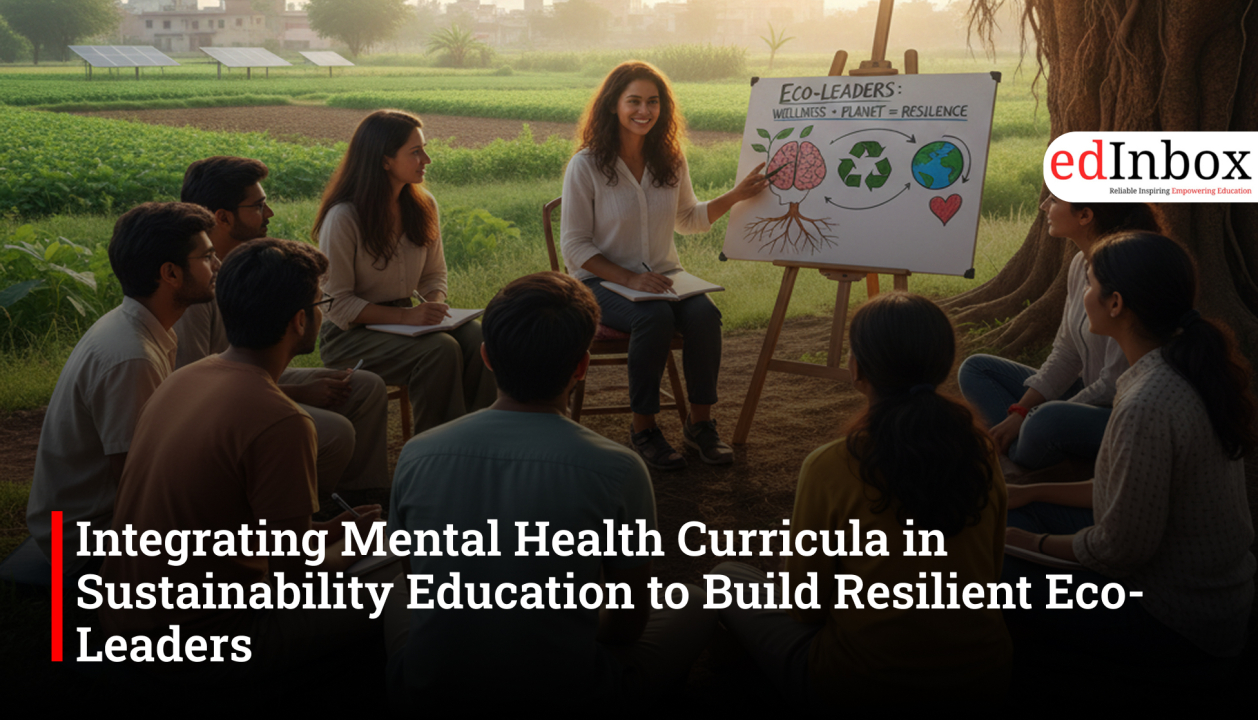
Integrating Mental Health Curricula in Sustainability Education to Build Resilient Eco-Leaders
Typography
- Smaller Small Medium Big Bigger
- Default Helvetica Segoe Georgia Times
- Reading Mode