
Educational psychology is one of the oldest and most influential branches of psychology, dedicated to understanding how people learn and how teaching methods can be improved. From classrooms and universities to workplaces and sports training centers, the field examines the mental, emotional, and social processes involved in learning throughout life.
At its core, educational psychology seeks to answer fundamental questions: Why do some students learn faster than others? What motivates learners? Which teaching methods are most effective? And how can education become more inclusive and engaging for everyone?
Today, educational psychology plays a crucial role in shaping modern teaching strategies, curriculum design, student assessment, and educational policy across the world.
Ancient Roots of Educational Psychology
The foundations of educational psychology can be traced back to ancient Greek philosophers such as Plato and Aristotle.
Plato believed that learning depended on the mind’s natural ability to absorb knowledge and evaluate moral and intellectual truths. Aristotle, on the other hand, focused on the importance of associations in learning. He argued that humans understand concepts by connecting ideas through similarities, contrasts, time, and space.
Centuries later, these philosophical ideas evolved into more structured psychological theories about memory, cognition, and teaching methods.
The British philosopher John Locke further advanced educational thought by describing the human mind as a tabula rasa or “blank slate.” According to Locke, individuals are not born with knowledge; instead, they learn through experiences and interactions with the world.
The Birth of Modern Educational Psychology
Educational psychology emerged as a formal discipline during the 18th and 19th centuries. Johann Friedrich Herbart is often regarded as the founder of the field.
Herbart believed that interest and engagement were essential for effective learning. He proposed five important teaching steps:
- Reviewing prior knowledge
- Introducing new material
- Presenting fresh ideas
- Connecting new concepts with existing knowledge
- Applying learning to practical situations
These principles continue to influence classroom instruction even today.
Another revolutionary figure was Maria Montessori, who transformed early childhood education through her student-centered learning model. Her educational philosophy emphasized hands-on learning, independence, sensory exploration, and self-directed activities.
Montessori schools around the world still follow many of the techniques she introduced more than a century ago.
Why Educational Psychology Matters Today
Educational psychology has become increasingly important in modern education because it helps teachers understand how students think, behave, and respond to instruction.
The field contributes to:
- Improved teaching strategies
- Better classroom management
- Student motivation and engagement
- Inclusive education for diverse learners
- Support for students with disabilities
- Effective assessment methods
Educational psychologists study how factors such as emotions, memory, environment, intelligence, and social interaction affect learning outcomes.
Their findings help educators create classrooms that are more supportive, adaptive, and effective.
What Educational Psychologists Do
Educational psychologists work in schools, colleges, universities, research institutions, government agencies, and corporate training environments.
Their responsibilities may include:
- Conducting research on learning methods
- Designing educational programs
- Developing curriculum strategies
- Evaluating teaching effectiveness
- Supporting students with learning difficulties
- Advising teachers on classroom practices
Many professionals in the field hold advanced degrees and contribute both to academic research and practical educational reforms.
Real-Life Examples of Educational Psychology
One of the most influential modern educational psychologists is Howard Gardner, who introduced the theory of multiple intelligences. Gardner argued that intelligence is not limited to traditional academic ability. According to his theory, individuals may possess different forms of intelligence, including musical, interpersonal, bodily-kinesthetic, linguistic, and spatial intelligence.
His work encouraged schools to recognize and nurture diverse talents rather than focusing solely on standardized testing.
Another important figure was Mamie Phipps Clark, whose famous “doll study” examined the psychological impact of racial segregation on children. Her research demonstrated how social environments and discrimination could influence self-esteem and identity development.
Educational psychology is also visible in everyday classroom practices such as differentiated instruction, formative assessments, collaborative learning, and motivational reward systems. Teachers often adapt lessons according to students’ unique learning styles and use continuous feedback to improve academic performance.
Major Theories in Educational Psychology
Several major theories continue to shape educational practices worldwide.
Behaviorism
Behaviorist psychologists such as B. F. Skinner believed learning occurs through reinforcement and conditioning. Rewards, praise, and repetition are commonly used behaviorist techniques in classrooms.
Cognitive Development Theory
Jean Piaget emphasized how children actively construct knowledge as they grow. His theory explained how thinking abilities develop through different stages of childhood.
Sociocultural Theory
Lev Vygotsky highlighted the importance of social interaction in learning. His concept of the Zone of Proximal Development showed that children learn best with guidance from teachers, parents, or peers.
Modern educational practices such as peer learning, scaffolding, and collaborative projects are strongly influenced by Vygotsky’s ideas.
Educational Psychology in the Modern World
In today’s rapidly changing educational landscape, educational psychology has expanded into areas such as online learning, artificial intelligence in education, emotional intelligence, and inclusive teaching strategies.
Researchers continue to explore how technology, social environments, and mental health influence student learning and achievement.
As education systems evolve globally, educational psychology remains central to understanding how humans learn best and how teaching can become more effective, compassionate, and accessible for all learners.
Ultimately, educational psychology is not only about improving academic performance — it is about unlocking human potential through better learning experiences.
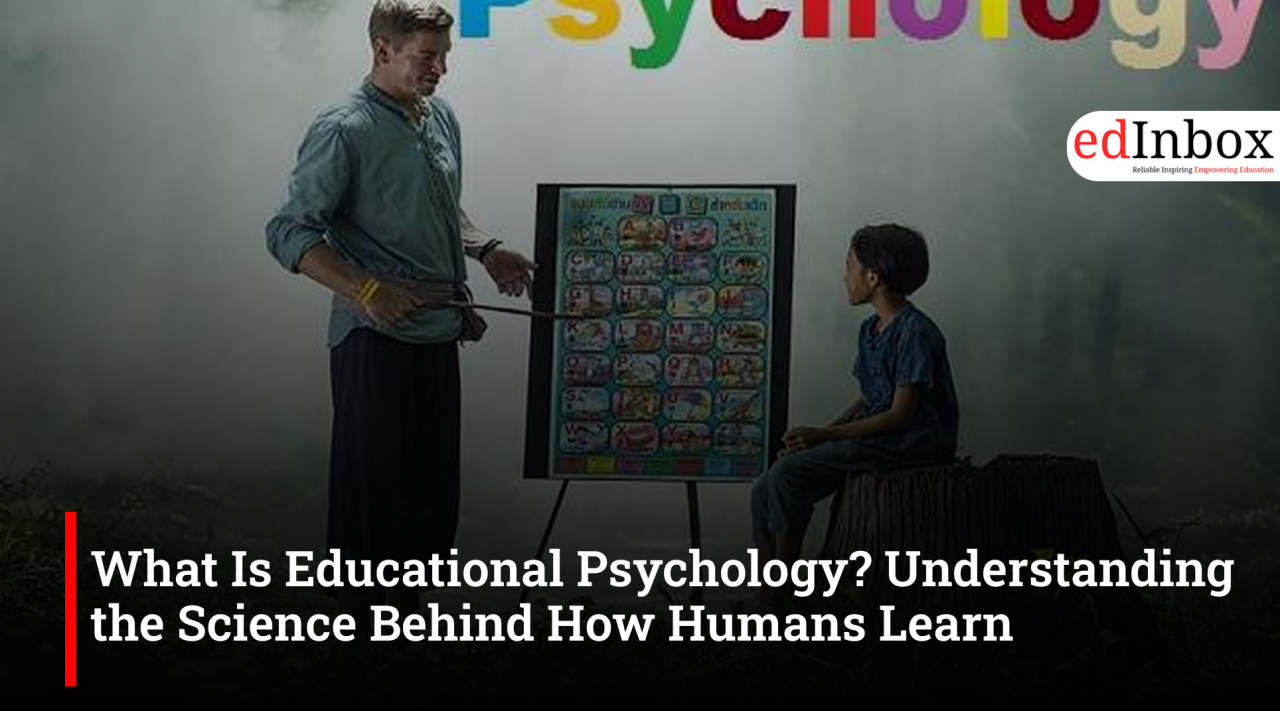
What Is Educational Psychology? Understanding the Science Behind How Humans Learn
Typography
- Smaller Small Medium Big Bigger
- Default Helvetica Segoe Georgia Times
- Reading Mode