
With the onset of winters, schools in various parts of North India are again being compelled to make changes, not because of examinations and holidays, but because of poor air quality, dense fog, and cold wave. During the past few weeks, various state administrations and district authorities have come out with a list of directives concerning attending schools, particularly in areas where pollution and adverse weather patterns are most prevalent.
GRAP limitations on online classes in the Delhi-NCR region, to the cold-wave notified school closures and timetables in Uttar Pradesh and Bihar, this is how the education sector is coping in response to different circumstances.
Delhi/NCR: Schools go online/hybrid as Delhi’s AQI enters 398
Given the dipping air quality in the national capital entering the severe zone, the government had to enforce the GRAP Action Plan’s Stage IV, the most severe of the lot.
As per the directions issued by the Delhi Directorate of Education, physical classes in nursery up to Class V are temporarily halted and all classes are conducted online, as reported by TNN. For Class VI to IX and Class XI students, the directions issued are to conduct classes through the hybrid system; in other words, both online and offline classes are possible, considering feasibility. These are applicable to all government and recognized Private Schools.
The same has been repeated in other district administrations in Noida and Ghaziabad, where schools up to class V began online learning, and seniors attended combined classes. These steps were taken based on guidelines issued by the Commission for Air Quality Management (CAQM) under GRAP IV.
Alongside these emergency steps, the Delhi government has also planned a medium-term intervention. According to reports by TNN, under the ‘Breathe Smart’ campaign, the education department has confirmed the installation of air purifiers in 10,000 government school classes, starting with the top 10 worst-hit areas with respect to pollution levels during the winter months.
Uttar Pradesh: Cold wave and fog cause district-level shutdowns
In the state of Uttar Pradesh, school closings have been influenced primarily by IMD warnings regarding dense fog and cold-wave situations, as ordered by district magistrates.
In Bareilly, schools for classes up to eight were shut by the administration due to low visibility and cold, as reported by PTI. This includes government as well as private schools, but excludes examinations.
A comparable measure was taken in the city of Kanpur as the district magistrate directed the shutdown of all schools from Nursery to Class XII for two days as an official weather warning was issued.
The other districts that have ordered the temporary closure of educational institutions for the young students include Rampur, Shahjahanpur, Pilibhit, Budaun, as well as Gonda. All of the above are due to the prevailing cold and fog conditions.
Bihar: New school hours introduced for the protection of school-going children
However, instead of complete closure of schools, some districts of Bihar decided to modify the timing of schools with official district notifications.
As per reports in PTI, a directive was issued by the district magistrate of Madhubani regarding not conducting any academic activities prior to 11 am and after 3:30 pm for a fixed period of time, including schools, pre-schools, and anganwadi centers. This was a bid to cut children's interface with extreme cold.
The Patna District Administration also changed the timing to suit the needs of the schools, which can now function from a late morning to earlier afternoon.
As reported by the media, the Buxar district ordered the closure of schools from Class 1 to 8 till December 25 owing to cold weather.
Why these decisions are being made
It has been emphasized by the authorities that children are some of the most susceptible groups affected by air pollution and cold. In this case, schools are supposed to restrict physical attendance based on hazardous levels of air quality under GRAP IV. In cold wave conditions, the decision to close schools or change timing is done based on orders from the IMD.
Although it differs from place to place – online classes for children living in pollutant cities, closure of schools in areas affected by fogs, and changed timings for colder areas – the motive remains unchanged: taking care of children's health and limiting disruptions.
What parents and students need to bear in mind?
However, authorities made it clear that these are only temporary and adaptive, and may change depending on AQI scores and meteorological conditions on a daily basis. Parents are advised to: Follow official guidelines from district administrations as well as education departments. Be aware of school notifications and local announcements Prevent exposure of kids to early morning outdoor conditions during times of high pollution and low temperatures.
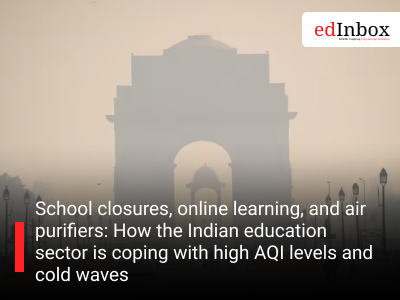
School closures, online learning, and air purifiers: How the Indian education sector is coping with high AQI levels and cold waves
Typography
- Smaller Small Medium Big Bigger
- Default Helvetica Segoe Georgia Times
- Reading Mode