
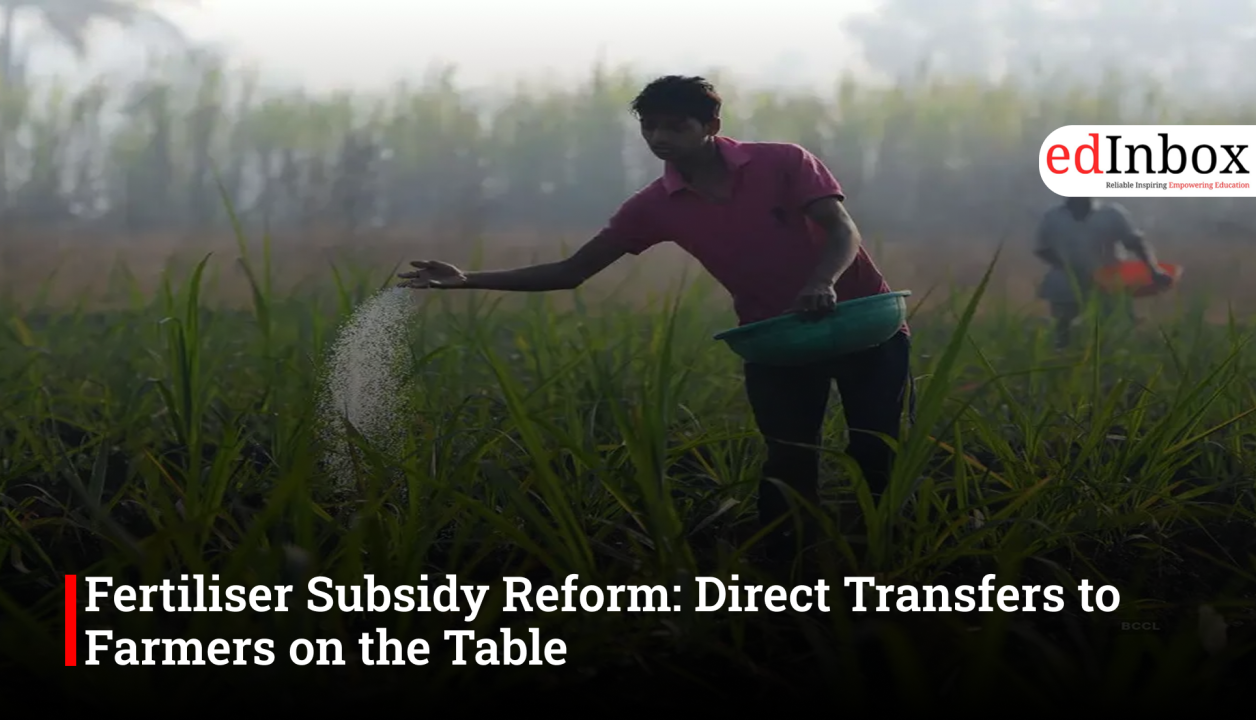
In a significant policy shift, Union Agriculture Minister Shivraj Singh Chouhan has proposed transferring the Centre’s ₹1.7 lakh crore annual fertiliser subsidy directly into farmers’ bank accounts through the Direct Benefit Transfer (DBT) system. The move, if implemented, could fundamentally alter how subsidies are delivered and utilised in India’s agriculture sector.
Existing Subsidy Framework
At present, fertiliser subsidies are routed to manufacturers after fertilisers are sold to farmers at subsidised rates. Since 2018, more than 2.3 lakh Point of Sale (PoS) retailers across the country have been linked to the Department of Fertilizers’ e-Urvarak portal. Under this system, farmers authenticate their purchases using Aadhaar, Kisan Credit Cards, or other government-approved identification. The real-time tracking mechanism ensures that subsidies are disbursed to companies only after verified sales.
While this system improved transparency and reduced leakages, the subsidy technically benefits manufacturers first, with farmers receiving fertilisers at controlled prices rather than direct financial support.
Putting Farmers in Control
The proposed reform seeks to reverse this flow. By depositing subsidy amounts directly into farmers’ bank accounts, the government aims to empower cultivators to choose the type and quantity of fertilisers best suited to their soil health and crop patterns. The minister presented the idea at the Pusa Krishi Vigyan Mela, emphasising that greater choice would encourage balanced nutrient usage and potentially curb overdependence on specific fertiliser brands.
Officials also indicated that digital monitoring mechanisms would remain in place to ensure accountability and prevent misuse.
A Wider Agricultural Push
The proposal aligns with broader efforts to modernise agriculture, including targeted Kisan Credit Card loans at concessional rates for small farmers, promotion of integrated farming models, and increased outreach by agricultural scientists at the village level. Together, these initiatives aim to boost farm incomes, strengthen food security, and promote sustainable cultivation practices.
If rolled out, direct fertiliser subsidy transfers could mark one of the most consequential reforms in India’s farm support architecture, shifting the focus decisively toward a farmer-first framework.
Fertiliser Subsidy Reform: Direct Transfers to Farmers on the Table
Typography
- Smaller Small Medium Big Bigger
- Default Helvetica Segoe Georgia Times
- Reading Mode