
New Delhi: As India looks to future-proof its energy needs amid global fuel uncertainties, a quiet but significant transition is taking shape—rethinking how millions cook every day. Moving beyond fossil fuels, policymakers are now exploring ethanol-based cooking solutions as part of a broader sustainable energy push aligned with Atmanirbhar Bharat.
At the centre of this transition is “Superblu,” an ethanol-based fuel that promises to be not just cost-effective, but environmentally cleaner than traditional alternatives like LPG and kerosene. With India’s ethanol production capacity crossing 2,000 crore litres, the country is uniquely positioned to scale this shift using domestically produced biofuel derived from sugarcane and maize.
Cleaner Fuel, Healthier Workspaces
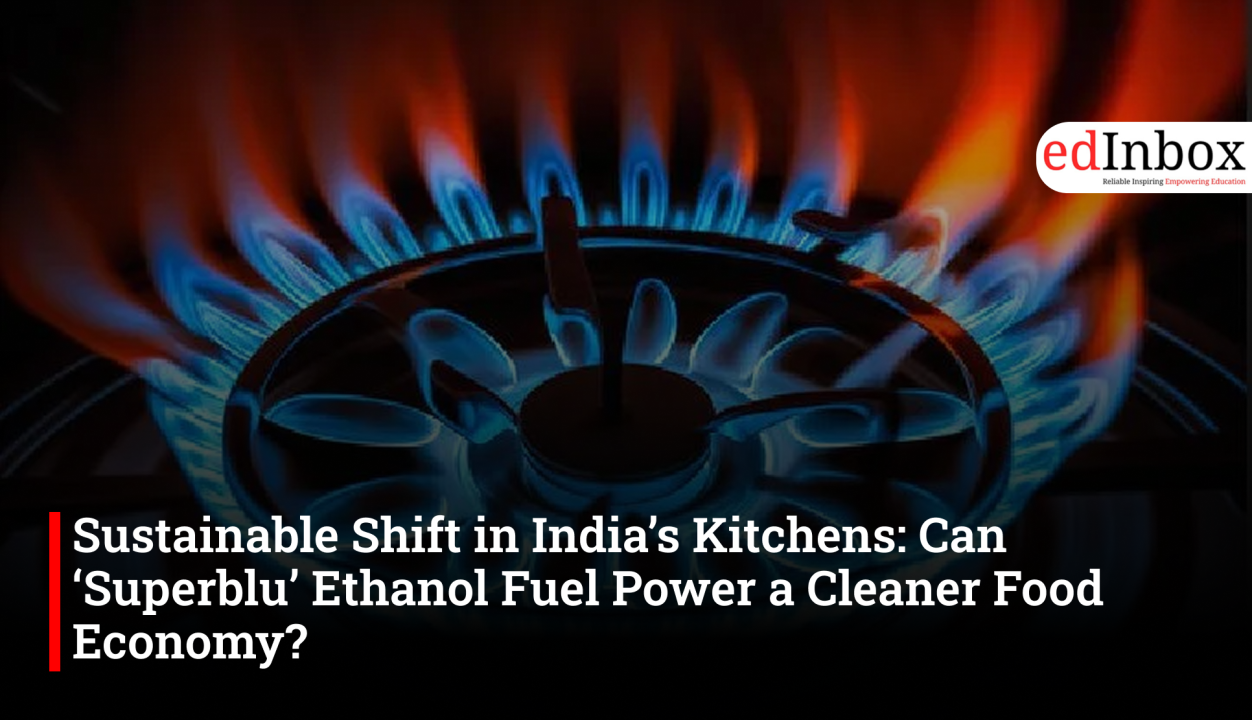
Unlike kerosene and biomass, which release harmful particulate matter, ethanol burns with a clean, blue flame, significantly reducing indoor air pollution. For India’s millions of street vendors and small eateries—often operating in cramped, poorly ventilated spaces—this could mean a dramatic improvement in working conditions.
The environmental benefits extend beyond air quality. Ethanol, as a biofuel, has a lower carbon footprint compared to fossil fuels, making it a more sustainable option in the long run. By integrating ethanol into everyday cooking, India could take a meaningful step toward reducing emissions in its informal food sector.
Efficiency Meets Sustainability
Modern ethanol burners are also proving to be highly efficient. Early evaluations suggest that one litre of ethanol can provide high-intensity heat for up to 15 hours, allowing vendors to operate for extended periods with minimal fuel. The ability to store ethanol in simple, non-pressurised containers further reduces the logistical burden associated with LPG cylinders.
This combination of efficiency and simplicity is key to sustainability—not just environmental, but economic.
Lower Costs, Stronger Livelihoods
For small food businesses, sustainability is closely tied to affordability. Fuel remains one of the largest recurring expenses. Ethanol, projected to cost significantly less than commercial LPG, offers immediate financial relief.
Lower fuel costs could translate into better profit margins for vendors, enabling them to reinvest in their businesses or improve their quality of life. In this sense, ethanol adoption supports not only green energy goals but also inclusive economic growth.
Building on Existing Ecosystems
India’s ongoing ethanol blending programme provides a ready-made distribution backbone. Leveraging this infrastructure to supply “cooking-grade ethanol” could accelerate adoption without requiring an entirely new supply chain.
Such a move would complement earlier clean cooking initiatives like the Pradhan Mantri Ujjwala Yojana, which expanded access to LPG in households. An ethanol-based model could now extend similar benefits to the commercial and informal sectors.
Safety and Policy Readiness
For ethanol to scale sustainably, robust safety standards will be essential. Regulatory bodies such as the Bureau of Indian Standards and the Petroleum and Explosives Safety Organisation are currently working on guidelines to ensure safe storage, transport, and usage.
Unlike LPG, ethanol does not require pressurised cylinders, but as a flammable liquid, it must be handled carefully to prevent spills and fire hazards. Clear protocols and awareness will be critical for widespread adoption.
Toward a Greener Food Economy
The proposed shift toward ethanol-based cooking reflects a larger vision—one where sustainability, affordability, and energy security intersect. If implemented effectively, an “Ethanol Clean Cooking Mission” could redefine how India’s food economy operates, especially at the grassroots level.
For millions of small vendors, this isn’t just about switching fuels—it’s about accessing a cleaner, safer, and more stable future.
Sustainable Shift in India’s Kitchens: Can ‘Superblu’ Ethanol Fuel Power a Cleaner Food Economy?
Typography
- Smaller Small Medium Big Bigger
- Default Helvetica Segoe Georgia Times
- Reading Mode