
As climate change intensifies across the globe through rising temperatures, extreme weather events, biodiversity loss, and water scarcity, the role of education is rapidly evolving. Climate education is no longer an optional topic confined to science classrooms; it is emerging as a critical foundation for preparing future generations to navigate an increasingly uncertain world.
Educators and policymakers are now recognising that students must not only understand the science behind climate change but also develop the skills, ethics, and leadership needed to create sustainable solutions.
Climate Education Beyond Textbooks
Climate education goes far beyond teaching students about carbon emissions or melting glaciers. Experts argue that it should function as an interdisciplinary framework connecting science, economics, governance, technology, public policy, and ethics.
By integrating climate literacy across subjects, schools and universities can help students understand how environmental challenges affect agriculture, healthcare, urban development, employment, and global inequality.
Such an approach encourages critical thinking and problem-solving rather than rote learning. Students learn to analyse real-world challenges, evaluate policy decisions, and understand the long-term consequences of environmental degradation.
Students Are Becoming Climate Leaders
Young people across the world are increasingly taking active roles in climate action through awareness campaigns, sustainable entrepreneurship, clean-energy innovation, and community initiatives.
From organising recycling drives and tree plantation campaigns to developing green technologies and participating in climate policy discussions, students are emerging as important stakeholders in shaping environmental futures.
Educational institutions are also beginning to introduce sustainability-focused programmes, climate labs, green campuses, and experiential learning opportunities that encourage students to move from theory to action.
Experts believe that empowering students early can help societies build a generation that is more environmentally conscious, socially responsible, and innovation-driven.
Why Climate Literacy Matters In The Future Economy
Climate awareness is becoming increasingly important in the global workforce. Industries ranging from renewable energy and sustainable agriculture to urban planning and environmental finance are creating new career opportunities linked to sustainability.
As countries transition toward green economies, climate literacy may become a core professional skill across sectors.
Students equipped with knowledge about sustainable development, clean technologies, resource management, and environmental governance are likely to play a significant role in future policymaking and industry transformation.
Challenges In Implementing Climate Education
Despite growing awareness, climate education still faces several barriers. In many regions, environmental topics remain fragmented within traditional curricula and lack practical engagement.
Limited teacher training, outdated educational resources, and insufficient institutional support often prevent meaningful implementation.
Experts also caution against treating climate education as fear-based learning. Instead, the focus should remain on solution-oriented approaches that balance scientific understanding with optimism, innovation, and civic participation.
Building A Sustainable Future Through Education
Climate education is increasingly being viewed as an investment in long-term global resilience. Supporters argue that informed students are more likely to adopt sustainable lifestyles, support evidence-based policies, and contribute to environmentally responsible innovations.
As climate challenges continue to reshape economies and societies, education systems may play one of the most decisive roles in preparing future generations.
If implemented thoughtfully, climate education can equip students not only to understand climate change, but also to lead the transition toward a more sustainable and equitable future.
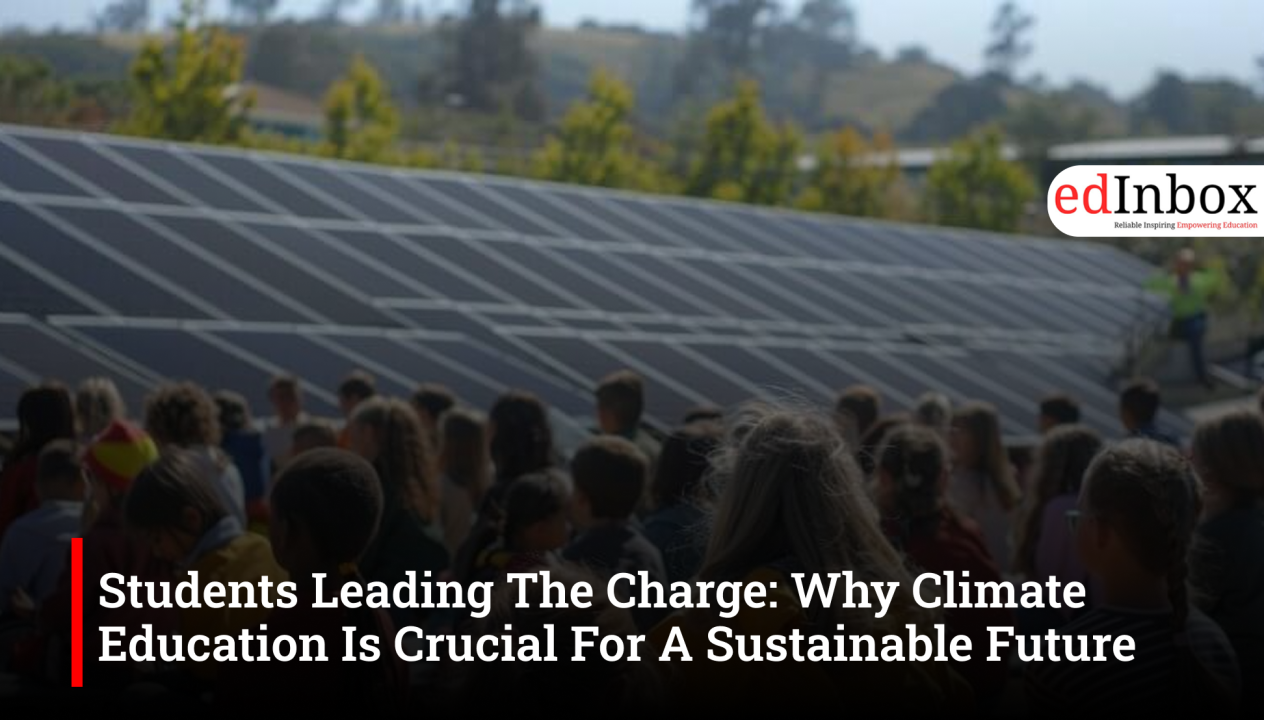
Students Leading The Charge: Why Climate Education Is Crucial For A Sustainable Future
Typography
- Smaller Small Medium Big Bigger
- Default Helvetica Segoe Georgia Times
- Reading Mode