
Lucknow University has issued seven show-cause notices to students and barred six former students from entering the campus following unrest at the Lal Baradari construction site earlier this week. The action comes after protests and public religious activities near the divyang canteen allegedly disrupted campus order.
The incident took place on the evening of February 21 when a group of Muslim students offered namaz and broke their fast in an open space near the under-construction Lal Baradari site. Shortly after, students affiliated with SCS, NSUI, and AISA reportedly formed a human chain around the group. Some were seen sitting on barricades, raising slogans, and attempting to hold prayers at the same location. University authorities termed these actions as disruptive and contrary to campus regulations.
Police were called to the spot to manage the situation. Initially, preventive notices were served to 13 students. On Wednesday, five additional students were issued notices directing them to appear before the Joint Commissioner of Police (Law and Order) on February 26. According to officials, the students may face challans for participating in unauthorized protests and conducting religious activities outside designated areas, potentially disturbing law and order.
In an official statement, the university administration said the measures were necessary to ensure that academic activities continue without interruption, particularly amid the ongoing redevelopment of the Lal Baradari premises. Authorities emphasised that campus spaces cannot be used for demonstrations or religious gatherings without prior permission.
University officials further stated that maintaining discipline and safeguarding the rights of all students and staff remain a priority. They underlined that preventive action was taken to avoid escalation and preserve campus harmony.
The episode has once again drawn attention to sensitivities surrounding public religious expression within educational institutions, especially during periods of infrastructural transition and administrative scrutiny.
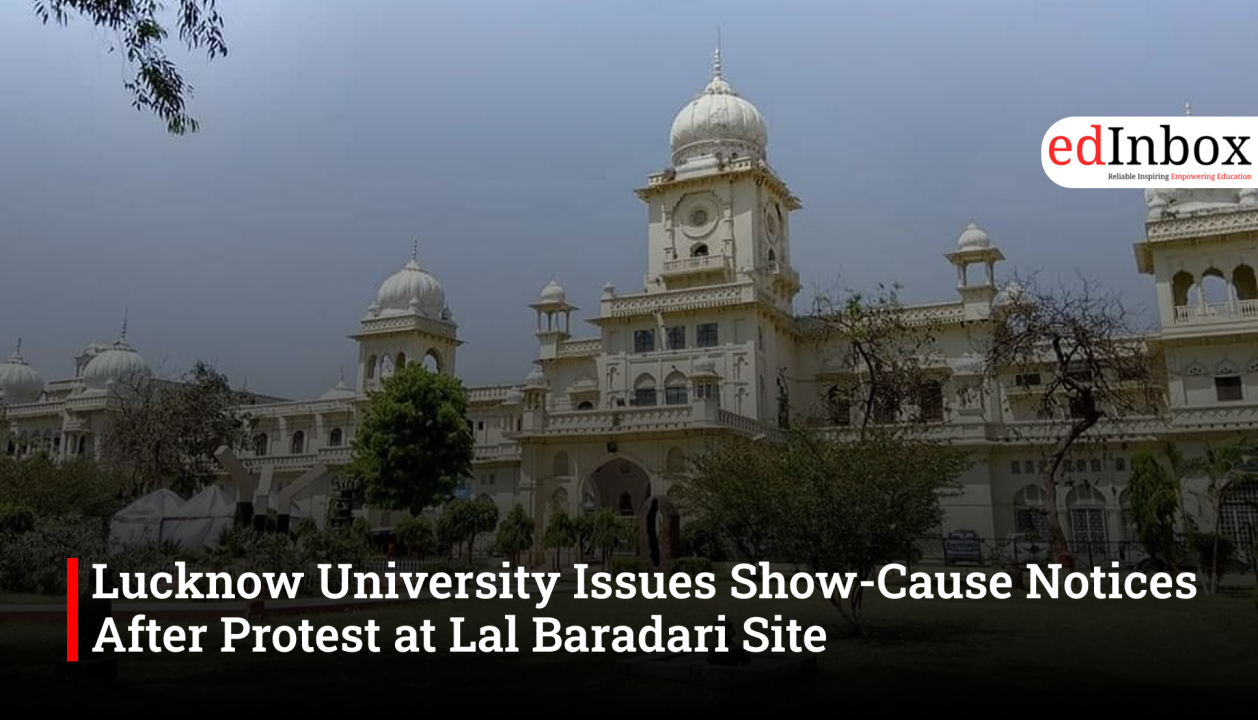
Lucknow University Issues Show-Cause Notices After Protest at Lal Baradari Site
Typography
- Smaller Small Medium Big Bigger
- Default Helvetica Segoe Georgia Times
- Reading Mode