
After appealing people to Work-from-Home, PM Modi is now appealing to schools to temporarily shift to digital classrooms. He highlighted it to be a part of a broader national effort to reduce fuel consumption.
The PM made this remark on Monday during the inauguration ceremony of Sardardham Hostel in Vadodara, where he talked about the current situation of geopolitical instability and the rising crude oil prices as one of the “major crises of this decade”.
Drawing parallels with corona time, PM Modi said that such collective efforts like that during the pandemic will help India tackle the present situation. Through responsible public participation and strategic adjustments, India might overcome the fuel crisis.
Push for Temporary Digital Learning
The Prime Minister, as part of the proposed measures, suggested the schools and colleges follow a “covid-style” online learning for a few days to help reduce daily fuel consumption caused by transportation. This appeal is for lowering the movement of school buses, private vehicles and institutional transport systems that contribute significantly to petrol and diesel consumption.
The government's concern is due to the higher global oil prices which are said to be touching the $105 per barrel mark, putting a strain on India's foreign exchange reserves and import bill.
As with the corporate sector, the call is targeted at schools and universities that have been recommended to bring back some of Work-From-Home's best practices and to favour virtual meetings as much as possible.
Broader Economic and Public Participation Measures
The Prime Minister also encouraged the citizens to take steps to reduce import dependence and fuel consumption, except for the education sector.
These included:
- Use of metro rail networks and electric buses to be increased.
- Increased carpooling
- Limited use of imported goods
- Not buying gold unnecessarily
The appeal is part of a broader austerity and economic stabilisation plan, in the backdrop of the continuing uncertainty in the international community related to the conflict in West Asia and volatility in energy prices.
Concerns Around Digital Divide Resurface
There have been varying responses to the suggestion in the education world. While several digitally equipped institutions and edtech stakeholders have reportedly welcomed the proposal as a practical utilisation of existing online infrastructure, concerns have also emerged regarding accessibility and educational inequality.
Critics state that a massive switch to online learning may once again highlight the digital divide that leaves rural students and households in poorer economic circumstances with less reliable Internet access and digital devices.
There is no Nationwide Mandatory Order in place.
There is no mandate, at this time, stating anything about online classes nationally to be applicable. However, several state governments, school boards, and educational authorities are now looking at the Prime Minister's suggestion and evaluating various options for its implementation according to the regional situation.
With the education system in India already having developed a significant familiarity with the models of digital learning from the pandemic years, the development is also more likely to be adaptable than before, with the hybrid and remote learning system being more prevalent in the education ecosystem.
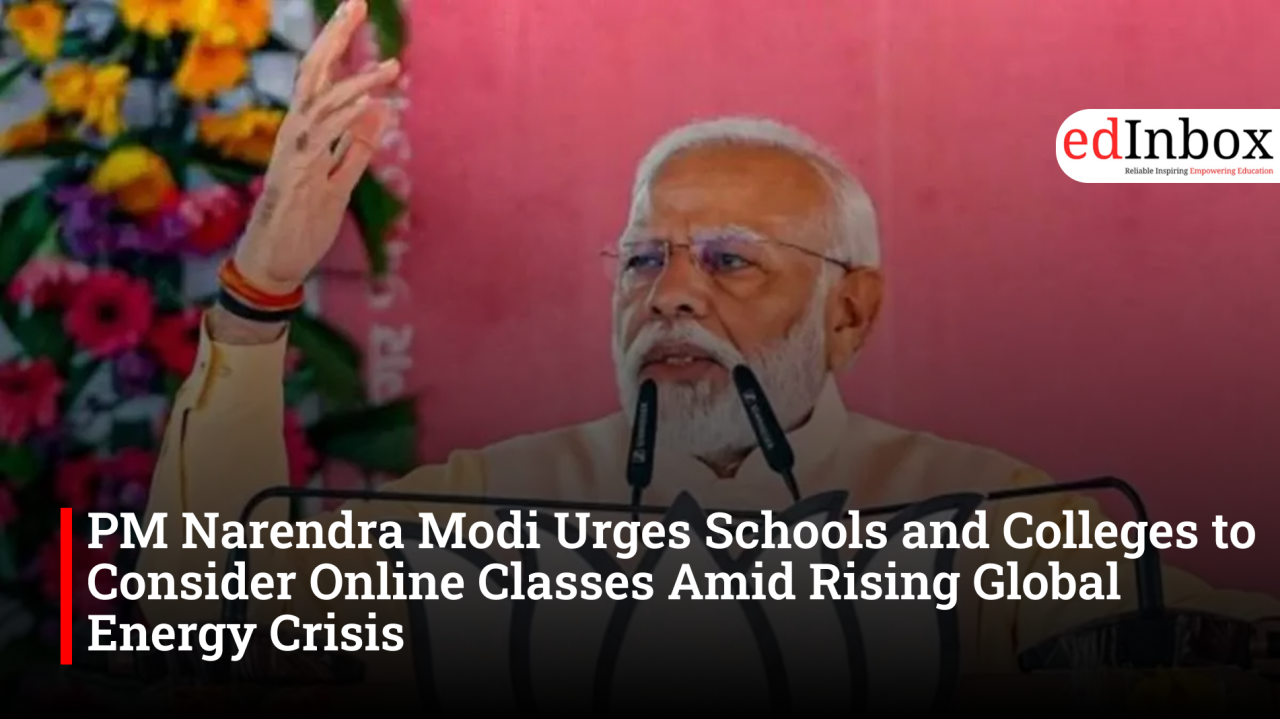
PM Narendra Modi Urges Schools and Colleges to Consider Online Classes Amid Rising Global Energy Crisis
Typography
- Smaller Small Medium Big Bigger
- Default Helvetica Segoe Georgia Times
- Reading Mode