
In a major push toward multilingual and inclusive education, the Ministry of Education will organise the Bharatiya Bhasha Summer Camp 2026 in schools across the country during the summer vacation. The week-long initiative aims to help students explore Indian languages through fun, activity-based learning rather than traditional classroom teaching.
Announcing the programme through a social media post, the ministry said the camp would focus on helping children develop basic communication skills in different Indian languages through interactive exercises, cultural exposure and everyday conversations.
The initiative builds on the success of last year’s edition, which reportedly saw participation from over 5.13 crore students nationwide. First launched in 2025 by Dharmendra Pradhan, the programme is now being expanded to schools across India following the strong response from students and educators.
One of the most significant additions to the 2026 edition is the inclusion of Indian Sign Language (ISL), a move being viewed as a step toward more inclusive classrooms and equitable learning opportunities. The decision also aligns with the broader vision of the National Education Policy 2020, which emphasises multilingual education, accessibility and cultural integration.
According to the ministry, the camp is designed to make language learning enjoyable and stress-free. Instead of focusing heavily on grammar rules, the programme encourages students to become familiar with sounds, phrases, vocabulary and expressions used in different parts of the country.
Seven-Day Learning Plan
The ministry has outlined a structured activity plan for the week-long camp:
- Day 1: Learning greetings, alphabets, numbers, signatures and basic self-introductions
- Day 2: Virtual city tours and role-play conversations for practical communication
- Day 3: Arts-based learning through music, dance and painting activities
- Day 4: Exploring names of foods, vegetables, fruits and ingredients in different languages
- Day 5: Activities centred on culture, listening skills and local heroes
- Day 6: Learning geography and history through rivers, mountains and important places
- Day 7: Reflection sessions, encouragement and closing activities
Officials say the broader goal is to expose children to India’s linguistic diversity in an engaging and natural environment. For many students, especially those from monolingual backgrounds, the camp could become their first meaningful interaction with languages spoken outside their home or region.
Education experts believe the programme could emerge as one of the largest language-learning initiatives ever conducted in Indian schools, while also helping children develop cultural awareness, empathy and appreciation for the country’s rich linguistic heritage.
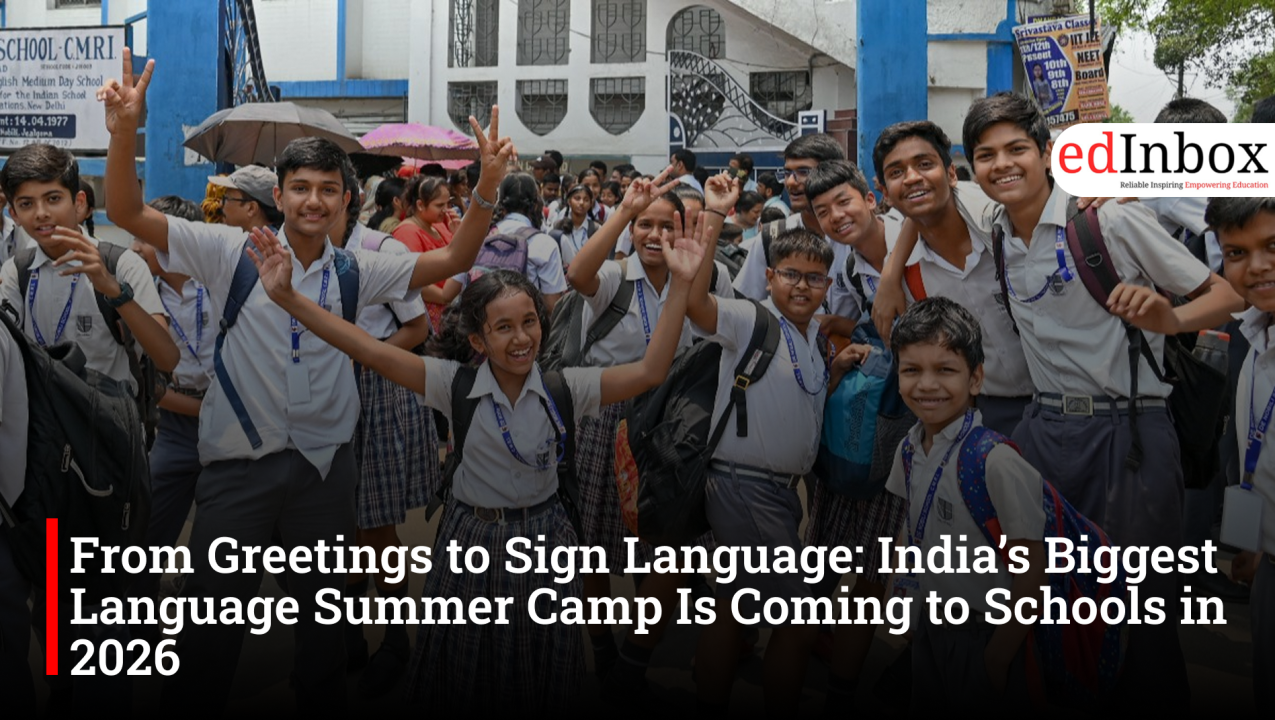
From Greetings to Sign Language: India’s Biggest Language Summer Camp Is Coming to Schools in 2026
Typography
- Smaller Small Medium Big Bigger
- Default Helvetica Segoe Georgia Times
- Reading Mode