
The Associated Managements of Schools (KAMS) has withdrawn its earlier advisory asking schools to remain closed during the proposed Cauvery bandh in Karnataka on August 13, citing concerns over the loss of academic days.
The decision comes particularly amid concerns over teacher shortages in aided schools and the additional workload associated with the ongoing SIR work.
While withdrawing its school-closure call, KAMS said it would continue to extend moral and peaceful support to the cause of protecting Karnataka's interests in the Cauvery water dispute.
The association has also suggested that schools use the day as an opportunity to help students understand the long-running interstate water dispute.
Schools May Wear Black Ribbons
Instead of shutting schools, KAMS said school managements, teachers and non-teaching staff may express solidarity by wearing a black ribbon or black strip on August 13.
The association stressed that the symbolic gesture should not disrupt regular academic activities.
However, following a fresh direction to Karnataka to release Cauvery water, KAMS has left the decision on declaring a holiday to individual school managements, depending on the local situation.
KAMS Suggests Cauvery Dispute Lessons for Students
KAMS secretary D Shashi Kumar said students from Classes 5 to 12 could be given age-appropriate and factual information about the Cauvery dispute during school assembly or a classroom session.
The association has suggested discussions covering:
- The history and background of the Cauvery water dispute
- Karnataka's dependence on Cauvery water for drinking water and agriculture
- The importance of the river to livelihoods
- Challenges created by inadequate rainfall and water scarcity
- Karnataka's concerns over water allocation
- Constitutional processes and judicial decisions
- The importance of cooperation between states
- Peaceful and responsible democratic expression
- Water conservation and sustainable water management
The idea is to turn a politically sensitive issue into an opportunity for civic and environmental education, rather than allowing students to become participants in political mobilisation.
Students Could Write to Supreme Court or Tribunal
KAMS has also suggested that students could be encouraged to prepare posters or letters addressed to the Supreme Court or relevant tribunal, seeking a fair distribution of Cauvery water.
According to the association, students could explore factors such as rainfall, drought conditions and water availability while expressing their views.
However, KAMS has made it clear that such activities should remain peaceful, balanced, educational and non-political.
Students should not be compelled to participate in protests or activities that could compromise their safety, emotional well-being or regular education.
Why KAMS Reversed Its School Closure Advisory
The association's decision to withdraw its earlier closure call is partly linked to concerns about academic disruption.
Schools have already faced pressure from teacher shortages, particularly in the aided-school sector. Additional closures could further reduce the number of instructional days available to students.
KAMS therefore appears to be seeking a middle path — allowing schools to remain operational while giving managements, teachers and students a way to acknowledge Karnataka's position in the Cauvery dispute.
Kannada Organisations to Meet Ahead of Bandh
Meanwhile, several Kannada organisations and associations have opted to extend moral support rather than immediately call for widespread disruption.
The Federation of Kannada Organisations has scheduled a meeting of stakeholders on Wednesday to discuss the proposed statewide bandh and formulate a strategy for the protest.
Praveen Shetty, who heads one faction of the Karnataka Rakshana Vedike (KRV), said the situation had changed since the bandh was initially announced.
He pointed out that when the bandh was called, concerns over inadequate dam storage and drinking-water availability were at the centre of the issue.
According to Shetty, Karnataka now has sufficient storage to meet drinking-water requirements, but the Cauvery Water Management Authority has again directed the state to release water.
The federation and other Kannada organisations are expected to assess the latest situation before deciding the nature and scale of Thursday's protest.
What This Means for Karnataka Schools
For parents and students, the immediate question is whether schools will remain open on August 13.
KAMS has withdrawn its general call for closure, but it has left the final decision with individual school managements based on local circumstances.
Schools are therefore expected to communicate any holiday decision directly to parents and students.
At the same time, KAMS's revised advisory signals an effort to keep the Cauvery issue within an educational and democratic framework, rather than allowing school closures or student participation in protests to become the focus.
The association has urged schools to maintain regular academic activities while ensuring that any discussion of the Cauvery dispute remains factual, age-appropriate, peaceful and non-political.
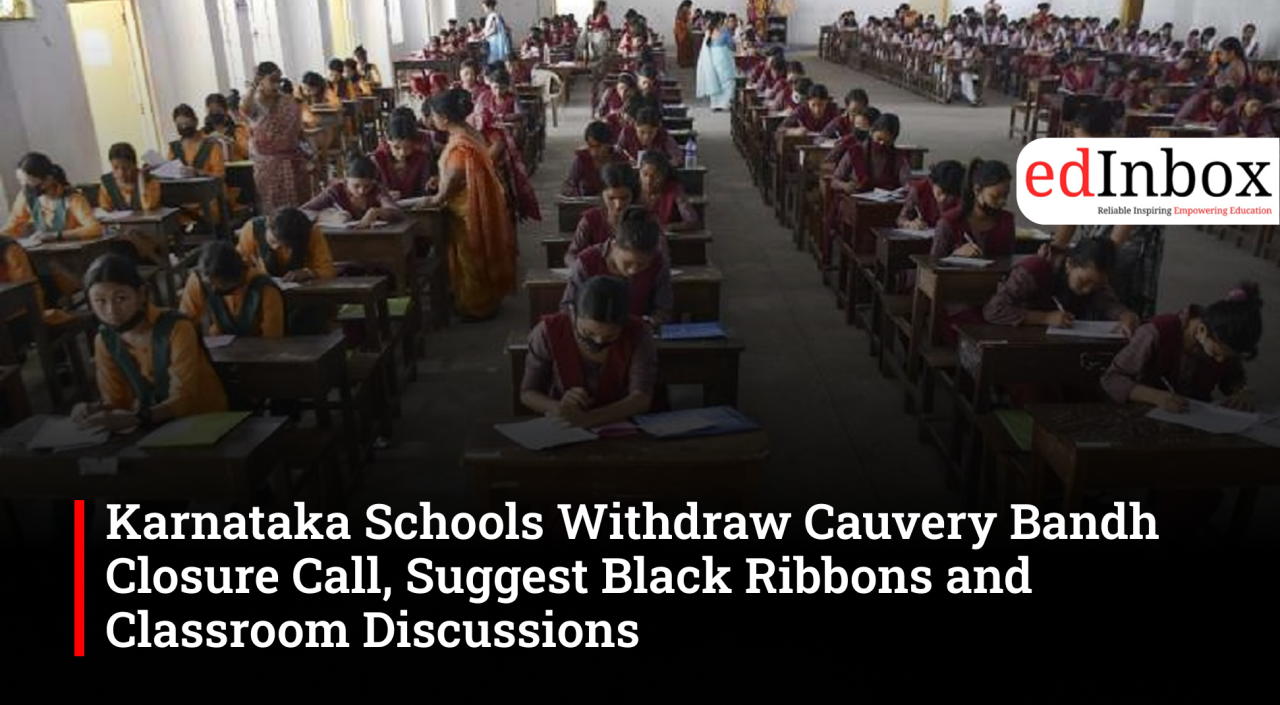
Karnataka Schools Withdraw Cauvery Bandh Closure Call, Suggest Black Ribbons and Classroom Discussions
Typography
- Smaller Small Medium Big Bigger
- Default Helvetica Segoe Georgia Times
- Reading Mode