The Rajasthan Board of Secondary Education (RBSE) is yet to announce the 12th Board exam results for 2025. Following the patterns of previous years, the results are expected to be declared in May 2025, offering students clarity on their academic achievements and future prospects.  

The RBSE 12th Board exams for 2025 are scheduled to take place between March and April, encompassing all three major streams: Arts, Commerce, and Science. These exams are crucial for students aiming to secure admissions to higher education institutions or pursuing other career paths.  

RBSE has maintained a consistent pattern of announcing the results in May each year. In 2024, the Board reported an impressive overall pass percentage of 98.95%, with female students outperforming their male counterparts. The Board’s meticulous evaluation process ensures timely and accurate results, upholding its reputation for academic excellence.  

Students can access their results through multiple channels for convenience:  
- Official Website: Visit [rajeduboard.rajasthan.gov.in](http://rajeduboard.rajasthan.gov.in) to check results by entering your roll number.  
- SMS Service: To get results via SMS, send a message in the format:  
  RESULT <space> RAJ12A/RAJ12S/RAJ12C <space> Roll Number  
  to 56263. This option is particularly helpful for students in areas with limited internet connectivity.  

For students who may not clear all subjects on the first attempt, RBSE provides a second chance through compartment exams. The results for these exams are anticipated in September 2025 and will also be accessible via the official website.  

As students await the results, this is an ideal time to prepare for the next steps, such as college applications, competitive exams, or vocational training. Regardless of the outcome, a positive approach can significantly influence their academic and career trajectories.  

The RBSE 12th Board results are a milestone for students, shaping their future endeavors. With the expected announcement in May 2025, students and parents are advised to stay updated through the official website and reliable sources. The Board’s commitment to fairness and transparency ensures a seamless result declaration process. Best wishes to all students for their upcoming results and future endeavors.  

A.S. Kiran Kumar, the former Chairman of the Indian Space Research Organisation (ISRO), underscored the critical importance of sustainable development aligned with nature during his recent lecture at the National Institute of Technology (NIT) Andhra Pradesh.

Speaking at a lecture series organized by the institute, Kumar emphasized the necessity of integrating sustainability into various sectors, including technology and industry, to ensure long-term well-being for humanity and the environment. He urged adopting practices that foster harmony with nature rather than exploiting its resources recklessly.

Kiran Kumar called for a balanced approach to development, advocating for strategies that meet human needs without compromising the planet's ecological health. Sustainable development, he noted, is essential to secure a better future for coming generations while mitigating the adverse impacts of industrialization and technological advancement.

The lecture drew participation from students, faculty, and dignitaries, sparking discussions on how technology can drive sustainability. Kumar shared insights from his tenure as ISRO Chairman from 2015 to 2018, where he spearheaded groundbreaking missions like the Mars Orbiter Mission and Chandrayaan-1.

Renowned for his contributions to space research and development, Kumar’s leadership at ISRO has been pivotal in propelling India to the forefront of global space exploration. His achievements have been recognized with numerous accolades, including the prestigious Padma Shri award in 2014.

Kumar’s address served as a clarion call for institutions, industries, and individuals to adopt sustainable practices that prioritize ecological balance. He emphasized that technological advancements must be designed and implemented with a focus on long-term environmental stewardship.

By fostering awareness and action around sustainable development, Kumar continues to inspire future scientists, engineers, and policymakers to innovate responsibly and ensure that progress is in harmony with the natural world.

The Consortium of National Law Universities (NLUs) has officially announced the results of the Common Law Admission Test (CLAT) 2025. Candidates can now access their results on the official website of the Consortium of NLUs at consortiumofnlus.ac.in.

CLAT 2025, a gateway to undergraduate and postgraduate law programs in 22 prestigious National Law Universities across India, witnessed participation from thousands of law aspirants. The much-anticipated results mark a significant milestone in their academic and professional journeys.

Accompanying the results is the toppers’ list, highlighting the All India Ranks (AIR) 1, 2, and 3 achievers. However, the names of these top performers have not yet been disclosed. Their exceptional performance underscores the competitive nature of the exam, which is a benchmark for legal education in the country.

The next step in the admission process is the counselling phase, which will commence soon. Detailed schedules and guidelines for the counselling process will be published on the official Consortium website. Candidates are encouraged to check the portal regularly to stay updated on important announcements.

Successful candidates can download their scorecards directly from the website. The scorecard will be a crucial document during the counselling and admission process, so aspirants are advised to keep it readily accessible.

For law aspirants, the CLAT 2025 results mark a pivotal moment, bringing them one step closer to securing admission to some of the nation’s top law schools. The upcoming counselling phase will determine the allocation of seats across participating NLUs, based on the candidates' preferences and rankings.

As the legal profession continues to grow in prominence, the CLAT examination serves as a vital steppingstone for future lawyers, judges, and policymakers. The successful conduct and declaration of results reflect the Consortium’s commitment to maintaining transparency and excellence in the admission process.

Candidates are urged to remain vigilant about further announcements on the counselling procedure to ensure a smooth transition into their academic careers. This achievement is just the beginning of their journey into the dynamic field of law, and it holds the promise of shaping their aspirations into reality.

A recent report has shed light on a concerning issue in India: the widespread lack of menstrual health literacy among women and girls. This deficit underscores the urgent need for education, awareness, and breaking entrenched stigmas around menstruation.

The statistics are alarming. Nearly 50% of Indian girls are unaware of menstruation before their first period. Moreover, 70% of women in the country rely on makeshift menstrual protection, such as cloth or ash, due to limited access to proper hygiene products. The consequences are far-reaching; approximately one in five girls drops out of school because of inadequate menstrual hygiene facilities.

Experts emphasize that improving menstrual health literacy is crucial for empowering women and girls to manage their health confidently and safely. It involves not only providing accurate information about menstruation but also ensuring access to safe menstrual hygiene products and fostering an environment where menstrual health is openly discussed and normalized.

The report highlights the importance of creating menstrual-friendly environments, particularly in schools and workplaces, alongside community engagement to challenge taboos and promote positive attitudes. Families, too, play a critical role in encouraging open dialogue about menstruation, which can dismantle stigma and foster support.

The Indian government has made notable strides with initiatives like the National Menstrual Health Programme, which aims to address menstrual health challenges comprehensively. However, the gap between policy and practice remains significant. Many rural and underserved areas still face acute shortages of resources and facilities, underscoring the need for enhanced efforts and targeted interventions.

As discussions on menstrual health continue to gain traction, it is vital to prioritize inclusivity and education. By doing so, we can build a society where every woman and girl can manage her menstrual health with dignity and without fear of discrimination.

Addressing menstrual health is not just about improving hygiene but also about empowering half of the population with the knowledge and tools to lead healthier, more confident lives. India must embrace a multi-faceted approach that combines education, infrastructure development, and societal change to ensure no girl or woman is left behind.

Aimed at providing relief to students from the harsh winter conditions, the Jammu and Kashmir administration has declared winter vacations for schools across the region. According to the announcement, all schools in the union territory will remain closed from December 10 to December 16.

The decision comes in response to the extreme cold weather that typically affects the region during this time of year. With temperatures dropping significantly, the administration has decided to give students a break from their academic schedules, allowing them to stay warm and avoid exposure to the chilly weather.

The winter break applies to both government and private schools in Jammu and Kashmir. Schools will reopen on December 17, and regular classes will resume as per the usual schedule.

This announcement has been met with enthusiasm by students, many of whom were eagerly awaiting the chance to relax during the cold winter days. Parents have also expressed their support for the decision, noting that the break will allow their children to rest and recharge in preparation for the remainder of the academic year.

The Jammu and Kashmir administration has also issued guidelines to ensure that students complete any pending assignments or projects before the start of the vacation. Schools have been advised to work with students to ensure that they stay on track with their academic responsibilities, despite the holiday break.

As the winter season sets in, this respite will provide much-needed comfort to students and families in the region, offering a chance to enjoy the festive season without the pressure of schoolwork.

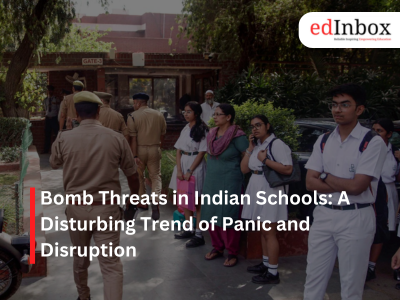
A wave of bomb threats disrupted normalcy across the national capital on Monday, as over 40 schools reported receiving alarming emails demanding a $30,000 ransom. The threats, issued via an unidentified Gmail account, claimed bombs had been planted in the institutions, sparking widespread panic among students, parents, and staff.  

Authorities took immediate action, evacuating the affected schools and deploying bomb disposal squads, police teams, and fire officials to investigate. Schools such as DPS RK Puram, GD Goenka in Paschim Vihar, The British School in Chanakyapuri, and Modern School in Mandi House were among those targeted. Following thorough searches, no explosive devices or suspicious items were discovered at any location.  

Parents, overwhelmed with anxiety, rushed to the schools to ensure their children’s safety. "The safety of students is paramount. We take every threat seriously and are leaving no stone unturned to investigate this incident," a Delhi Police spokesperson assured. Law enforcement agencies have urged parents, students, and school authorities to remain vigilant and report any suspicious activity.  

The threats have sparked renewed concerns about school security in Delhi, emphasizing the need for stringent safety measures. Many institutions are now reviewing their security protocols, with plans to strengthen surveillance systems and emergency response strategies.  

While no harm was reported, the psychological impact of the threats has been significant. Students were visibly shaken as they exited their schools under the supervision of teachers and security personnel. Efforts are underway to provide counseling support where necessary, ensuring the mental well-being of students and staff affected by the ordeal.  

The incident has highlighted the growing risks associated with digital threats in an increasingly connected world. Experts point out the importance of cybersecurity measures in preventing such incidents. Authorities are working to trace the origin of the emails and identify the individuals responsible for the threats.  

This episode serves as a stark reminder of the vulnerabilities faced by educational institutions. It underscores the importance of collaboration between schools, law enforcement, and the community to ensure the safety and security of students and staff. As the investigation progresses, Delhi’s schools are determined to enhance their defenses against similar incidents in the future.  

The situation remains under close monitoring as authorities continue their efforts to bring the perpetrators to justice.

The Indian wedding season is a spectacle of grandeur, rich with vibrant traditions, elaborate celebrations, and joyful gatherings. It’s a time when families and friends come together to celebrate love and unity, with music playing a central role in creating the festive atmosphere. However, amid the glitz and glamour, the rights of musicians, the very artists who provide the soundtrack to these joyous occasions, are often sidelined.

The Indian wedding industry is a multi-crore market, estimated to be worth over ₹1 lakh crore, and music forms a significant portion of wedding expenses. It’s not uncommon for couples to spend anywhere between ₹5 lakh to ₹10 lakh—or more—on live music performances, making it a highly lucrative market for musicians. Yet, despite the increasing demand for live performances, musicians often face challenges related to copyright infringement, underpayment, and lack of fair compensation.

The Indian Copyright Act, 1957, offers legal protections for musical artists, including provisions for royalties and performance rights. However, enforcement of these laws remains inconsistent, leaving many musicians vulnerable to exploitation. One of the major issues is that a large number of musicians are not registered with the Indian Performing Rights Society (IPRS), which limits their ability to claim rightful royalties for their work.

Additionally, the absence of standardized contracts in the wedding music industry leaves musicians without a clear framework to ensure fair payment and protection of their intellectual property. Without formal agreements, many artists find themselves underpaid or deprived of their due earnings, despite their crucial role in the wedding celebrations.

Experts in the music industry argue that the time has come for change. "The Indian wedding season, while a celebration of culture and joy, often overlooks the rights of the musicians who make it special," said an industry expert. "It’s time to ensure that the people behind the music receive fair recognition and compensation for their work."

To address these issues, musicians and industry experts are calling for greater awareness of musicians' rights, the establishment of standardized contracts, and stricter enforcement of copyright laws. This would not only safeguard the interests of musicians but also promote a more ethical and sustainable wedding industry.

As the wedding season continues to grow and evolve, it’s crucial that we acknowledge and respect the rights of those who bring the magic of music to these momentous occasions. Protecting musicians' rights will ensure that they can continue to contribute to the cultural richness of Indian weddings with dignity and fairness.

More Articles ...