
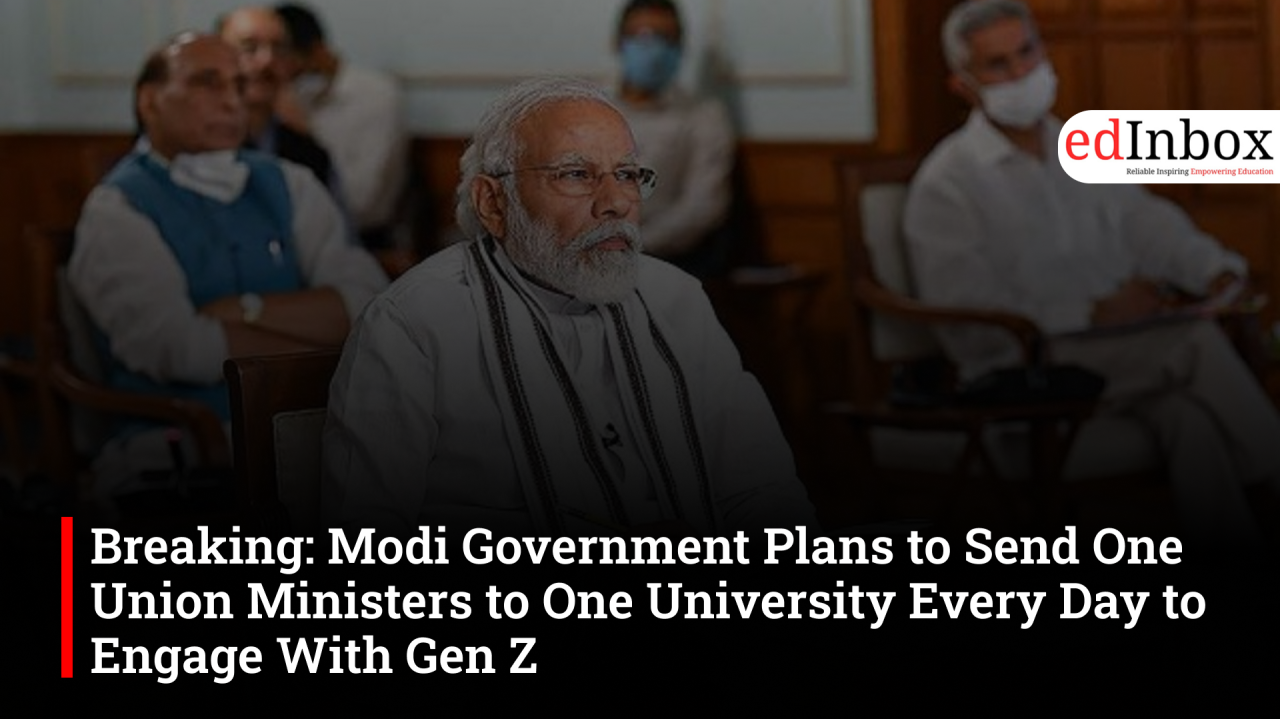
The Narendra Modi government is set to launch a university outreach initiative across the country as per which one Union minister will visit one university every day to meet the students face-to-face. The initiative is focused on gaining insights into the concerns, aspirations and expectations of GenZ and improving the government's connection with young Indians/voters.
The planned outreach follows a time of increased student and youth involvement in national issues. The student agitation against the NEET-UG 2026 paper leak and examination reforms has become a political issue in recent weeks, eventually prompting the resignation of then Union Education Minister Dharmendra Pradhan.
Why is the Modi government targeting Gen Z?
The government's latest outreach plan comes after a wider outreach drive by the BJP and Centre to reach out to the youth in spaces where they are active. Earlier, Prime Minister Narendra Modi had urged Union ministers to be more active on Instagram and post short-form content to reach out to the youth with government schemes and messages. The Prime Minister referred to Instagram as a significant platform to reach out to young India, reports said.
The university visits would go beyond social media. Ministers would be able to meet students, listen to their concerns and engage in direct conversation on campuses, rather than just through posts and videos.
What will Union ministers do on campus?
The proposed programme will include Union ministers visiting universities in the country and interacting directly with the students, the report said. The discussions should give the government a clearer picture of the aspirations, concerns and expectations of young Indians regarding education, employment and the future of the country. The programme is being seen as a step towards fostering a closer relationship between the government and the Gen Z. The report does not provide details of the full list of universities, the programme of individual ministers and the subjects to be discussed, which have not been made public.
Gen Z outreach comes after student protests
The proposed university programme is an opportune one. The student-led protests against the NEET-UG 2026 controversy had grown into a nationwide movement, with students calling for accountability and changes in the examination system.
In July, Union Minister for Education Dharmendra Pradhan resigned following weeks of protests. The government then said it would implement measures related to the changes in the exams, and the Cockroach Janta Party, which had spearheaded the agitation, withdrew its nationwide protest after discussions with the Centre.
In a later statement, Pradhan said that there had been an attempt to “mislead” Gen Z during the protests and that young Indians were the “key to the future of India”. He made the remarks after resigning from the post at GM University in Odisha to students and teachers.
Why universities might be the next political outreach space
The universities are a natural platform for direct engagement as they attract a large and diverse segment of India's youth. The suggested programme is also timely, as the political communication with Generation Z is shifting to informal and direct communication modes. Opposition leader Rahul Gandhi, for example, recently started an Instagram “Ask Me Anything” campaign to which students and young people can send questions to him.
The idea of ministers going into universities might provide a new form of interaction for the government, one in which students can ask questions in the flesh, not in response to a government message on the web.
The proposed outreach of one minister, one university a day thus marks a larger attempt to grasp and reach a generation that is increasingly shaping the public discourse in India.
As more information about the programme comes out, the reaction of young people and universities will be the deciding factor as to whether it is just another government outreach programme or whether it becomes an effective forum for youth to voice their concerns directly to those in power.
Breaking: Modi Government Plans to Send One Union Ministers to One University Every Day to Engage With Gen Z
Typography
- Smaller Small Medium Big Bigger
- Default Helvetica Segoe Georgia Times
- Reading Mode