
When astronauts describe life in space, it’s always about floating toothbrushes, recycling water, and the strange silence that exists outside their spacecraft environment,” Walsh said. “It’s been brought up lately, though, that there’s one aspect of life that has not been addressed: menstr
In the course of a reporting project on space medicine, a former flight surgeon at NASA once joked with me about the implications of her experiences with menstrual cycles in space: “Space does not care about your cycle—but the design of spacecraft did.” Space exploration had long been built for the physiology of the average man. But when women increasingly made flights into space, they also had an inconvenient question following in their orbit: What happens to your periods when you're short of water and a toilet?
Bathing is performed with damp wipes. Each gram of trash is carefully placed away until it is ready to be returned to Earth. It is with this background that even changing a sanitary napkin becomes a major feat.
Scientists initially wondered if menstruation itself would function correctly in a weightless environment. "What if, without the influence of gravity, women's menstrual fluid did not drain properly from the body, but actually reversed course?" The notion was a quick myth-busting challenge. The challenge that actually existed concerned something much more mundane: waste and water.
“Pads and tampons create waste—and lots of it. Thousands of items wouldn’t make the cut on long missions, particularly if astronauts are headed to Mars one day. The problem could be dodged altogether by using hormonal pills to delay their menstrual cycle. Several women astronauts chose just that. It worked well, yet it wasn’t the most ideal option in the world—not to mention not everyone could comply with something like that.”
This is where NASA’s current research becomes relevant.
In terms of mission planning, menstrual cup solves a series of issues: no waste, no need to regularly restock the supply, and it takes up less space for storage.
"The problem is not the cup itself," stated a NASA scientist who contributed to the study of human systems. "The problem is how to clean the cup safely and comfortably in microgravity environments.” In actual fact, water acts differently in space. Instead of going down, it floats into a kind of sphere. Scientists and doctors are trying to analyze the manner of cleaning in zero-gravity environments.
As things stand now, the only two options offered to astronauts are either to halt the menstrual flow through hormones or deal with the situation using normal products, thereby having the consequent waste. However, NASA is very specific on the matter. NASA refuses to impose any one solution. “The goal is choice,” declares a top mission planner. “Astronauts should be able to live in space in a way that respects their bodies and health.”
Astronauts could potentially remain away from the Earth’s surface for extended periods of years, and restocking their supplies will not be a possibility. After all, space these days is no longer a man’s only frontier. As an astronaut once said: “If we’re serious about living beyond Earth, our spacecraft have to work for real people.” Including those who menstruate.
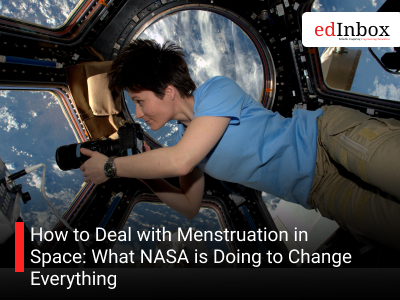
How to Deal with Menstruation in Space: What NASA is Doing to Change Everything
Typography
- Smaller Small Medium Big Bigger
- Default Helvetica Segoe Georgia Times
- Reading Mode