
In an effort to highlight the powerful combination of film and environmental activism, a special screening of the internationally celebrated documentary Turtle Walker was held on February 9 at the National Gallery of Modern Art (NGMA), Mumbai. This event was a part of the "Cinema & Climate Showcase, " a series of programmes leading up to Mumbai Climate Week 2026.
The three, day event, Mumbai Climate Week, is scheduled from February 17 to 19 at the Jio World Convention Center. More than a dozen thematic events are planned in different parts of the city before the main summit. One of these is the ongoing showcase titled "When Cinema Meets Climate, " which seeks to harness films and storytelling as means to raise climate change awareness.
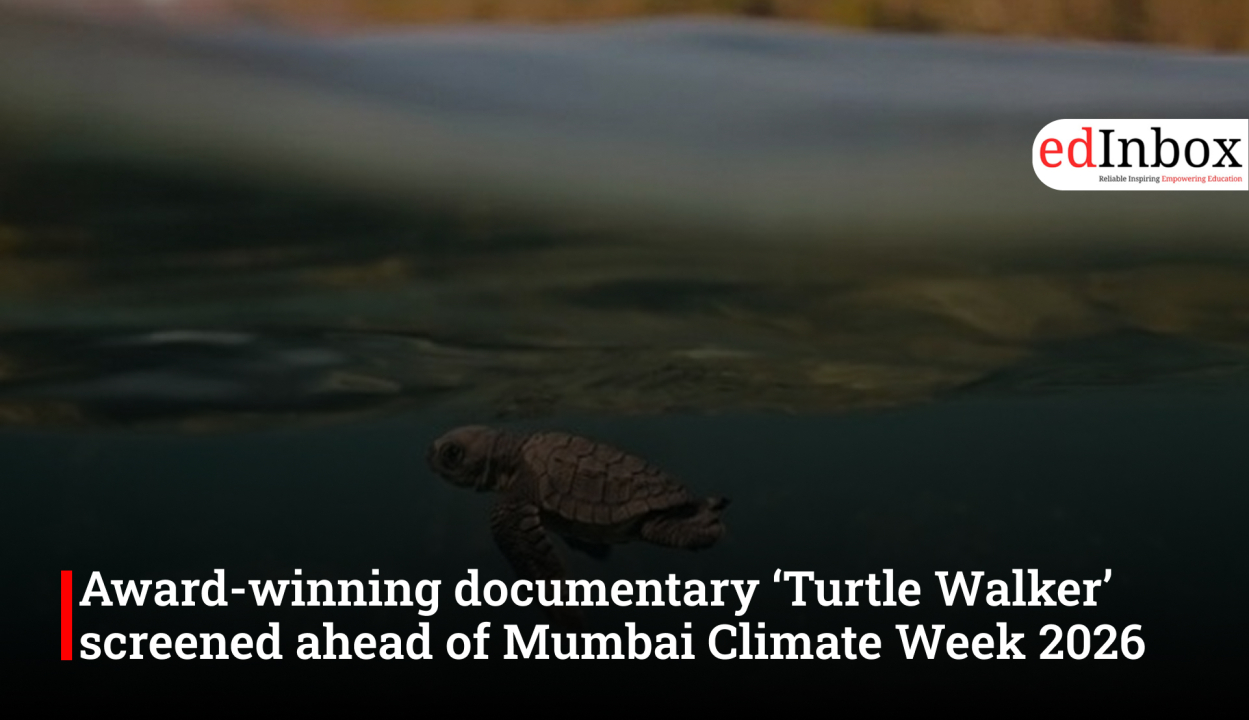
Turtle Walker is a documentary directed by Taira Malaney which narrates the life story of an Indian environmentalist, Satish Bhaskar. Most of his life he devoted to research on sea turtles and to the rescue of the coastal habitats that are endangered. The film portrays the emotional and social struggles of the environmentalists and it has received many international awards, not only for its artistic merit but also for its ability to convey complex climate topics through compelling human stories.
The screening was followed by a panel discussion with environmental filmmakers and writers. The panel consisted of director Taira Malaney, Director of Photography and Associate Director Krish Makhija, filmmaker Sarvnik Kaur and writer Sejal Mehta. They talked about how art and cinema can help people understand the climate challenges.
Speaking to the assembly, Malaney stressed the significance of such events. Mumbai Climate Week is important because we are experiencing climate change impacts basically in urban cities in India. These occasions give us the chance to share stories that connect people emotionally with environmental issues. Cinema and art, if used wisely, can become powerful instruments to initiate speeches and bring about change, she explained.
Vijayalakshmi, Project Manager Mental Health at Project Mumbai Stories, expressed agreement. It is well known that stories make us act and cinema is one of the most impactful art forms making use of visuals and emotions. Indigen is really buying into Turtle Walker's story, how it spotlights the integral natural human and world relationship, she said, noting that the massive turnout of young people for the event was proof of the fact that young Indians are more concerned than ever about climate issues.
The organisers of the event claim that the film is only one part of a larger outreach programme whose objective is to attract diverse audiences and educate them about the importance of marine ecosystems and the conservation of oceans. The event marked the raising of the profile of Mumbai as a city of climate discourse, showcasing the potential of films, literature, and art, when combined, to be a source of environmental initiatives.
Award-winning documentary ‘Turtle Walker’ screened ahead of Mumbai Climate Week 2026
Typography
- Smaller Small Medium Big Bigger
- Default Helvetica Segoe Georgia Times
- Reading Mode