
Every day, millions of plastic bottles are used, discarded, and forgotten. They end up on beaches, in rivers, on roadsides, and eventually in the environment we all share. Most people know plastic pollution is a problem. The harder question is: how do you make people truly feel the scale of it?
That was the challenge behind UnPlastic India, a campaign that started with a simple but powerful idea and grew into one of the country's most talked-about environmental movements.
A Campaign That Refused to Be Ignored
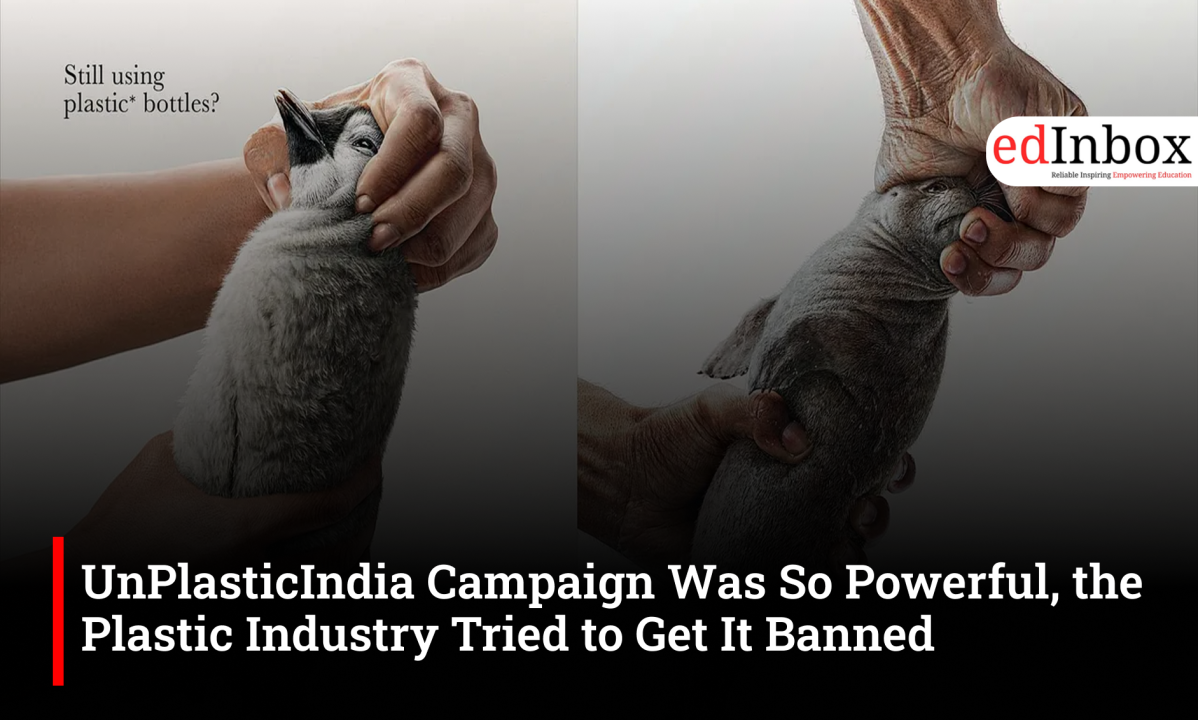
UnPlastic India first appeared as a hard-hitting print campaign in The Times of India on World Environment Day. The campaign used striking visuals and a blunt message to force readers to confront the reality of plastic pollution. The images were uncomfortable, emotional, and impossible to dismiss that they challenged people to think about the consequences of everyday plastic consumption and the damage it leaves behind long after a bottle is thrown away.
The campaign quickly gained attention across the country. In fact, it generated so much discussion that plastic bottle manufacturers reportedly filed complaints with the Advertising Standards Council of India (ASCI), seeking to have the campaign withdrawn. The challenge did not succeed, and the conversation around plastic waste only grew stronger.
From Newspaper Pages to Real-World Change
What made UnPlastic India different was that it did not stop at awareness. The campaign evolved into a nationwide movement that encouraged people to take a 21-day pledge to reduce plastic consumption. Schools, NGOs, communities, and volunteers joined hands to organise clean-up drives and environmental activities across multiple cities.
The message was clear that awareness alone is not enough. Real change begins when people take action. As participation increased, the campaign transformed from a media initiative into a public movement that invited ordinary citizens to become part of the solution.
Turning Plastic Waste into a Powerful Message
One of the most impactful moments of the campaign came when the plastic collected during clean-up drives was transformed into massive public installations. These structures were built using the very waste people had discarded. Among them were installations created by renowned sand artist Sudarsan Pattnaik, designed to confront people with the visible consequences of plastic pollution. The message was difficult to ignore. What many people considered a small piece of litter became part of a giant visual reminder of a growing environmental crisis.
Five Lakh Voices for a Cleaner Future
The campaign struck a chord with people across India. Nearly five lakh individuals took the pledge to reduce plastic use and contribute towards a cleaner environment. The movement's impact extended beyond national borders when it was recognised and featured by the United Nations Environment Programme (UNEP). The recognition highlighted how a campaign that began with a newspaper advertisement had evolved into a large-scale environmental initiative capable of inspiring meaningful action.
Why UnPlastic India Matters
Plastic pollution is often discussed through statistics and reports, but numbers rarely create emotional change. UnPlastic India succeeded because it transformed an environmental issue into a human one. It reminded people that every discarded bottle has a destination, and every choice has a consequence.
At a time when environmental challenges continue to grow, the campaign demonstrated the power of storytelling, public participation, and collective responsibility. More importantly, it showed that when awareness is combined with action, even a simple idea can inspire hundreds of thousands of people to rethink their habits.
A Reminder That Change Starts Small
UnPlastic India is not just a story about a campaign. It is a story about how ordinary people responded when asked to care. A plastic bottle may seem insignificant in a single hand. But multiplied by millions, it becomes a crisis. In the same way, a single pledge may seem small. Yet when taken by five lakh people, it becomes a movement.
And perhaps that is the most important lesson of all: lasting environmental change does not begin with governments or organisations alone. It begins with individual choices that, together, can reshape the future.
UnPlasticIndia Campaign Was So Powerful, the Plastic Industry Tried to Get It Banned
Typography
- Smaller Small Medium Big Bigger
- Default Helvetica Segoe Georgia Times
- Reading Mode