
When former Indian badminton player Jwala Gutta recently shared photographs of stored breast milk packets on social media, a lot of people first felt it as a kind of personal motherhood update or an “experience-sharing” moment. But this perception didn’t stay there for long, the post quickly became part of a larger healthcare conversation, more real, more urgent, almost right away as soon as people read her heartfelt message.
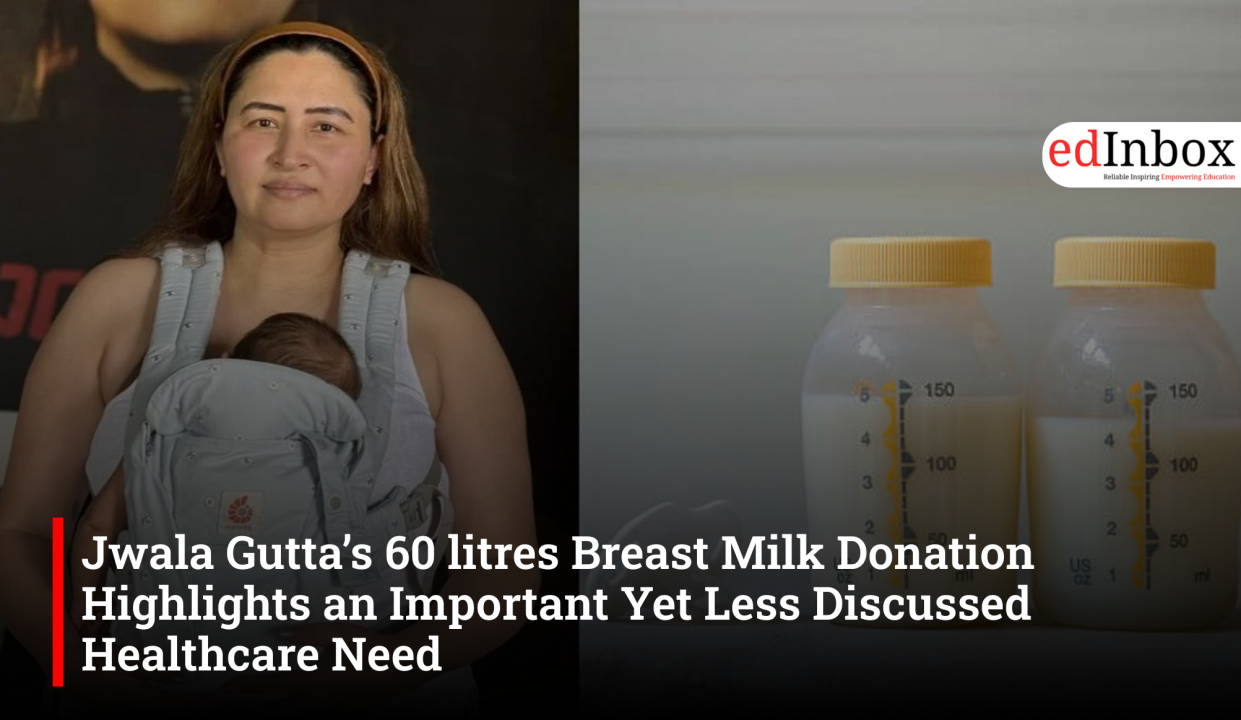
Jwala Gutta and her husband actor Vishnu Vishal welcomed their daughter in April 2025, and after a year of experiencing postpartum life, she talked about donating breast milk to encourage other mothers to consider it. She shared two photographs on X in which she wrote, "I donated around 60 litres of breast milk to the government hospitals in Hyderabad and Chennai during my first year of postpartum!!"
Her post got noticed online fast, not just because of the donation itself, but because it put a national spotlight on a healthcare topic that is rarely talked about openly in India : breast milk donation, and the way it supports saving premature babies.
Why donor breast milk matters in neonatal care
In her detailed post, Jwala explained that donor human milk becomes really important for babies who are admitted to Neonatal Intensive Care Units, the NICUs, especially for premature and low-birth-weight infants.
A number of newborns cannot get their own mother’s milk right away because of things like premature delivery, medical complications, maternal health concerns, or delayed lactation after childbirth. For these babies, donor milk works like an immediate nutritional and immune lifeline during the most fragile phase of early life.
“Just 100 ml of donor milk can feed a tiny 1 kg baby for several days,” Jwala wrote, and honestly the statement resonated strongly online as it made a complicated healthcare subject easier for people to picture, and understand without medical jargon.
The Medical Importance of Human Milk Banks
The importance of donor breast milk is strongly backed up by various global healthcare organisations, more or less. According to the World Health Organization (WHO) , low-birth-weight infants who can not receive their own mother’s milk should be given donor human milk wherever safe milk banking facilities are available.
Medical experts have often stressed that donor breast milk:
- strengthens immunity,
- helps digestion
- lowers infection risks
- supports neonatal development
And Jwala also pointed to necrotising enterocolitis in her post, a serious intestinal problem seen in premature infants. Research has shown that donor human milk really can lower the chances of this life-threatening condition in neonatal care settings.
Globally, WHO estimates suggest that more than 20 million low-birth-weight babies are born every year. A big part of this happens in developing countries, where newborn healthcare systems often face even more strain.
Why Awareness Around Breast Milk Donation Remains Limited
Even with the medical value of donor milk , awareness around human milk banks is still quite limited in India. Many families don’t know that breast milk donation:
- is medically screened,
- is run using safety protocols
- is handled through regulated milk banks
- directly supports premature infants in hospitals
Public conversation around maternal health tends to stay mostly focused on pregnancy and childbirth, while postpartum recovery, neonatal nutrition, and milk donation kind of get less visibility , which is also one reason Jwala Gutta’s post got such a big public response. It helped normalise a conversation that usually stays tucked away inside hospital systems.
A Post That Felt Like Honest Awareness
The photos shared online didn’t really look staged, or promotional… it seemed more like routine healthcare prep, with neat storage packets organised for donation to hospitals. That simplicity made the message more impactful.
Healthcare professionals have often said that awareness matters a lot for strengthening neonatal support systems; one donor can end up helping multiple infants admitted to NICUs, especially during those early, critical moments when survival and immunity are still really fragile.
And by talking openly about the process, Jwala also encouraged mothers to look up local government hospitals, to see how breast milk donation programmes actually work, step by step.
A Bigger Conversation About Healthcare and Compassion
The discussion is now going beyond sports and celebrity culture, into broader, kind of connected topics like:
- maternal healthcare
- newborn nutrition
- nursing support systems
- neonatal care awareness
- women’s health education
For students thinking about healthcare, nursing, paediatrics, neonatal medicine, or public health careers , this story shows how awareness and community involvement can quietly back life-saving healthcare systems.
In a lot of situations, the most important acts in healthcare are not dramatic or easy to notice. They happen in a calmer way, through educated decisions, compassion, and help that reaches people right at the most vulnerable point in life.
Jwala Gutta’s 60 litres Breast Milk Donation Highlights an Important Yet Less Discussed Healthcare Need
Typography
- Smaller Small Medium Big Bigger
- Default Helvetica Segoe Georgia Times
- Reading Mode