
A family-led startup from Kolkata is attempting to reduce India’s dependence on imported marine technology by developing indigenous underwater robotic systems designed for river inspection, hydrographic surveys, and underwater mapping.
Founded by the Banerjee family, Banergy is building Remotely Operated Vehicles (ROVs) and Unmanned Surface Vehicles (USVs) that can be used for underwater inspection, environmental monitoring, and maritime survey operations. The startup has been conducting real-world testing of its prototypes at Prinsep Ghat along the Hooghly River.
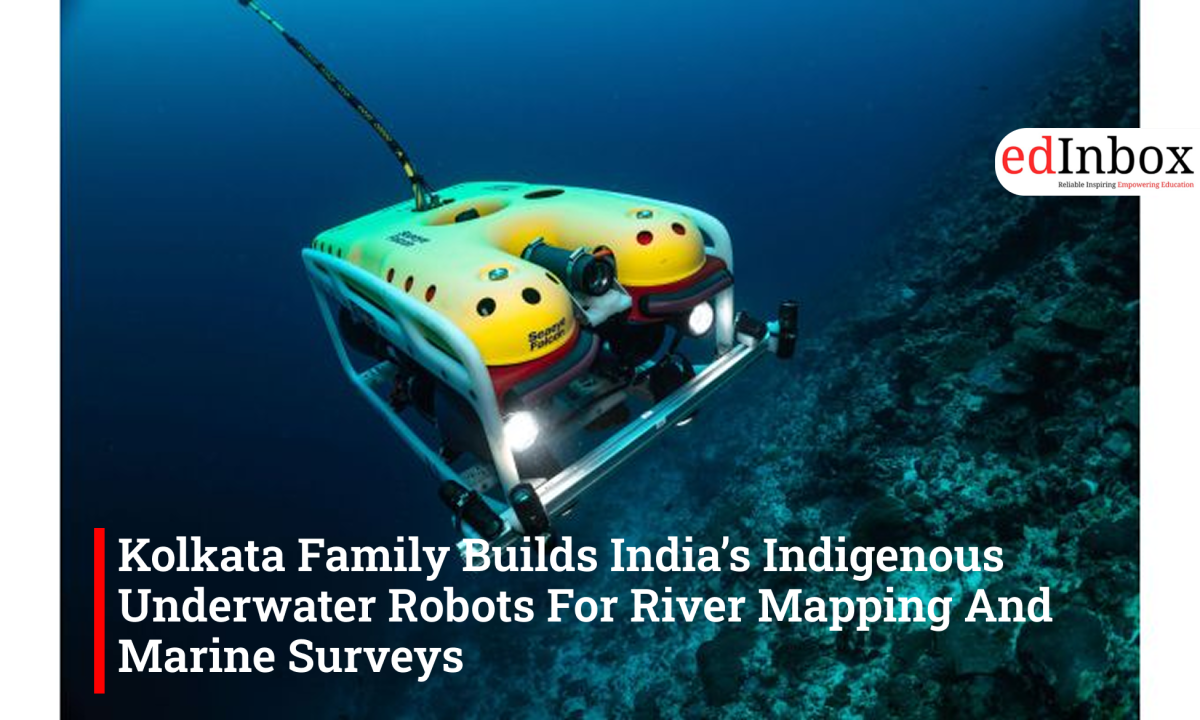
The company’s current prototypes include a cylindrical ROV equipped with dual thrusters for underwater movement and a catamaran-style unmanned surface vehicle designed for hydrographic and surface-level survey operations. While some specialised components are sourced globally through collaboration with Blue Robotics, Banergy says the systems are being engineered and assembled in India.
The startup is led by Rakhi Banerjee as Managing Director, alongside Swarnab Banerjee overseeing operations and Rishav Banerjee leading engineering development. According to the team, the idea emerged from observing the growing need for indigenous marine technologies suited to India’s rivers, ports, and coastline.
India currently relies heavily on imported underwater survey and inspection systems for activities ranging from port infrastructure monitoring to riverbed mapping and maritime research. Banergy aims to create cost-effective alternatives that can support domestic infrastructure, inland waterways, and coastal management projects.
The startup’s focus comes at a time when India is investing heavily in river transport, smart ports, coastal surveillance, and inland waterway development. Experts say indigenous underwater robotics could play a crucial role in reducing operational costs, improving accessibility for local agencies, and strengthening technological self-reliance in the marine sector.
Unlike many early-stage technology ventures focused primarily on software, Banergy is positioning itself as a hardware-driven engineering startup that develops and tests physical systems under field conditions. The company describes its mission as creating technologies “born from Indian rivers” and adapted to local environmental challenges.
As interest in blue economy technologies and maritime infrastructure grows, Banergy’s efforts highlight how smaller Indian startups are beginning to enter specialised deep-tech sectors traditionally dominated by international manufacturers.
Kolkata Family Builds India’s Indigenous Underwater Robots For River Mapping And Marine Surveys
Typography
- Smaller Small Medium Big Bigger
- Default Helvetica Segoe Georgia Times
- Reading Mode