
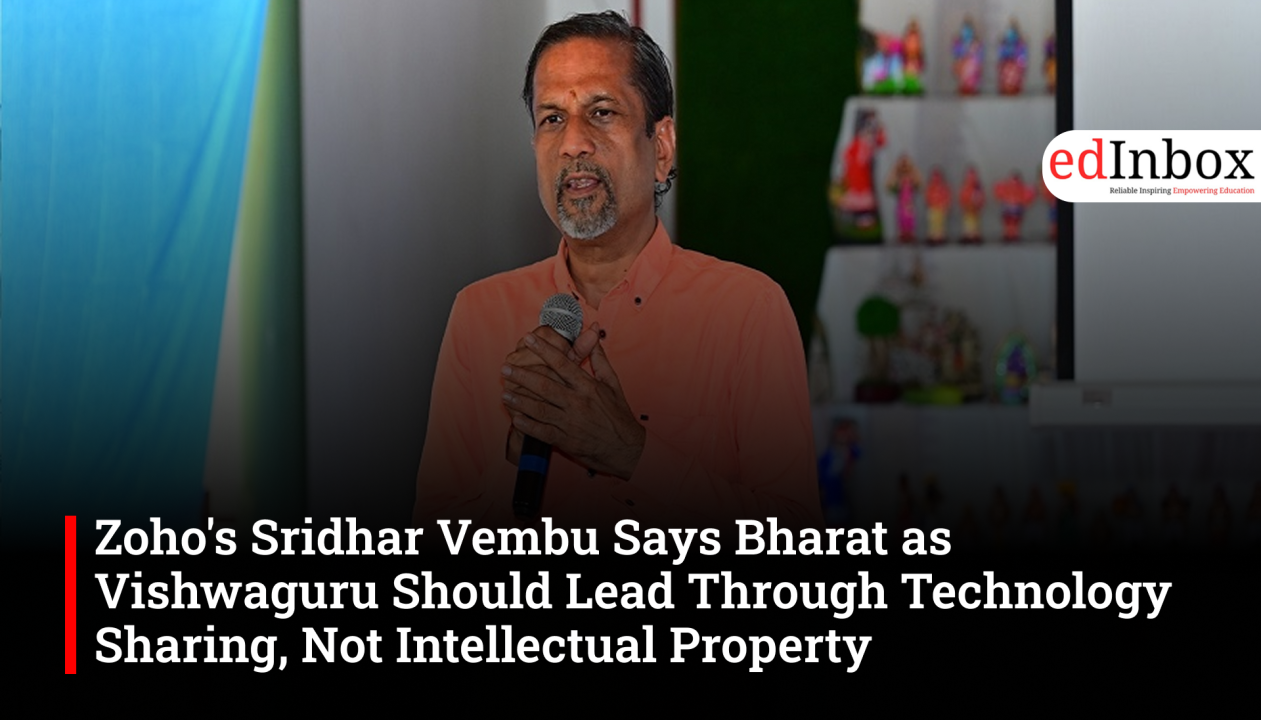
Zoho Chief Scientist Sridhar Vembu has said that India's vision of becoming "Vishwaguru" should be rooted in reviving a global culture of technology sharing rather than restricting innovation through intellectual property (IP). In a recent post on social media platform X, Vembu argued that advanced technologies should be voluntarily shared with developing nations to help them build self-reliant industrial ecosystems, drawing inspiration from the international cooperation that followed World War II.
His remarks come amid growing global debates on artificial intelligence (AI), open-source innovation, intellectual property rights and technology sovereignty, as countries seek to balance innovation with equitable access to emerging technologies.
Vembu calls for revival of international cooperation
In his post, Vembu contrasted the spirit of international cooperation that characterised the decades following World War II with what he described as the "Wall Street-driven Globalism" that emerged after the collapse of the Soviet Union in the 1990s.
According to him, the earlier model focused on enabling newly independent nations to develop their own industrial capabilities through technology transfer rather than merely creating new export markets for developed economies.
He argued that countries were encouraged to build domestic manufacturing capacity and technological expertise through collaborative partnerships that promoted self-reliance.
Integral Coach Factory cited as an example
To illustrate his argument, Vembu referred to the establishment of the Integral Coach Factory (ICF) in Chennai.
He noted that the railway coach manufacturing facility was developed with technical assistance from Switzerland, enabling India to establish its own manufacturing capabilities instead of remaining dependent on imports.
According to Vembu, such collaborations represented an era when knowledge and industrial expertise were openly shared to strengthen the capabilities of developing nations.
He described "technology transfer" as a widely accepted principle during that period, where the objective was to build local capacity rather than retain exclusive control over technological know-how.
Criticism of intellectual property-driven models
Vembu argued that the global approach has gradually shifted from knowledge sharing to business models centred on intellectual property protection.
According to him, the increasing emphasis on intellectual property has reduced opportunities for collaborative technological development and has altered the nature of international cooperation.
He suggested that excessive dependence on IP-driven models has contributed to unequal access to advanced technologies and limited the ability of developing countries to build independent technological ecosystems.
Linking technology sharing to Bharat as Vishwaguru
Expanding on his vision, Vembu said India's aspiration to become Vishwaguru should involve making advanced technologies accessible to countries with limited technological resources.
He argued that India's global leadership could be strengthened by voluntarily sharing innovations and supporting technological capacity-building in developing nations, similar to the international cooperation witnessed in earlier decades.
Referring to recent developments in artificial intelligence, Vembu pointed to China's release of advanced large language models (LLMs) as an example of how open access to cutting-edge technologies can enhance a country's global influence and soft power.
According to him, such initiatives offer valuable lessons for India as it seeks to expand its role in global technology leadership.
Debate on open innovation gathers momentum
Vembu's remarks come at a time when governments, researchers and technology companies worldwide are actively debating the future of open-source AI, intellectual property rights and responsible technology governance.
As artificial intelligence becomes central to economic growth and national competitiveness, policymakers are increasingly examining how to balance innovation incentives with broader access to transformative technologies.
By advocating greater international technology sharing, Vembu has contributed to the ongoing discussion on how India can combine technological advancement with global cooperation while pursuing its vision of becoming a leading knowledge economy.
Zoho's Sridhar Vembu says Bharat as Vishwaguru should lead through technology sharing, not IP control
Typography
- Smaller Small Medium Big Bigger
- Default Helvetica Segoe Georgia Times
- Reading Mode