
Did the foreign women really come to Ladakh to conceive "pure Aryan" babies? Or is this another internet fueled myth cloaked in tourism marketing?
If you have ever seen viral posts claiming that foreign women come to Ladakh to have babies with "Real Aryan" men, you're not the only one. The term pregnancy tourism in Ladakh frequently raises curiosity, debate and puzzlement. But what is fact and what is fiction? For students studying for a degree in society, media, genetics or tourism, this is an important lesson in critical thinking.
In this article, we will take a closer look at this topic and find out the most interesting, factual and insightful angle of this type of pregnancy.
What Is Pregnancy Tourism?
In academic and policy discussions, pregnancy tourism typically refers to travel for childbirth-related reasons. This can include women travelling abroad for better maternity care, assisted reproductive services or to give birth in countries that grant citizenship by birth (jus soli), such as the United States or Canada. This is a known international problem, an area of migration law and public policy research.
However, what is termed as "pregnancy tourism" in Ladakh is very different.
Where Did The Pregnancy Tourism Claim Originate From?
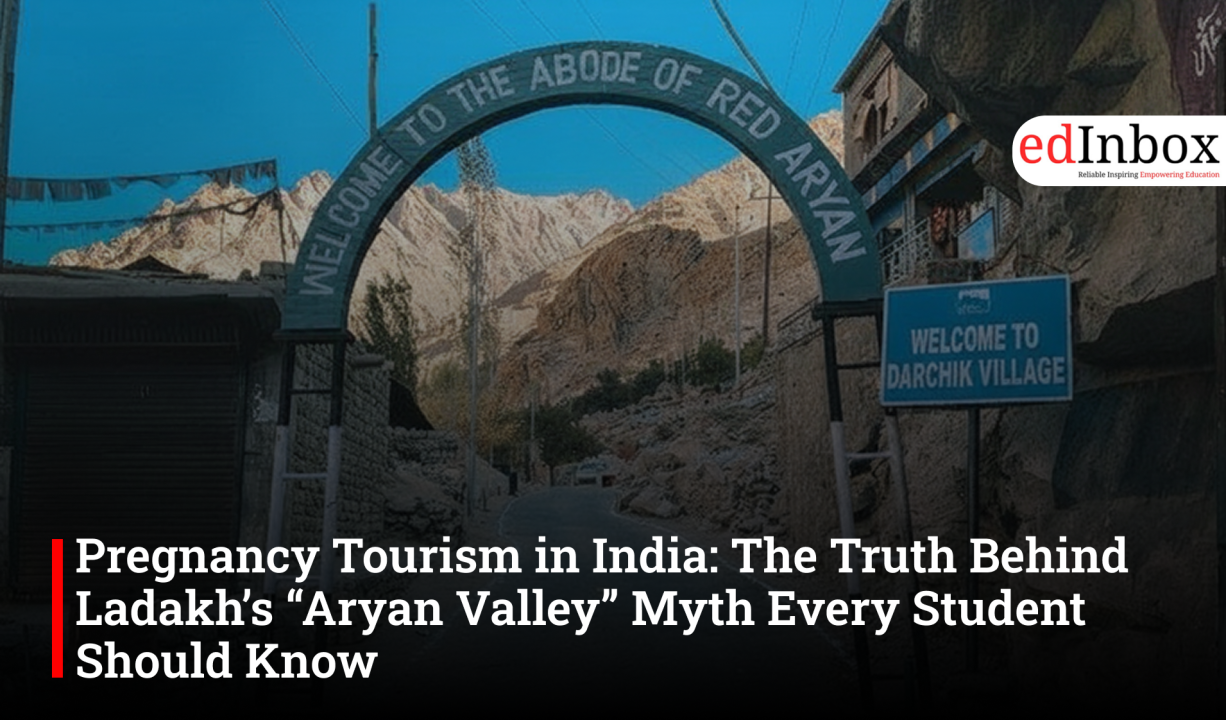
The concept of "pregnancy tourism in Ladakh" came to the limelight with the exposure of a few travel blogs and word-of-mouth publicity, as well as on the internet. The claim indicates that there are some foreign women who visit these villages with the intention of conceiving children with Brogpa men with the belief in the concept of preserving "pure Aryan genes".
One of the rare documented field investigations on this claim was made by Manzoor Ahmad Khan, Assistant Professor of Travel and Tourism at the University of Kashmir. His 2018 paper in the International Journal of Multidisciplinary Research and Development was prepared based on a 20-day field visit in 2017.
During the course of his research, he interacted with some 180 foreign female tourists. Among them only one tourist openly admitted that she had travelled with the intention of conceiving, influenced by information that she had found on the internet. The remaining visitors said that they came out of cultural curiosity, interest in photography or to learn about the Brogpa community's lifestyle.
The existence of such practices was even denied at first hand by local sources. Over the years, some accepted that rare and isolated cases may have occurred. However, the study did not prove pregnancy tourism as an organised, large-scale activity.
Myth, Media, and Tourism
This is where the story becomes more interesting from an academic point of view. The pregnancy tourism story seems more of a tourism curiosity and media amplification phenomenon rather than a documented social trend.
There were many factors that contributed to its spread:
- Online material that romanticised genetic "purity"
- Travel Marketing that emphasised physical characteristics of the Brogpa community
- Worldwide interest in identity and ancestry
- Repetition of anecdotal stories lacking a larger data
In fact, Ladakh draws tourists more for its landscape, culture, monasteries and adventure tourism. The "Aryan" label has in some instances become a tourism USP, despite the lack of scientific validity.
What Should Students Know?
For students taking courses in sociology, tourism, anthropology, media studies or genetics, this topic will provide a great lesson in evidence-based thinking.
First of all, not every phenomenon that is so popular in discussion is statistically significant. One admitted case out of 180 surveyed tourists does not make an organised trend. Second, racial purity stories have long been discredited in modern science. Genetic diversity in human populations makes the idea of biological purity scientifically unsound. Third, tourism narratives can sometimes oversimplify, or sensationalise, complex cultural identities.
What Do We Understand By This?
Pregnancy tourism as a global concept is real, in contexts that are related to medical travel and citizenship law. However, in the Aryan villages in Ladakh it would seem that the claim is not widespread, anecdotal and massively supported by media and internet story telling rather than by large scale evidence in Ladakh.
The more important thing is not scandal, it's how easy it is for identity myths to become tourism stories in the digital age. For readers and students alike, the lesson is simple: curiosity is a healthy thing, but conclusions should always be based on research, field evidence, and scientific understanding.
Pregnancy Tourism in India: The Truth Behind Ladakh’s “Aryan Valley” Myth Every Student Should Know
Typography
- Smaller Small Medium Big Bigger
- Default Helvetica Segoe Georgia Times
- Reading Mode