
When American traveller Charlie Evans described Indian medicine as “god-tier” after recovering from illness during his trip, many on social media applauded the statement as validation of India’s healthcare ecosystem. His experience—combining Ayurveda, home remedies, pharmacies, and hospital care—captured something uniquely Indian: a healthcare system that blends tradition with modern science and delivers treatment quickly and affordably.
But behind this positive experience lies a deeper and often overlooked truth. Healthcare is not powered by doctors alone. It is sustained by an entire ecosystem of allied healthcare professionals—laboratory technicians, physiotherapists, radiographers, emergency responders, pharmacists, nutritionists, and medical technologists—whose expertise keeps hospitals functioning.
In India, the coexistence of traditional healing systems such as Ayurveda with modern medicine creates a holistic healthcare culture. Institutions like the Ministry of AYUSH promote integration between traditional practices and evidence-based medical treatment. However, this integration only works when trained professionals can diagnose, test, monitor, and rehabilitate patients effectively—roles that belong largely to allied healthcare workers.
The Invisible Workforce Behind Every Recovery
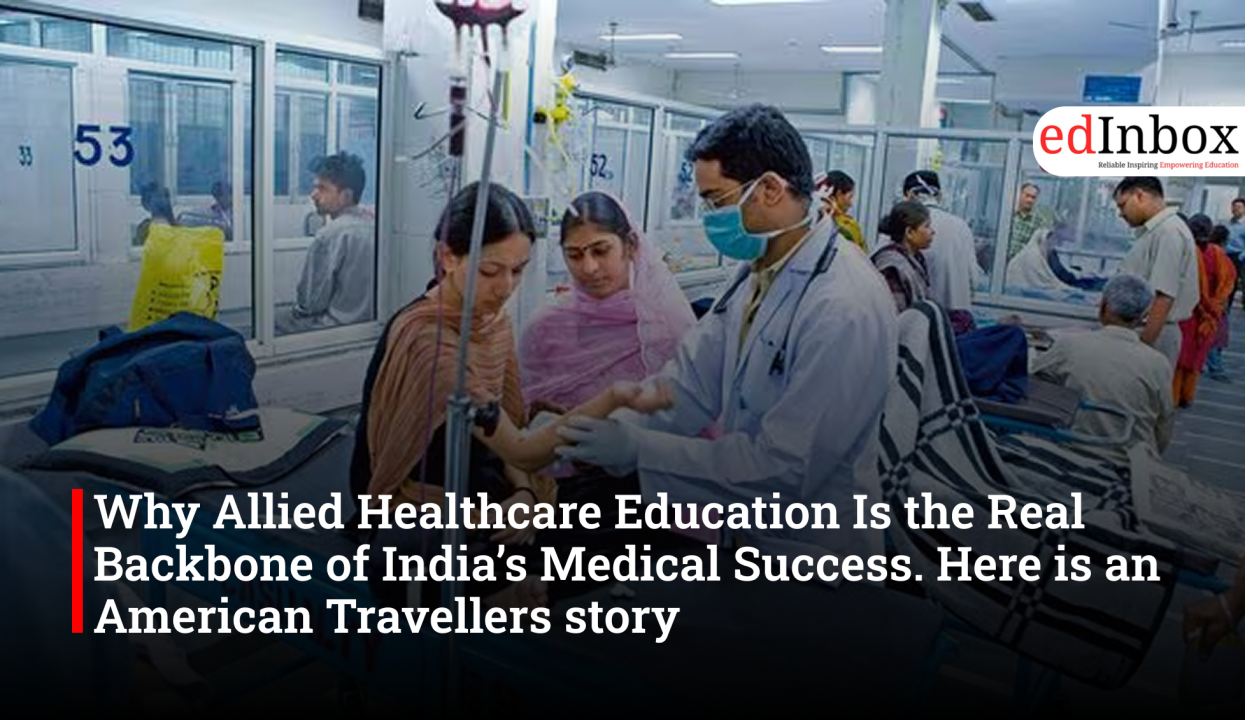
A patient walking into a hospital rarely meets only a doctor. The diagnosis might involve medical laboratory technologists, imaging might require radiology technicians, treatment may depend on pharmacists, and recovery could involve physiotherapists or occupational therapists. Without this network of specialists, even the most skilled physician cannot deliver effective care.
The importance of this workforce has been highlighted by global health institutions such as the World Health Organization, which warns that countries with insufficient allied health professionals struggle to deliver quality healthcare even if they have adequate doctors.
In India, where hospitals often treat thousands of patients daily, allied healthcare professionals form the operational backbone of healthcare delivery. Their presence ensures that diagnostics are accurate, treatments are safe, and patients recover faster.
Lessons From the Pandemic
The COVID-19 crisis offered a powerful reminder of the importance of allied healthcare. While doctors and nurses were on the frontline, it was lab technicians running PCR tests, respiratory therapists managing ventilators, and emergency technicians transporting patients who ensured that hospitals could cope with the crisis.
During the pandemic, India also accelerated public health training through institutions such as the National Institute of Health and Family Welfare to strengthen the allied healthcare workforce.
The lesson was clear: healthcare systems collapse without trained technical support staff.
The Skill Gap India Must Address
Ironically, even though India is globally recognised for affordable healthcare and medical tourism, the country faces a significant shortage of allied healthcare professionals. Hospitals frequently struggle to recruit trained technicians and specialists.
Educational institutions are beginning to address this gap by expanding allied health science programmes, focusing on fields such as clinical laboratory technology, medical imaging, physiotherapy, and emergency medical services.
This shift is critical not only for healthcare quality but also for employment generation. Allied healthcare education can create millions of skilled jobs while strengthening India’s medical infrastructure.
Building the Healthcare Workforce of Tomorrow
For India to maintain the reputation that impressed travellers like Evans, the country must invest more deeply in structured allied healthcare education. That means better training institutes, updated curricula, modern laboratories, and strong clinical exposure.
Allied healthcare professionals are not merely assistants; they are specialised experts whose skills determine the accuracy of diagnoses and the effectiveness of treatment.
The Future of Holistic Healthcare
India’s healthcare strength lies in its pluralistic model—a system where modern hospitals coexist with traditional wellness knowledge and accessible community care. But the future of this model depends on highly trained allied healthcare professionals who bridge technology, diagnostics, and patient recovery.
If India wants to remain a global example of affordable and effective healthcare, the next step is clear: build a stronger pipeline of allied healthcare professionals through robust education and training.
Because ultimately, every successful recovery—from a minor infection to a complex surgery—depends on the invisible army working quietly behind the hospital doors.
Why Allied Healthcare Education Is the Real Backbone of India’s Medical Success. Here is an American Travellers story
Typography
- Smaller Small Medium Big Bigger
- Default Helvetica Segoe Georgia Times
- Reading Mode