
For Gen Z, travelling has become a theraphy. Beyond the tradition, travelling is now seen as a need; it has sort of quietly turned into identity, escape, emotional reset, and sometimes even survival, like actually.
A few years ago travelling was seen as a reward. People planned to go out after promotions, after retirement, after saving enough money, or after years of regular, routine work. It was something postponed until life became “stable”. But Gen Z approaches travel in a different way.
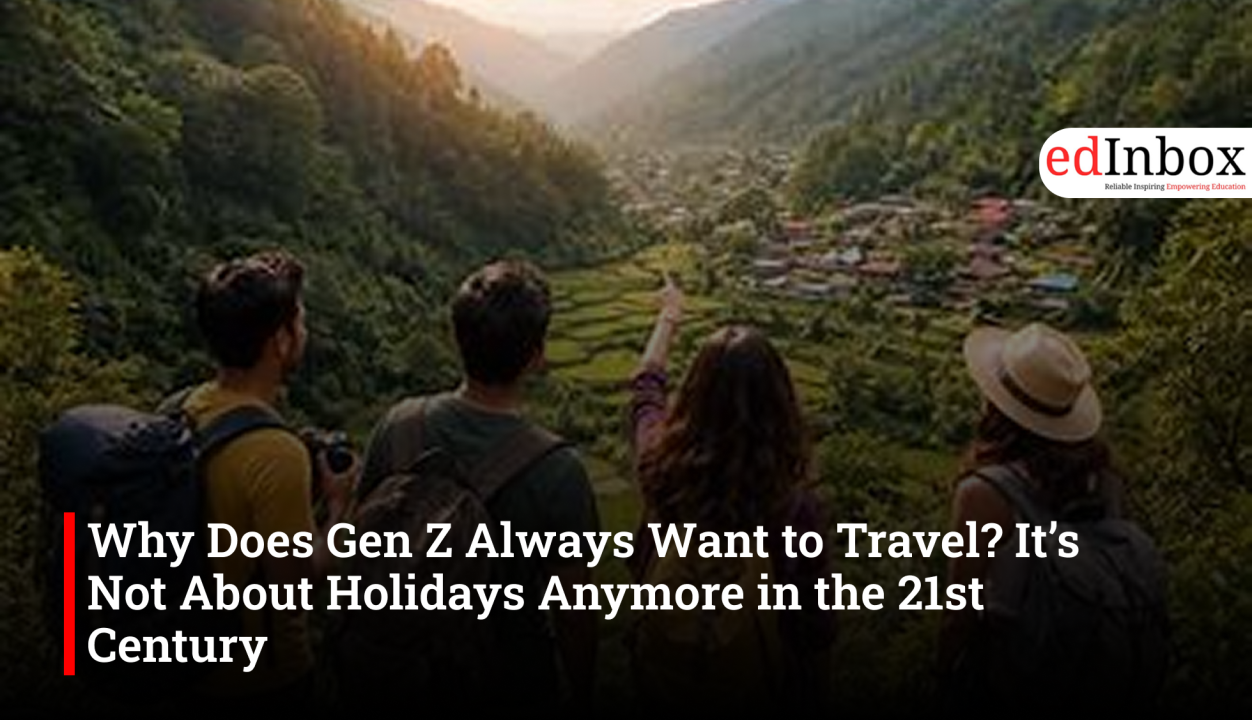
Now young people are booking spontaneous trips between semesters, taking solo vacations after burnout , working remotely from hill stations, and spending their savings on experiences instead of long term possessions. If you scroll social media for like five minutes it becomes obvious , this generation is attached to movement.
And that naturally leads to the question a lot of people search online now: Why does Gen Z always want to travel? The answer has way less to do with luxury and way more to do with psychology.
Gen Z Grew Up Watching Stability Collapse
Older generations were raised around predictable life structures. Study well, get a secure job, settle down , and then slowly build a comfortable future. Gen Z inherited a far less certain world.
They grew up watching layoffs happen to qualified professionals. They saw burnout become normalised inside workplaces. They entered adulthood during a pandemic that interrupted education, careers, relationships, and long term planning almost overnight.
So, a lot of young adults don’t really fully trust the whole idea of delaying happiness forever. For them, travelling isn’t simply recreation. It often feels like reclaiming life before routine completely eats it up. That shift explains much of modern travel culture.
Social media transformed the way GenZ view travel
To be honest, it's easy to say that Instagram is to blame for the addiction of Gen Z to travelling. The desire to explore was not born in social media. It amplified it.
Travel was once far away and costly. Nowadays, creators, freelancers, students and remote workers are all documenting affordable trips, workcations, backpacking experiences, and solo adventures on the internet.
Travelling is no longer just for celebrities or rich tourists. It feels accessible. Meanwhile, social media also altered people's emotional definitions of success. The previous generations had a different idea of success, which was owning property, a house, a car, a permanent job.
Gen Z more and more equates success with experience: freedom, flexibility, memories, mobility and personal growth. Hence, travel content is so successful online. It doesn't just feature places to visit. It's a seller of emotional possibility.
Travelling is a way to get away from the emotions
Modern life is draining in a way that was not experienced by previous generations on a continual basis:
- Notifications never stop.
- Work comes home with people.
- Social comparison exists 24/7.
- Resting can also be performative in an online context.
For a lot of young adults, travelling breaks the emotional cycle. The mental rhythm is altered by a different environment. New locations demand attention. Details are observed again, weather, conversations, food, silence, movement. Even a brief vacation can help you feel disconnected from the stress-filled routine.
The importance of novelty in enhancing cognitive flexibility and preventing mental stagnation has been a topic of discussion among psychologists. Travel is not therapy, but it can affect mood, attitude and emotional reactivity. That's why many Gen Z travellers say that travelling is “healing” even if the trip itself is not easy.
Why Gen Z values experiences over possessions
Economic reality is also a significant factor in the present-day travelling behaviour. Other milestones like owning a home or having a stable financial situation seem to be further away for many young adults. The concept of success has evolved for younger generations due to factors such as increasing expenses, fluctuating employment and work cultures.
Experiences often feel more achievable than long-term permanence.
A trip is possible, but the purchase of a house may not. This psychological turn is what makes many Gen Z adults spend money on travel, concerts, cafés, experiences, and short-term memories. Rather than waiting years to get to the point where you can finally “start living.” It's not necessarily about being financially irresponsible, it's usually emotional practicality based on uncertainty.
Travel is now a part of identity
Another reason for the increased travel amongst Gen Z is that travel is now a part of self-expression. Today's younger tourists are not as interested in tourism and more interested in personal experience. That's why people opt for local cafés over luxury resorts and slow travel over rushed itineraries and cultural immersion over tourist checklists.
It's not just “Look where I went.” It's evolved to become, “Look, how this experience transformed me.” That's also why there's been a surge in people travelling alone in their youth. For many, travelling alone is a sign of independence, confidence, emotional clarity, and personal freedom.
Corona Changed Gen Z’s Relationship with Time
Young people around the world were significantly impacted psychologically by COVID-19. Schools were closed, friendships were lost, internships were canceled, graduations were delayed, travel plans were canceled, and important events were missed during formative years.
Many young adults began adulthood with a sense of having missed crucial years of their lives. Following that encounter, it seemed like a risk to put off life forever. This attitude continues to shape travel behaviour in the present day.
Gen Z is more and more interested in being flexible, mobile, experiencing, in the moment and
Emotional satisfaction, as uncertainty is now more tangible and visible than in the past to the same age.
So, why does Gen Z always want to travel?
For many young people, travelling is no longer about tourism, it is a symbol of freedom in a generation that is overrun by structure; it's a reflection of screen-dominated lives moving. However, travel is often the one thing that Gen Z doesn't get most of the time from modern life:
the sense of being in the emotional moment.
And maybe this is why this generation continues to pursue airports, road trips, mountains, cafés and strange cities. Not because they're escaping reality but because they're working hard to get back into it.
Why Does Gen Z Always Want to Travel? It’s Not About Holidays Anymore in the 21st Century
Typography
- Smaller Small Medium Big Bigger
- Default Helvetica Segoe Georgia Times
- Reading Mode