Indian Space Research Organisation (ISRO) successfully launched EOS-05, India’s first imaging satellite built for a geosynchronous orbit, which is a significant advancement in the nation's capabilities.
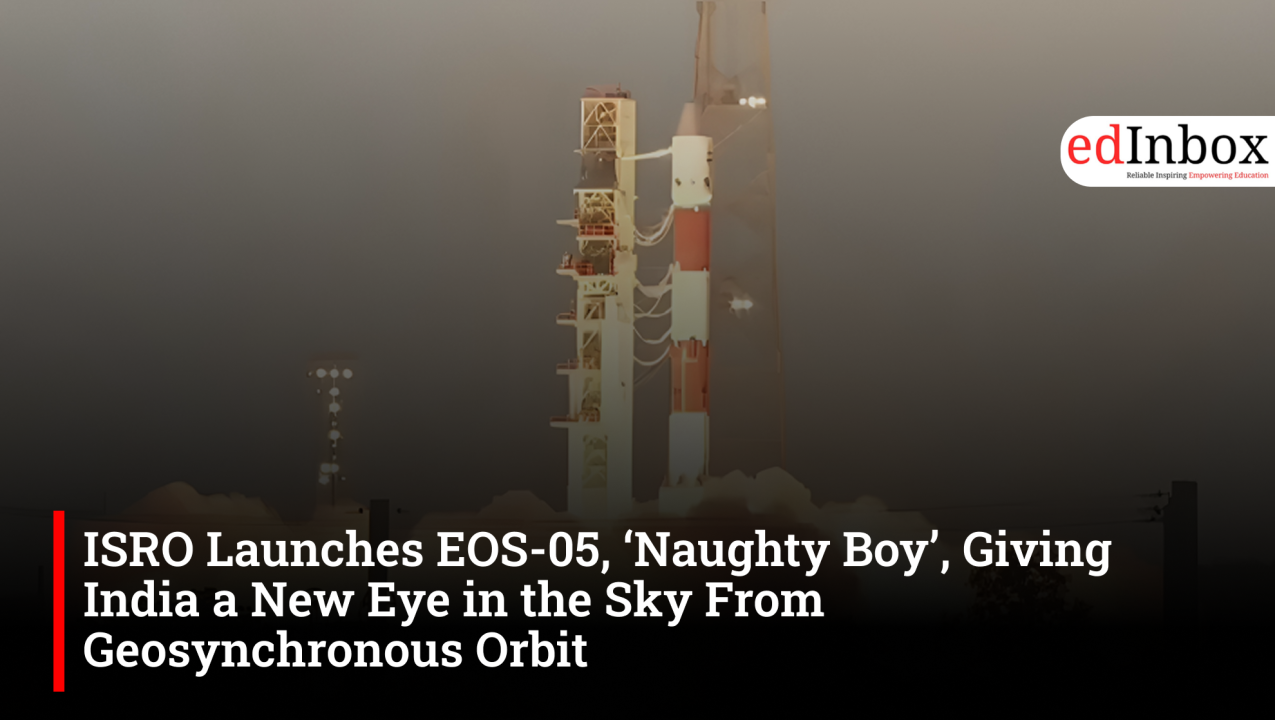
The GSLV-F17 rocket lifted off from the Satish Dhawan Space Centre in Sriharikota at 2:55 am on September 4, 2026. The 51.7-metre-long launch vehicle launched the EOS-05 satellite weighing around 2,367 kg in its intended sub-geosynchronous transfer orbit (EGTO). ISRO stated that the mission GSLV-F17 has been a successful mission.
Why EOS-05 Is Important for India
EOS-05 will eventually be placed in a geosynchronous orbit, which will provide a radically new viewing ability compared to traditional low-earth orbit Earth-imaging satellites. A geosynchronous imaging satellite can observe a large area continuously for long periods, as opposed to overflying it at intervals from orbit, typically 36,000 km above the Earth.
The persistent vantage point may enable India to get high resolution images of large areas periodically, and facilitate applications such as disaster management, agriculture, environmental monitoring, urban planning, and the development of infrastructure. The satellite's capacity to see the same area again and again could also be of strategic importance for monitoring sensitive areas and the Indian borders.
ISRO calls EOS-05 the first-ever imaging satellite from a geosynchronous orbit. The spacecraft has been initially injected into sub-GTO orbit, and the expected manoeuvre to its operational orbit will be performed.
GSLV-F17 Marks 19th GSLV Flight
The successful launch was also crucial for the Geosynchronous Satellite Launch Vehicle (GSLV) programme. ISRO's mission records show that GSLV-F17 is the 19th flight of GSLV. The three-stage configuration with an indigenous cryogenic upper stage is employed by the launcher to launch heavier payloads to higher orbits.
This is the GSLV's second flight after its earlier missions presented reliability issues, which led to it being dubbed the informal nickname, “Naughty Boy”. The achievement is of the highest order, and will be added to the vehicle's impressive litany of achievements following a rough year for ISRO's launch programme.
The agency's launch records indicate that the PSLV-C61/EOS-09 mission in May 2025 and PSLV-C62/EOS-N1 mission in January 2026 were both unsuccessful. The successful launch of GSLV-F17 is thus a welcome milestone in ISRO's 2026 launch schedule.
EOS-05 Could Strengthen Real-Time Earth Observation
The advantage of EOS-05 is that it could be used for long-term observations of large areas. Traditional low-earth-orbit (LEO) imaging satellites orbit the Earth, and a specific area could only be viewed by a particular satellite at certain times.
A geosynchronous satellite, on the other hand, can have a much more continuous view of its area of interest. It can be especially useful in fast-moving situations like severe weather events, natural disasters and other emergencies, where further observations can aid in determining what has happened and what measures can be taken.
The satellite is also expected to expand the use of space-based imagery for developmental applications such as agriculture, forestry and infrastructure, while offering potential strategic value for national security.
A Significant Mission for ISRO
The significance of GSLV-F17 extends beyond the satellite itself. The mission also demonstrates the continued capability of the GSLV to place heavier payloads into higher orbits. The agency's official mission page states the rocket has successfully injected EOS-05 into its planned sub-geosynchronous transfer orbit.
In India, EOS-05 is not just a satellite to observe the earth. Once operational from its planned geosynchronous orbit, EOS-05 could provide a persistent view of a large designated region, allowing more frequent observation of changes on Earth.
September 4 is an important milestone, therefore, in India's quest for a more continuous, high-altitude Earth observation, and another notable milestone in the growing ability of India's space programme.
ISRO Launches EOS-05, ‘Naughty Boy’, Giving India a New Eye in the Sky From Geosynchronous Orbit
Typography
- Smaller Small Medium Big Bigger
- Default Helvetica Segoe Georgia Times
- Reading Mode