At 15, students are faced with an important decision regarding their future careers. It is common for schools to offer only three broad specialisations for students to choose from after class 10: Science, Commerce or Arts. The final choice is often made based on grades, parental pressure, friend groups, or family legacy, and not on an individual’s interest, skills, or values.
“Ask any students what influenced their decision for choosing a stream and you will see overlapping responses,” says Nikhar Arora, Founder and CEO, Mentoria, an education consulting firm. “The parent’s profession, a relative’s success in engineering or just high grades in Science, would have subconsciously played a role in their decision-making. The issue with career counselling in schools is that it is seen as an ancillary activity,” he added. “Students do not have access to experts who can guide them through the minefield of specialisations and skill sets that will define their career paths.”
Arora argues that while most parents are well-meaning, their guidance is often based on assumptions since they are not career counsellors themselves. He added that it was important to consider how the job market today is different, given disruptive technologies and artificial intelligence that are driving a large number of new-age professions.
The hidden opportunity cost of a wrong career choice
Career regret is not always immediate. Students often graduate, get a “good” job and quickly settle into married life. It is only years later that the lack of fit between their true potential and actual work creates dissatisfaction.
The main reason why students do not pursue their passion lies in the sunk-cost fallacy.
After investing years of effort and potentially, money, in a certain area of study, students are often too afraid to move out due to the perceived loss. Additionally, there is also fear that the combination of effort and finances invested will not yield desired results. “These are the primary reasons why students get stuck in the wrong career. The longer they stay, the more difficult it becomes to pivot, especially if this is not the right skill set for the individual,” says Arora.
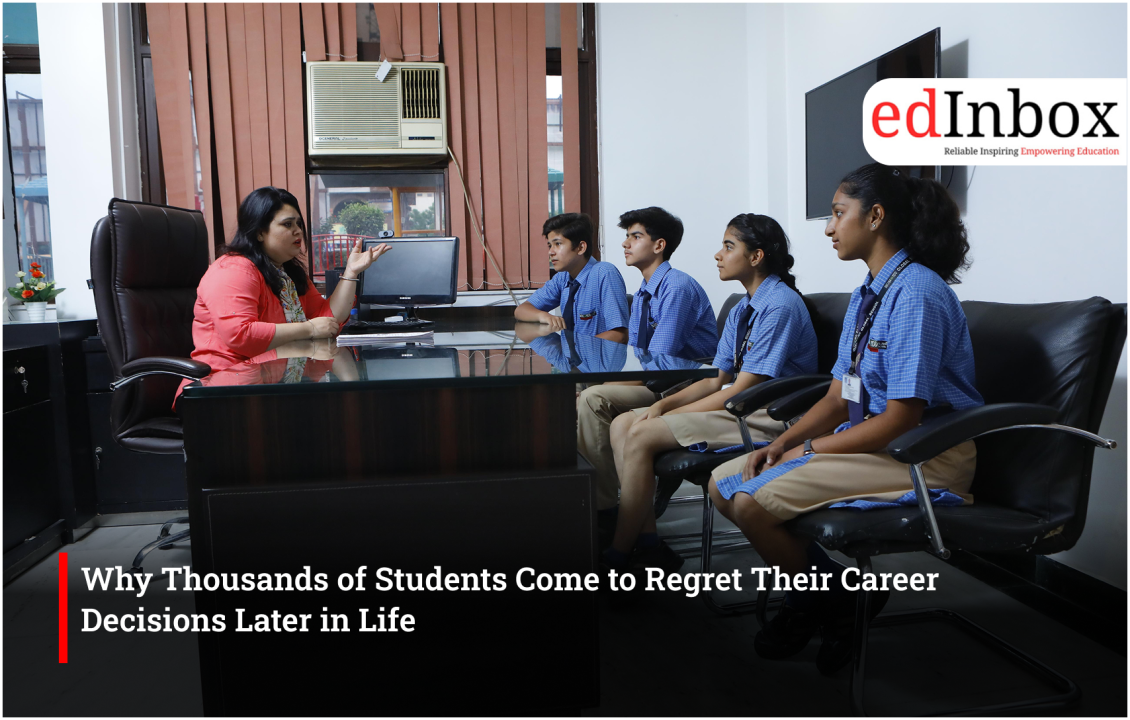
Choosing the right career path involves understanding a student’s personality and interests. It is for this reason why experts think career counselling should begin from as early as class 8 or 9.
“If we begin individualised career guidance from class 8 or 9, then it will become easier for students to make better decisions in class 11,” says Arora. “At this age, the individual is already starting to develop their interests and aptitudes. Students also benefit from psychometric tests, current labour market trends, and unbiased guidance from counsellors who do not have a personal stake in their decision.”
Career guidance in the age of AI
With AI-driven innovations disrupting existing jobs and simultaneously creating newer ones, it is crucial for students to receive unbiased, objective career guidance from experts.
“There are certain entry-level posts that are being completely automated and replaced by AI-driven technologies. At the same time, there are completely new verticals that did not exist five years ago. This is why students need to receive career guidance that balances an understanding of individual aptitude and the changing needs of the labour market,” says Arora. In his view, the phenomenon of career regret on a large scale is indicative of a ‘systems failure’.
“Schools do not give career counselling the attention it requires,” he adds.
Dr Sandeep Pachpande, Chairman, ASM Group of Institutes, argues that social media, familial expectations, and even the lure of ‘popular’ professions can often influence students in making impulsive career decisions. “It is important for students to take a step back and understand their own skill set, strengths, and weaknesses. Career planning should not be a spectator sport where students only follow others,” he adds. “It is important for students to invest in professional counselling and receive unbiased guidance on which areas suit their personality.”
The truth is that the best career is one where an individual’s skills, interests, values, and even personality align in theory and in practice. After all, money and prestige are only important if your skills enable you to earn them and your personality allows you to enjoy the lifestyle it brings. Helping young people prepare for this realisation could be the best way to ensure that they do not regret their career decisions later in life.
Why Thousands of Students Come to Regret Their Career Decisions Later in Life
Typography
- Smaller Small Medium Big Bigger
- Default Helvetica Segoe Georgia Times
- Reading Mode