In the state of Nagaland, the village of Pongo in the Longleng district has started a two-day long “Taro Festival” to make people aware of the climate-resilient vegetable taro, which had protected the place
In the small village of Nagaland’s Longleng district, there has been a massive effort to revive a traditional produce that has protected the inhabitants from famine. The Pongo Village has initiated the celebrations of the Two-Day Taro Festival, which the event organizers believe could become the model for the revival of agriculture by the community.
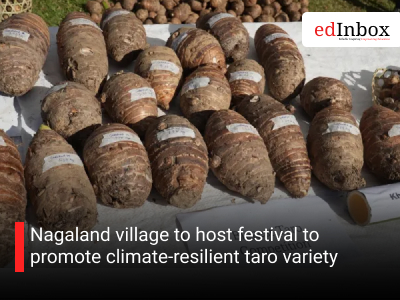
The event was organized on December 5 & 6 in connection with the 26th Hornbill Festival. Farmers, self-help groups, youth groups, and villagers assembled to display more than 10 varieties of taro, including Khedoong, which is known to be one of the popular locally grown varieties, appreciated for its taste, texture, and storage life.
In the opening ceremony of the event, the village head P Khangyong explained the significance of this vegetable to the history of all of them through this statement: “Our ancestors had overcome famine with the help of taro, and this incident has become an important folk lore of our village.” He recalled during his childhood days as quoted by India Today NE that “taro only used to be available to us.”
The event was mostly organized by the youths of the village in collaboration with the Department of Horticulture. It mostly targeted farmers as opposed to the other vendors. Along H. Phom, the convenor of the event stated that most of the funds were channeled to the farmers. "We emphasized the farmers' knowledge right from the beginning. The goal is to help the farmers understand that taro is an economic crop,"
The agriculture stalls featured produce of entrepreneurs and self-help groups. Farmers demonstrated the utilization of every aspect of the plant, right from leafy greens to the corms. Artisans in the villages further revealed the utilizations of different parts of the taro plant in the local black clay pottery.
The local MLA, A Pongshi Phom, who was present as a Chief Guest, motivated the youths to consider opportunities in Agriculture as well as Agri Tourism.
On the second day, technical sessions were held by ICAR regional centers on ways to improve taro production, value addition, and development of new varieties. A talk on the nutritional importance of the plant in countering climate change was also given by Maongsangla, a district agriculture officer. The ultimate plan is to improve market links and ensure scientific support and documentation of indigenous knowledge to revive taro farming in the region.
Nagaland village to host festival to promote climate-resilient taro variety
Typography
- Smaller Small Medium Big Bigger
- Default Helvetica Segoe Georgia Times
- Reading Mode