What we feed the present is what we sow in the future. When we involve young minds to
interpret, analyse and educate, we are setting a strong foundation for the future. The young
minds bring pragmatism, progressiveness and passion into the debates; something that the media today is lacking behind.
When journalistic scholars and schools collaborate, news stops being passive consumption
and becomes civic education. The fragmented, informal exposure students receive through
headlines and feeds can be transformed into a structured understanding. Instead of reacting to
events, students can learn to analyse them — to question sources, interpret data, and
understand institutional processes.
Such partnerships are not optional add-ons. In a digital age saturated with information, they
are necessary safeguards for informed citizenship.
Collaboration between newsrooms and schools must move beyond token workshops. It
requires structured, intentional models.
First, modular lesson kits. Newsrooms can co-create concise, topical modules that integrate
directly into civics or social studies classrooms. These should not be passive explainers, but
interactive frameworks — short briefings, guided discussions, source-tracing exercises, and
verification tasks. Students must learn not just what happened, but how information is
constructed.
Second, sustained classroom partnerships. Journalists can work with a class over a term —
not as guest speakers, but as mentors. Weekly discussions, feedback on student reporting, and
exposure to real editorial constraints can demystify journalism. It teaches accountability,
deadlines, and ethics — not as theory, but as practice.
Third, student bureaus. Schools can host student-run news desks under the guidance of
professional editors. When students report on local issues, they move from consumers to
contributors. Media literacy deepens when responsibility is shared.
Finally, teacher training in media literacy. News organisations must invest in equipping
educators with tools to teach fact-checking, bias recognition, and verification methods. If
Teachers are empowered, the classroom becomes the first newsroom of democratic thinking.
These models are not innovations. They are necessities in an age where information is
abundant, but understanding is fragile.
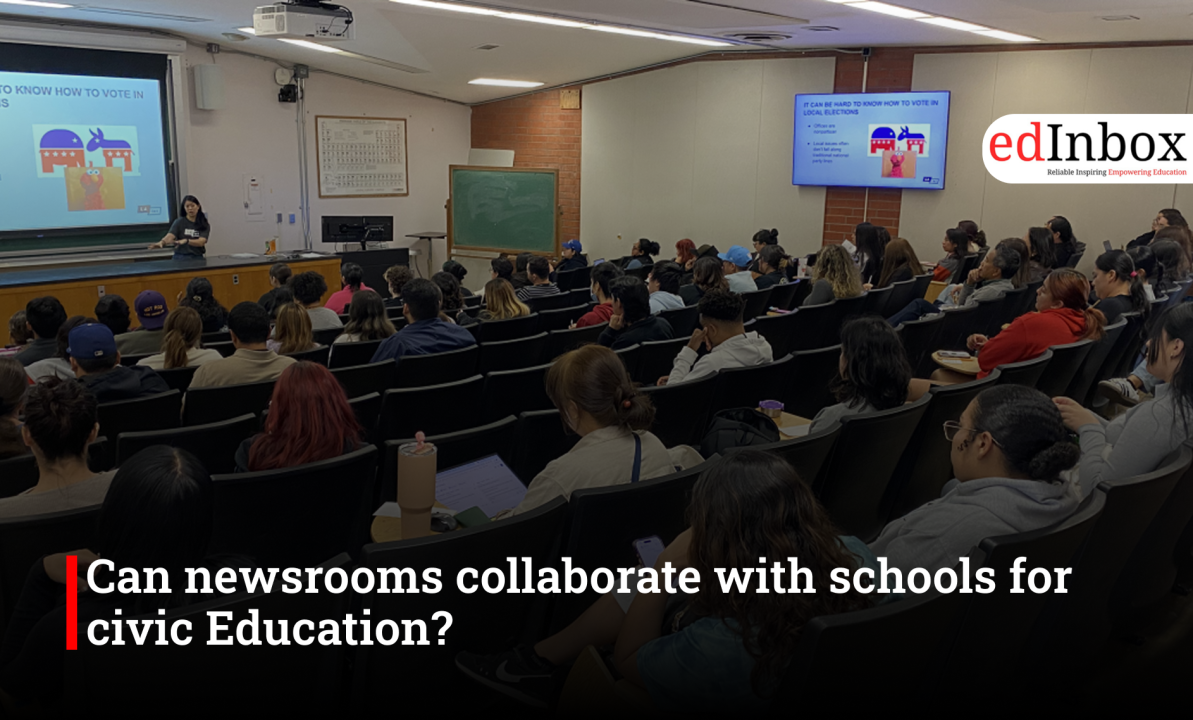
Can newsrooms collaborate with schools for civic Education?
Typography
- Smaller Small Medium Big Bigger
- Default Helvetica Segoe Georgia Times
- Reading Mode