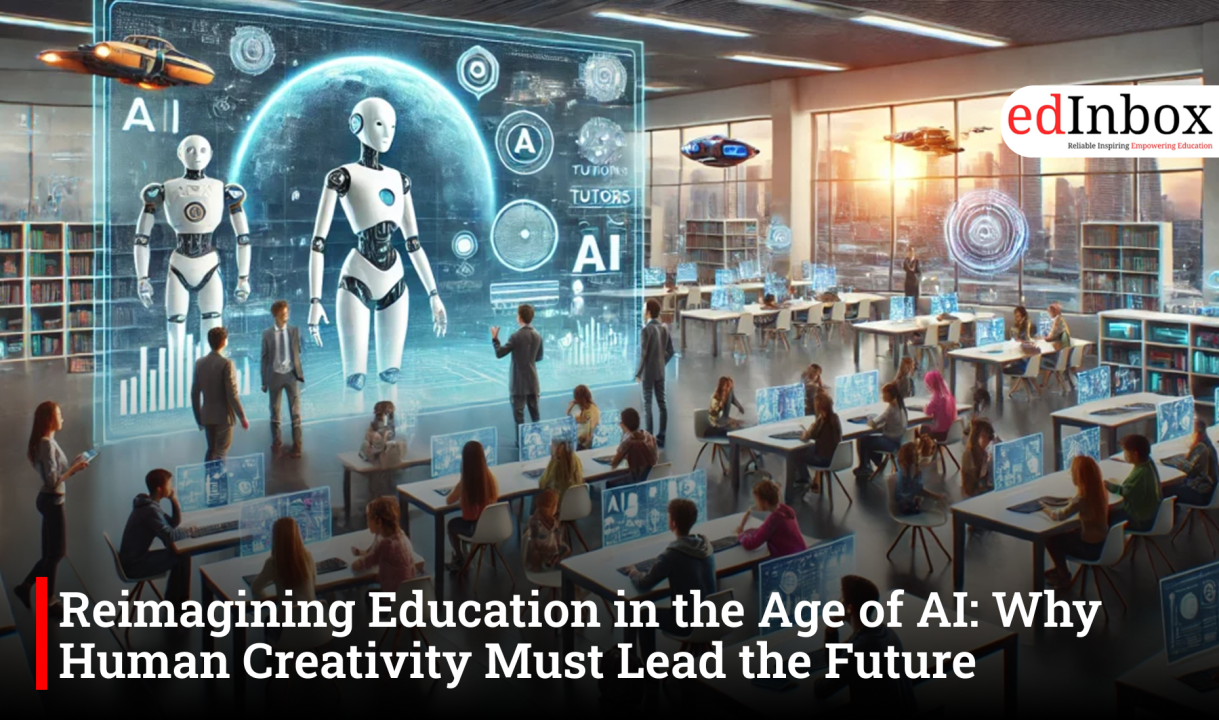
The story of education began with oral traditions in ancient India's gurukul system. Plus, it moved to printed books after the Industrial Revolution. Now, digital learning ecosystems dominate. Artificial Intelligence has caused the most disruptive shift yet. Educators face a key question: can technology support learning without reducing human creativity?
Learning was once experiential and human-centered. In texts like the ramayana and mahabharata, teaching happened through dialogue, practice, and observation. Gurus such as Vasistha and Dronacharya trained students in knowledge, ethics, and real-world decisions. Assessment wasn't graded on paper, it was based on performance and action.
Today's education focuses more on content and technology. Generative AI can write essays, analyze data, even simulate thinking. Students now have powerful tools for efficiency and access. But this creates a paradox: how do we use AI without letting it take over thought? There's no easy answer yet.
The answer isn't about limiting AI, it's about changing how we use it. We must stop measuring what machines do well - like recalling facts, doing math, or churning out standard content, and start focusing on what only humans can bring: creativity, innovation, emotional intelligence, and real-world doing.
Picture classes where students launch actual products on campus, run retail stores, or tackle live business problems. AI helps with data, forecasts, and designs - The real test is how students make choices, talk to people, and react in the moment. The core of evaluation stays human-led.
The thing is, the national Education Policy 2020 wants students to learn by doing, not just memorizing facts. It pushes for important thinking and skills that span subjects - stuff like problem-solving and adaptability. In a world where AI is taking over office jobs, companies want people who can build new things, guide teams, and drive change.
People also need to get better at reading others and handling emotions. Machines can spot trends, but they don't feel what humans feel or sense when a team is low on morale. That kind of awareness? It's what leads to real leadership.
Education has to shift at least in theory. We're not training grads to pack brains with facts anymore. Now, we're shaping future leaders - people who use AI as a helper, not a shortcut. As tech keeps changing fast, the edge won't be in machine power. It'll be in human creativity and action.
Right now, schools should focus on hands-on learning, real-world challenges, and change, and use AI to support human ability instead of stepping into its place.
Reimagining Education in the Age of AI: Why Human Creativity Must Lead the Future
Typography
- Smaller Small Medium Big Bigger
- Default Helvetica Segoe Georgia Times
- Reading Mode