As student debt rises worldwide, a growing number of Muslim students are confronting a dilemma that goes beyond economics—one rooted in faith. At the heart of the issue is riba (interest), prohibited in Islam, which directly conflicts with the structure of most modern student loan systems.
Across countries like the UK, where higher education increasingly depends on borrowing, the tension is becoming more visible. Under newer loan frameworks, students face decades-long repayments with accruing interest—turning what was once an educational decision into a moral one.
A System at Odds With Belief
Islamic teachings consider interest-based transactions unethical, viewing money as a medium of exchange rather than a commodity for profit. This places observant Muslim students in a difficult position: pursue higher education through loans and compromise religious values, or avoid debt and risk limiting career prospects.
The divide is not just personal—it extends to scholars. A study by the British Board of Islamic Scholars found nearly equal disagreement among Islamic authorities on whether student loans can be considered permissible, highlighting the complexity of the issue.
Choosing Between Opportunity and Obligation
For many students, the decision is shaped by circumstance.
Some, like aspiring law students from working-class backgrounds, justify taking loans under the Islamic principle of darurah—necessity—arguing that education is essential for financial stability and family support.
Others take a different path altogether.
A growing number are opting for degree apprenticeships, where tuition is funded and students earn while they learn. These alternatives, often offered in partnership with universities and corporations, allow students to graduate debt-free—sidestepping the ethical burden entirely.
Social Pressure and Silent Trade-offs
Rejecting traditional university routes, however, comes with its own challenges. Students report facing confusion and even criticism from peers and educators unfamiliar with the religious implications of interest.
In some cases, even within Muslim communities, interpretations differ—some viewing student loans as a form of “graduate tax” rather than prohibited interest.
This divergence leaves students navigating not just financial systems, but layers of social and theological interpretation.
Community Support and Emerging Awareness
University-based Islamic finance societies and advisory groups are increasingly stepping in to guide students through these decisions. They provide education on ethical finance, alternative funding routes, and religious perspectives—helping students make informed choices aligned with their beliefs.
At the same time, families are playing a more active role, with some stepping in to financially support education and avoid interest-based borrowing altogether.
Policy Gaps and Global Implications
Governments are beginning to acknowledge the issue. In the UK, policymakers have indicated plans to introduce alternative, faith-compliant student finance models under broader education reforms. However, implementation remains slow, leaving current students to make difficult choices in the meantime.
The challenge is not confined to one country. As higher education systems worldwide rely heavily on interest-based financing, similar dilemmas are emerging in other regions with significant Muslim populations.
The Road Ahead
The debate ultimately reflects a larger question:
Can modern financial systems adapt to accommodate diverse ethical and religious frameworks?Until that question is answered, Muslim students across the globe will continue to walk a tightrope—balancing ambition with belief, and opportunity with conviction.
For many, the pursuit of education is no longer just about securing a future. It is about defining it—on their own terms.
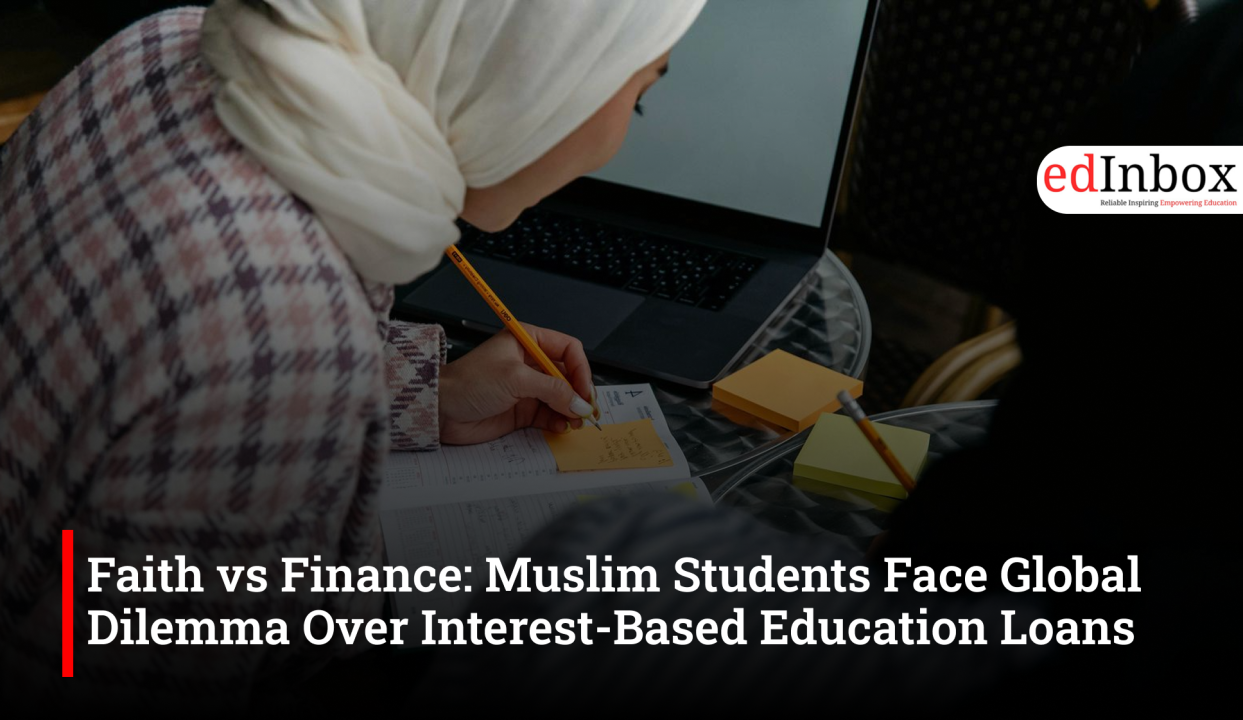
Faith vs Finance: Muslim Students Face Global Dilemma Over Interest-Based Education Loans
Typography
- Smaller Small Medium Big Bigger
- Default Helvetica Segoe Georgia Times
- Reading Mode