A new study led by researchers at University College London has raised concerns that the rapid rise in satellite launches could unintentionally alter Earth’s climate by injecting large amounts of black carbon soot into the upper atmosphere.
Published in the journal Earth's Future, the study warns that emissions from rockets launching satellite megaconstellations are reducing the amount of sunlight reaching Earth’s surface — creating effects that resemble small-scale geoengineering.
Scientists say the phenomenon remains limited for now, but growing launch rates could make the environmental impact increasingly difficult to reverse.
How rocket launches are affecting the atmosphere
The study focuses on black carbon particles released by rockets burning kerosene-based fuel.
Unlike pollution near Earth’s surface, rocket soot is injected directly into the stratosphere and upper atmosphere, where:
- Rain cannot easily wash it out
- Atmospheric circulation is slow
- Particles can persist for years
Researchers found that this high-altitude soot absorbs sunlight and alters how solar radiation moves through the atmosphere.
The result is a slight dimming effect at Earth’s surface.
Scientists compared the process to proposed solar geoengineering techniques that intentionally block sunlight to cool the planet — except in this case, the effect is occurring unintentionally through commercial space activity.
Why black carbon in space launches matters
According to the study, black carbon released at high altitudes is roughly 500–540 times more climate-potent per unit mass than soot emitted at ground level.
That is because:
- Surface pollution is removed relatively quickly by weather systems
- Stratospheric soot remains suspended far longer
- High-altitude particles interact differently with solar radiation
Researchers stress that the current cooling effect remains extremely small compared with overall global warming caused by greenhouse gases.
However, they warn the long-term accumulation could:
- Alter atmospheric circulation
- Affect regional climate patterns
- Interfere with ozone chemistry
- Create difficult-to-predict environmental consequences
Satellite megaconstellations driving launch surge
The increase in rocket emissions is closely tied to the global race to build satellite megaconstellations.
Major projects include:
- SpaceX’s Starlink
- China’s Qianfan
- Amazon’s Project Kuiper
These systems aim to deploy tens of thousands of satellites to provide global internet coverage.
The study notes that annual rocket launches have nearly tripled:
- 114 launches in 2020
- 329 launches in 2025
Much of the increase comes from reusable rockets such as Falcon 9, which commonly use kerosene fuel that generates black carbon soot.
By 2029, researchers estimate rocket launches could emit around 870 tonnes of black carbon annually — comparable to emissions from the United Kingdom’s passenger vehicle fleet.
Scientists compare it to an unregulated geoengineering experiment
Researchers described the situation as a “small-scale unregulated geoengineering experiment” taking place without comprehensive international oversight.
Unlike aviation or industrial emissions, rocket emissions currently face relatively limited environmental regulation globally.
Scientists argue there is still time to act because:
- The total climate impact remains relatively small
- The industry is still expanding
- Cleaner propulsion systems may reduce future risks
But they warn that delays in regulation could allow atmospheric effects to accumulate before the science is fully understood.
What scientists want next
Researchers are calling for:
- Greater monitoring of rocket emissions
- International environmental standards for launches
- More research into upper-atmosphere pollution
- Development of cleaner rocket fuels
They also caution that current projections may underestimate future impacts because launch growth between 2023 and 2025 has already exceeded earlier forecasts.
As governments and private companies compete to dominate satellite internet infrastructure and commercial space operations, the study highlights a growing reality: space activity is no longer environmentally isolated from Earth’s climate system.
The findings add to broader concerns that humanity’s expanding presence in near-Earth space may create unintended planetary consequences long before global regulatory systems are prepared to manage them.
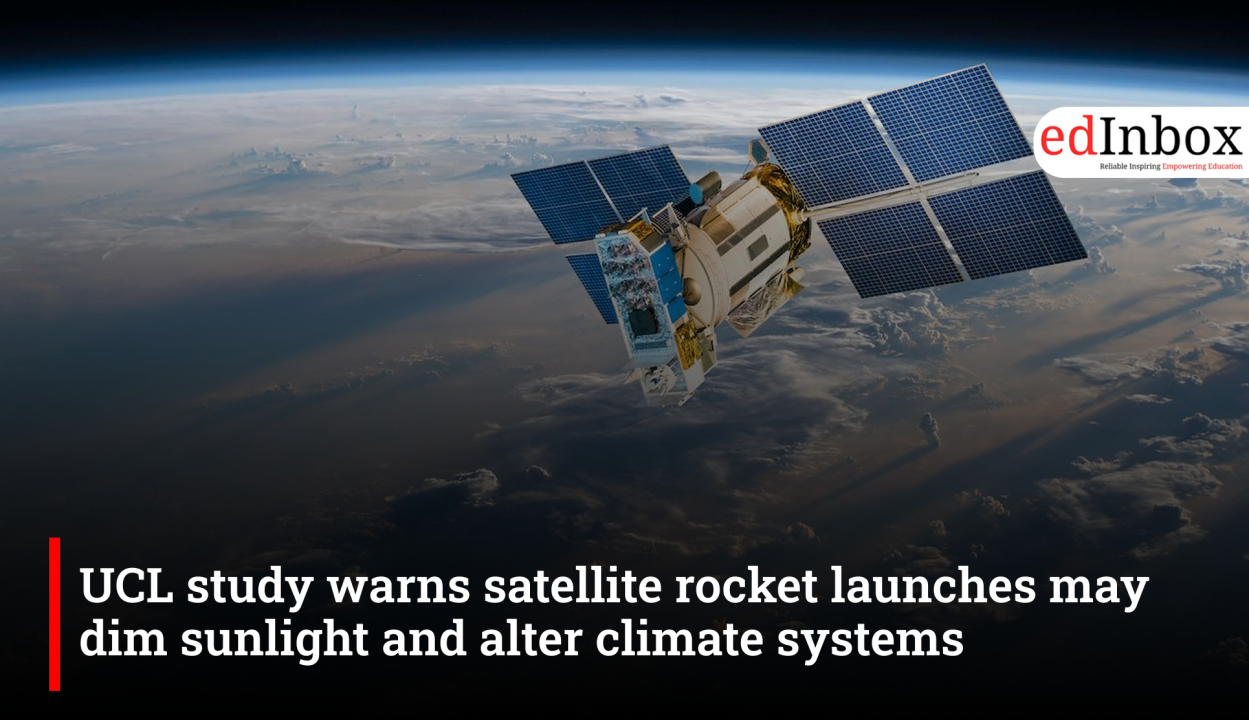
UCL study warns satellite rocket launches may dim sunlight and alter climate systems
Typography
- Smaller Small Medium Big Bigger
- Default Helvetica Segoe Georgia Times
- Reading Mode