
The Maharashtra higher education department has directed colleges and universities across the state to implement fuel-saving measures, encourage car-pooling, and reduce unnecessary travel as part of a wider energy conservation initiative.
In a circular issued on May 13, Director of Higher Education Shailendra Deolankar instructed vice-chancellors and regional joint directors to ensure that higher educational institutions actively adopt practices aimed at reducing fuel consumption and controlling avoidable expenditure.
The department stated that increasing fuel consumption and growing environmental concerns have made it essential for educational institutions to promote sustainable and energy-efficient practices in their day-to-day operations.
As part of the guidelines, universities and colleges have been asked to encourage staff members and students to use shared transportation systems and adopt “car-pooling” in order to reduce the number of private vehicles entering campuses. Institutions have also been advised to minimise avoidable travel and make greater use of online meetings and virtual communication platforms wherever possible.
The circular further instructed campuses to reduce excessive use of electricity-consuming equipment and adopt measures that contribute to overall energy conservation. Authorities have also been told to avoid unnecessary administrative and travel-related expenses.
According to the department, educational institutions have a crucial role to play in promoting environmental responsibility and efficient resource utilisation. The circular emphasized collective participation from students, teaching staff, and non-teaching employees in achieving these sustainability goals.
In addition, colleges and universities have been urged to create awareness among students regarding fuel conservation, responsible energy use, and environmentally conscious behaviour.
Officials said the initiative forms part of a broader push by the state government to encourage sustainable practices in educational institutions while simultaneously reducing operational costs linked to transport and energy consumption.
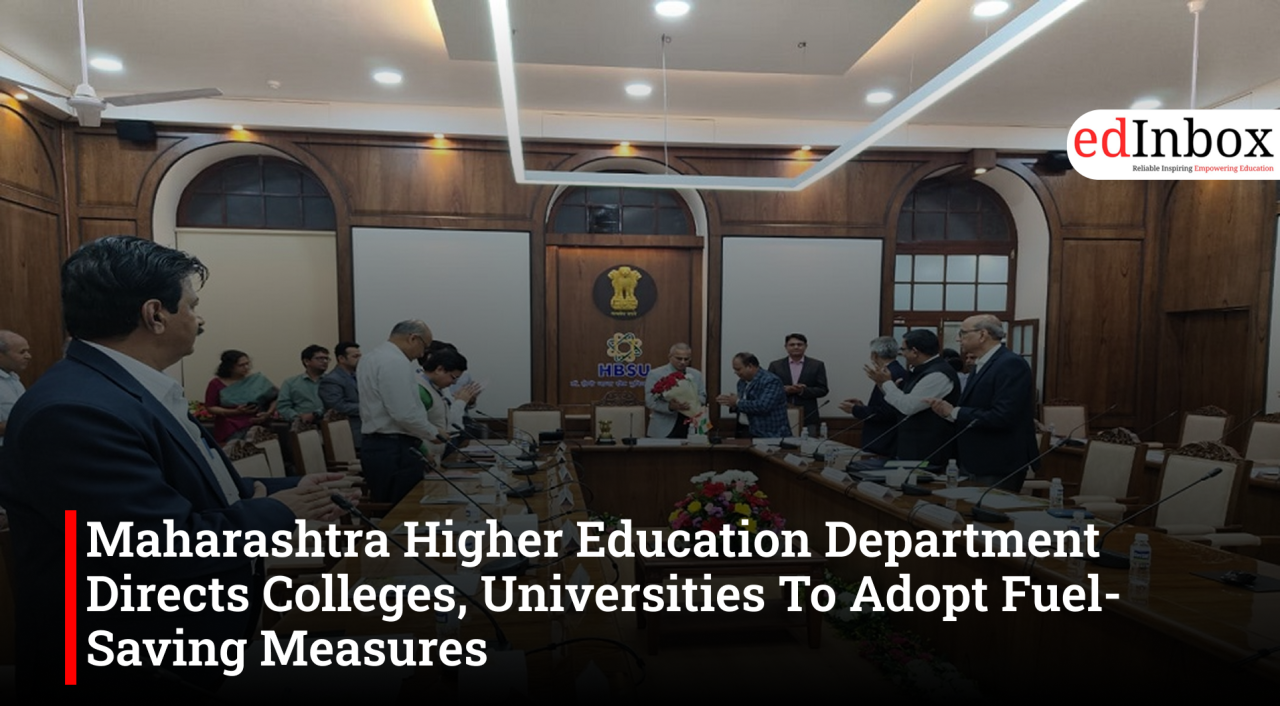
Maharashtra Higher Education Department Directs Colleges, Universities To Adopt Fuel-Saving Measures
Typography
- Smaller Small Medium Big Bigger
- Default Helvetica Segoe Georgia Times
- Reading Mode