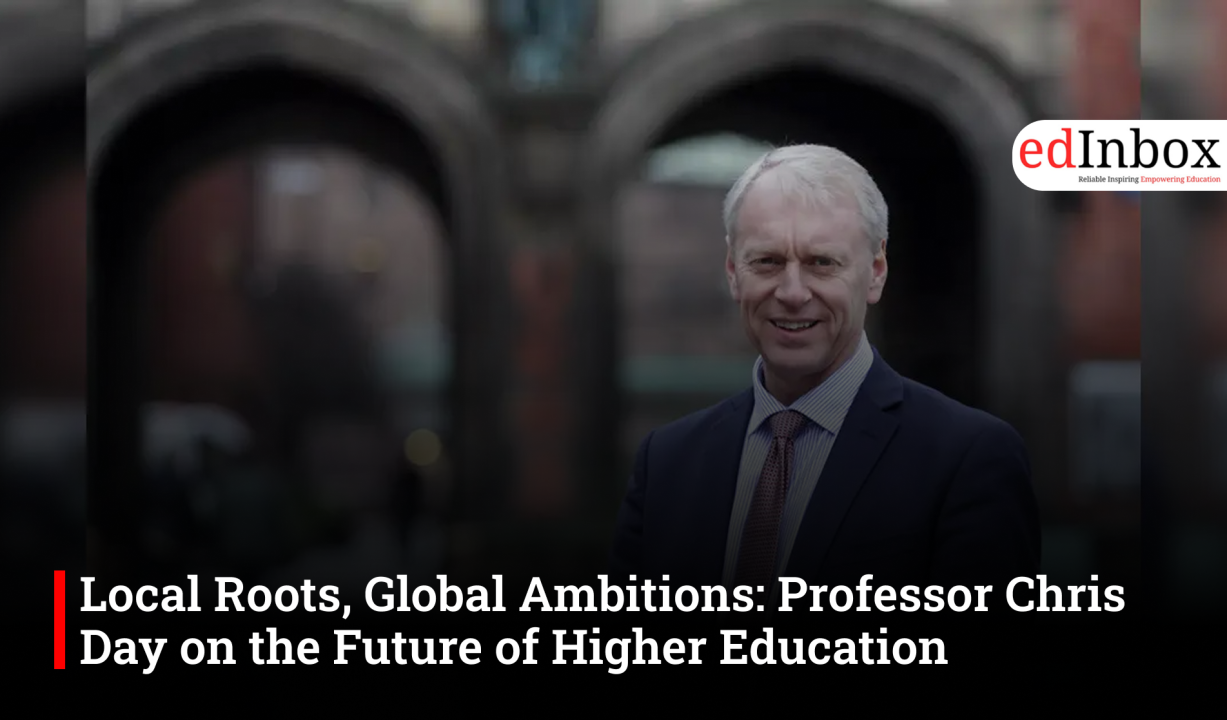
The future of higher education will depend on how effectively universities balance local relevance with global collaboration, according to Chris Day, who believes institutions must evolve into globally connected ecosystems that prepare students for an increasingly complex and interconnected world.
In an interaction with ETEducation, Day highlighted that universities today are no longer just centres of learning but communities where cultures, ideas and innovation converge. He stressed that international education must move beyond academic instruction and focus on creating supportive environments that help students adapt socially, professionally and culturally. For Indian students studying abroad, challenges often include cultural integration, academic adjustment and career readiness, areas where universities must provide stronger mentorship, guidance and industry engagement.
Day also underlined the growing importance of cross-border research collaborations in addressing global challenges such as climate change, health security, clean energy and sustainable development. Universities, he said, are uniquely positioned to connect researchers, policymakers and industry leaders across countries, enabling innovation that aligns with the United Nations Sustainable Development Goals (SDGs).
On diversity and inclusion, Day argued that global universities must actively promote equitable access through scholarships, inclusive curricula and support systems that allow students from different backgrounds to thrive. He noted that international students contribute significantly to academic communities by bringing diverse perspectives and experiences that enrich learning for everyone.
Looking ahead, Day sees artificial intelligence, health sciences and digital transformation as key drivers reshaping higher education. He believes universities must invest in interdisciplinary research, ethical AI development and partnerships that bridge academia and industry. Such collaborations can accelerate innovation in areas ranging from healthcare technologies to sustainable energy systems.
Addressing employability, Day emphasised that future-ready graduates will require more than academic knowledge. Universities must strengthen project-based learning, internships, entrepreneurial training and industry-linked programmes to address emerging skill gaps, particularly in rapidly evolving fields such as data science, renewable energy and advanced technologies.
According to Day, the universities that succeed in the coming decades will be those that remain deeply connected to their local communities while building global partnerships, fostering innovation and preparing students to contribute meaningfully to a rapidly changing world.
Local Roots, Global Ambitions: Professor Chris Day on the Future of Higher Education
Typography
- Smaller Small Medium Big Bigger
- Default Helvetica Segoe Georgia Times
- Reading Mode