
Indian students planning to study abroad are increasingly approaching international education as a strategic investment, placing greater emphasis on career outcomes, employability and visa opportunities than on university prestige alone, according to the latest Emerging Futures 9 report released by IDP Education.
The report highlights a growing trend of students comparing multiple study destinations before making a final decision. Globally, 78% of prospective international students now seriously consider more than one country, up from 66% in 2024. While 36% compare two destinations, another 22% evaluate three or more options, reflecting a more informed and consumer-driven decision-making process.
For Indian students in particular, return on investment (ROI) has become a key factor. The report found that 41% of Indian respondents view career outcomes as the most important measure of value for money, ahead of teaching quality (31%) and industry-relevant skills (27%). This focus reflects increasing concerns about long-term employability and career mobility in a competitive global job market.
Traditional study destinations such as the Australia, United Kingdom, United States and Canada continue to attract the majority of students. However, their appeal is now being assessed through the lens of post-study work opportunities, employment prospects and immigration policies rather than reputation alone.
Rising education costs are also influencing decisions. With the total cost of overseas education often exceeding ₹50–70 lakh, including tuition fees, accommodation and living expenses, many students are beginning financial planning 12 to 18 months before departure. The report notes that 43% of students who abandoned their study-abroad plans cited unaffordable tuition costs as the primary reason.
At the same time, changing visa regulations in major destination countries have elevated visa feasibility into a critical decision-making factor. Policy shifts in countries such as the UK, Canada and Australia are prompting students to evaluate immigration pathways early in the application process.
The report also points to growing interest in emerging destinations such as Singapore, the Netherlands and Nordic countries, particularly among students pursuing high-demand fields like artificial intelligence and data science. Experts say this trend reflects a shift toward skills-based, outcome-focused education choices designed to improve global career prospects in an increasingly technology-driven economy.
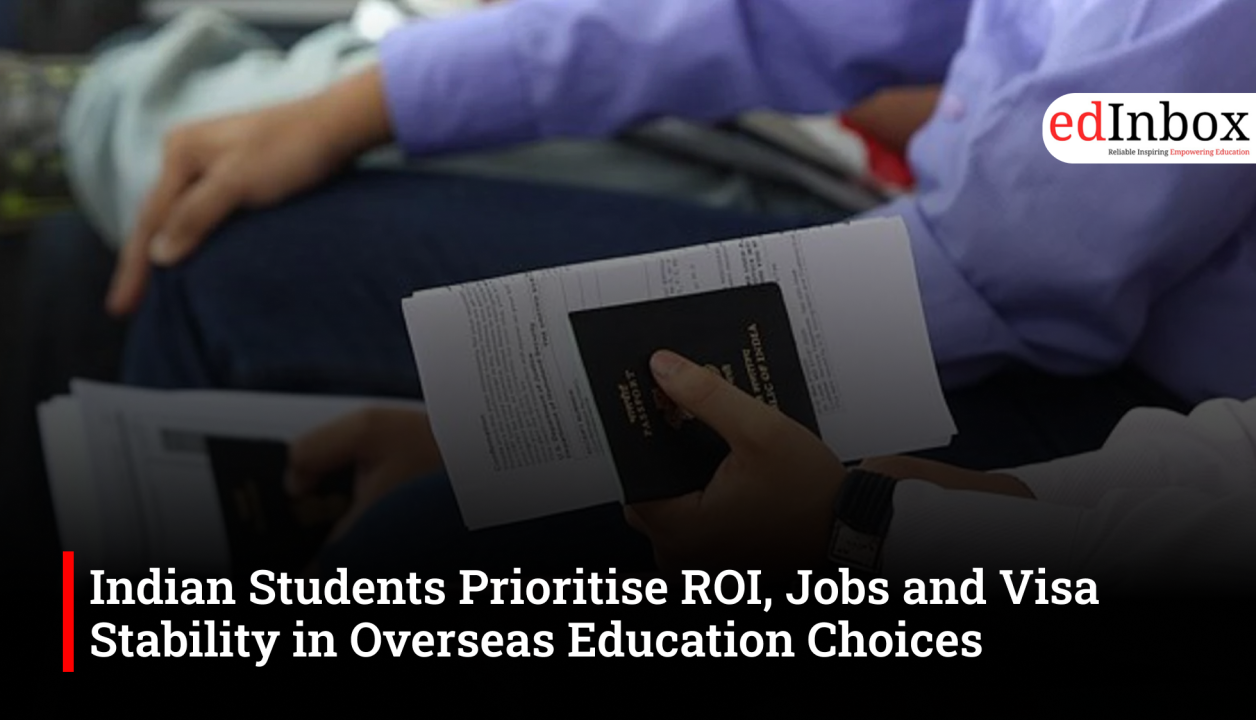
Indian Students Prioritise ROI, Jobs and Visa Stability in Overseas Education Choices
Typography
- Smaller Small Medium Big Bigger
- Default Helvetica Segoe Georgia Times
- Reading Mode