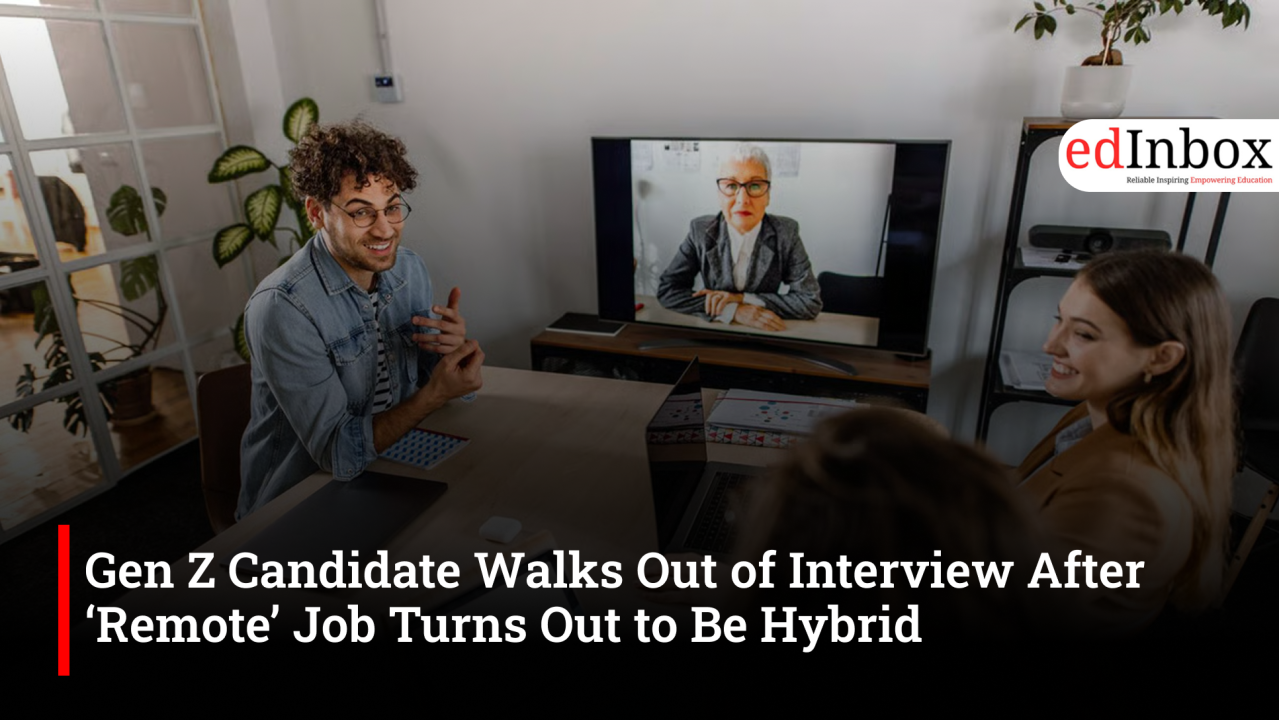
A job interview has sparked a wider debate on workplace transparency after a Gen Z candidate reportedly walked out upon discovering that a position advertised as fully remote actually required employees to work from the office several days a week.
The incident, which gained traction on social media platform X, highlighted growing concerns among young professionals about misleading job advertisements and the importance of honesty in recruitment practices.
According to the widely shared account, the applicant attended the interview expecting a fully remote role. However, during the discussion, recruiters reportedly informed him that the position required employees to be physically present in the office three days a week. When the candidate questioned the discrepancy, interviewers allegedly admitted that the role had been advertised as remote to attract a larger pool of applicants.
Unhappy with the explanation, the candidate reportedly ended the interview and left, criticising the company's approach and indicating that he would share the experience online. The story quickly resonated with social media users, many of whom argued that employers should clearly communicate work arrangements from the outset.
The episode has reignited conversations about the evolving expectations of Generation Z workers, who increasingly prioritise flexibility, transparency and work-life balance when evaluating career opportunities. Having entered the workforce during or shortly after the COVID-19 pandemic, many young professionals view remote and hybrid work options as a fundamental consideration rather than a workplace perk.
Labour market observers note that job flexibility has become one of the most influential factors in employment decisions, alongside salary, career growth and organisational culture. As a result, discrepancies between advertised and actual working conditions can undermine trust and damage employer reputations.
The discussion also reflects broader pressures facing younger workers, including economic uncertainty, rapid technological change and concerns about burnout. Many Gen Z professionals are vocal about setting workplace boundaries and expect employers to provide clear, accurate information about job responsibilities and expectations.
Beyond recruitment practices, the debate highlights how social media is reshaping accountability in the hiring process. Experiences shared online can quickly influence public perception, encouraging organisations to adopt more transparent communication strategies to attract and retain talent in an increasingly competitive job market.
The incident serves as a reminder that, in today's workforce, trust and transparency are becoming as important as compensation in attracting the next generation of employees.
Gen Z Candidate Walks Out of Interview After ‘Remote’ Job Turns Out to Be Hybrid
Typography
- Smaller Small Medium Big Bigger
- Default Helvetica Segoe Georgia Times
- Reading Mode