In an age when students are often seen merely as users of education systems, three teenagers demonstrated how informed and determined individuals can hold institutions accountable. Their actions played a significant role in bringing national attention to concerns surrounding the Central Board of Secondary Education's (CBSE) Class 12 On-Screen Marking (OSM) system, raising important questions about transparency, cybersecurity, and accountability in digital examinations.
The controversy began when Vedant Shrivastava discovered what appeared to be a serious error in the answer-sheet review process. While seeking access to his evaluated answer script, he reportedly received the answer sheet of another student. The incident immediately raised concerns about data privacy and the integrity of the examination review mechanism. Rather than dismissing the issue as an isolated mistake, Vedant pursued the matter and sought answers from authorities.
Meanwhile, Sarthak Sidhant took a different approach. Curious about the technology and processes behind the OSM system, he examined the tendering and procurement details associated with the platform. His efforts focused on understanding how the system had been selected, implemented, and monitored. By studying publicly available information, he highlighted questions regarding governance, oversight, and transparency in the management of large-scale digital examination systems.
The third student, Nisarga Adhikary, turned his attention to cybersecurity. According to reports, he identified potential vulnerabilities within the marking portal and raised concerns about the security of sensitive student and examination data. His findings contributed to a broader debate on whether adequate safeguards were in place to protect information within the digital evaluation framework.
Individually, each student's discovery appeared limited in scope. Collectively, however, their findings painted a larger picture, prompting scrutiny of a system responsible for evaluating thousands of students across the country. Their efforts gained public attention and added momentum to demands for greater transparency and stronger digital safeguards.
The episode highlights the growing role of young citizens in promoting accountability in the digital era. Armed with curiosity, technical knowledge, and persistence, the three students demonstrated that meaningful oversight is no longer limited to experts, institutions, or professional investigators.
As education systems increasingly rely on technology, the questions raised by Vedant Shrivastava, Sarthak Sidhant, and Nisarga Adhikary serve as a reminder that trust in digital platforms depends not only on innovation but also on transparency, security, and public confidence.
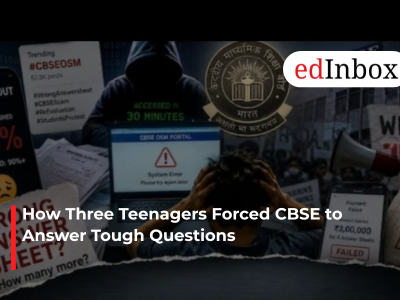
How Three Teenagers Forced CBSE to Answer Tough Questions
Typography
- Smaller Small Medium Big Bigger
- Default Helvetica Segoe Georgia Times
- Reading Mode