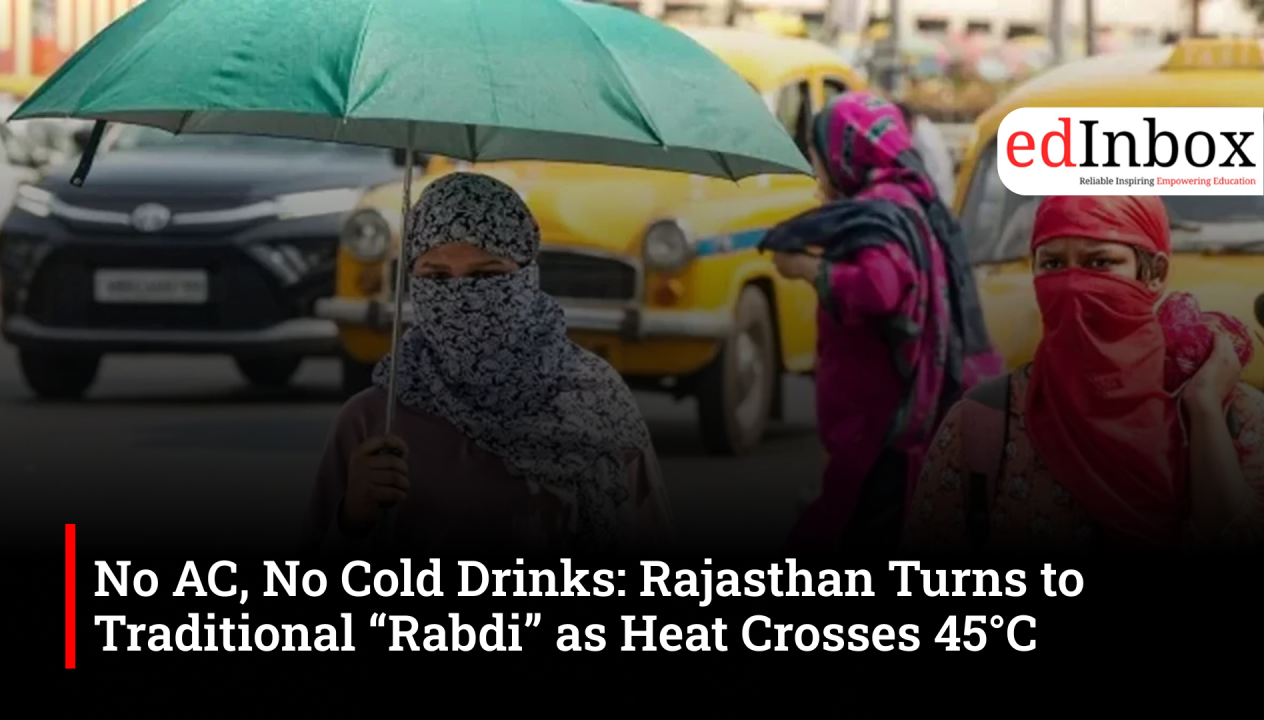
As Rajasthan continues to battle an intense summer heatwave with temperatures crossing 45°C in several districts, residents in desert regions are turning back to a centuries-old traditional dish — a savoury form of Rabdi — to cope with the extreme weather.
In areas such as Barmer, Jaisalmer, and Bikaner, where scorching winds and harsh afternoons have become routine, locals are increasingly relying on this simple, homemade preparation instead of packaged cold drinks and artificial energy beverages.
Unlike the popular North Indian sweet dessert of the same name, Rajasthan’s Rabdi is a savoury dish made using millet or sorghum flour mixed with buttermilk. It is widely consumed in rural households during summer months and is believed to help the body stay naturally cool, hydrated, and energetic in extreme temperatures.
Prepared using basic ingredients such as millet flour, buttermilk, water, and salt, the dish is cooked slowly until it reaches a smooth, porridge-like consistency. Some households add cumin seeds or green chilli for flavour. It is typically served slightly cooled and eaten during midday meals when heat conditions are most severe.
Residents in desert regions say Rabdi is more than just food — it is a traditional cooling remedy passed down through generations. Many families continue to prefer it over modern beverages, especially during peak summer months when temperatures become difficult to endure.
In several villages, elderly residents describe it as a “desi superfood” due to its nutritional value and easy digestibility. It is commonly believed to help maintain hydration levels and reduce fatigue caused by prolonged exposure to heat.
Beyond its nutritional benefits, Rabdi also holds cultural significance in Rajasthan’s rural communities. In some areas, Jyeshtha Sudi Chaturthi is celebrated informally as “Rabri Day,” when families prepare and share the dish collectively.
Despite rapid urbanisation and changing food habits, the dish remains a staple in desert kitchens, particularly during extreme heatwaves.
As Rajasthan faces increasingly severe summers, the renewed popularity of traditional foods like Rabdi highlights how age-old dietary practices continue to offer practical solutions for surviving harsh climatic conditions, long before modern cooling systems became common.
No AC, No Cold Drinks: Rajasthan Turns to Traditional “Rabdi” as Heat Crosses 45°C
Typography
- Smaller Small Medium Big Bigger
- Default Helvetica Segoe Georgia Times
- Reading Mode