Global study highlights the importance of soil biodiversity, climate resilience and environmental science education
In a breakthrough for environmental science and climate research, an international team of scientists has created the first comprehensive global map of underground fungal networks, revealing a vast biological system stretching an estimated 110 quadrillion kilometres beneath Earth's surface.
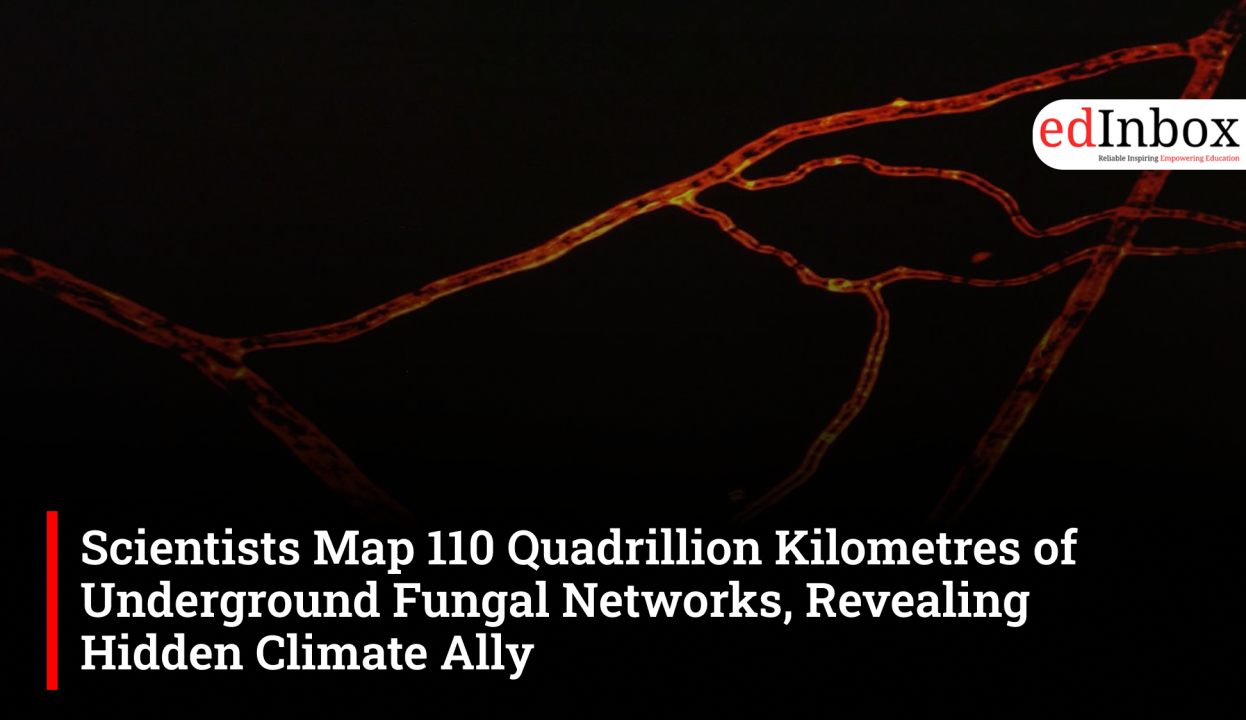
The study, led by the Society for the Protection of Underground Networks (SPUN), analysed more than 16,000 soil samples using advanced machine learning models to map the distribution of arbuscular mycorrhizal fungi, microscopic organisms that form vital partnerships with plant roots.
Researchers found that the underground fungal threads collectively weigh around 300 megatons, making them four to six times heavier than the total mass of all humans on Earth. The densest fungal networks were identified in ecosystems such as wetlands, grasslands and floodplains, including hotspots in the Everglades, the Sudd Wetlands and the Tibetan Plateau.
Why the Discovery Matters
Scientists say the findings have significant implications for climate science, biodiversity conservation and environmental education. Arbuscular mycorrhizal fungi form symbiotic relationships with nearly 70% of the world's land plants, extending root systems and helping plants absorb essential nutrients such as phosphorus.
The networks also play a major role in carbon storage. According to researchers, these fungi transfer approximately 4 billion tonnes of carbon dioxide equivalent into soils annually, helping remove greenhouse gases from the atmosphere and supporting global climate regulation.
Often referred to as the underground "wood wide web," these fungal systems connect plants, enabling nutrient exchange and strengthening ecosystem resilience.
Warning for Agriculture and Conservation
The study also found that agricultural land contains nearly 50% fewer fungal networks than natural ecosystems due to intensive farming practices, including excessive tilling and fertiliser use.
Researchers warn that wild grasslands, which contain around 40% of global fungal biomass, are disappearing rapidly as land is converted for agriculture. More than 90% of identified fungal biodiversity hotspots currently fall outside protected areas, raising concerns about long-term ecosystem health.
Experts say the newly developed Mycorrhizal Infrastructure Map will serve as an important educational and research resource, helping students, scientists, and policymakers better understand the role of soil biodiversity in climate resilience and sustainable land management.
Scientists Map 110 Quadrillion Kilometres of Underground Fungal Networks, Revealing Hidden Climate Ally
Typography
- Smaller Small Medium Big Bigger
- Default Helvetica Segoe Georgia Times
- Reading Mode