India's engineering education landscape is undergoing a significant correction. The All India Council for Technical Education (AICTE) has approved the progressive closure of 58 engineering and technical colleges during the 2025–26 academic year, signalling a shift from expanding capacity to improving quality.
The highest number of closures has been reported in Uttar Pradesh and Maharashtra, with 12 institutions each, reflecting the growing challenges faced by many engineering colleges in sustaining admissions and meeting regulatory standards.
What does 'progressive closure' mean?
Contrary to concerns, these institutions are not shutting overnight.
Under AICTE's progressive closure policy:
- No fresh admissions will be permitted.
- Existing students will continue their education until graduation.
- Institutions will cease operations only after all enrolled batches complete their programmes.
The phased approach is designed to protect students while allowing colleges to wind down in an orderly manner.
Why are engineering colleges shutting down?
AICTE attributes the closures to multiple long-standing issues:
- Persistent decline in student admissions.
- Shortage of qualified faculty.
- Failure to meet infrastructure and academic norms.
- Poor compliance with regulatory standards.
- Difficulty maintaining institutional quality.
Alongside institutional closures, more than 950 engineering and technical programmes have also been discontinued due to consistently low demand.
A changing engineering education ecosystem
The closures reflect a broader transformation in student preferences.
Today's engineering aspirants increasingly prioritise institutions that offer:
- Strong placement records.
- Industry-oriented curriculum.
- Programmes in Artificial Intelligence, Data Science, Cybersecurity, Robotics and Semiconductor Engineering.
- Better research infrastructure.
- Industry collaborations and innovation ecosystems.
As a result, colleges relying on traditional programmes without upgrading infrastructure or academic quality have struggled to attract students.
Impact on students
AICTE has assured that students already enrolled in colleges under progressive closure will face no academic disruption.
The regulator has directed institutions to:
- Continue teaching current batches.
- Ensure uninterrupted academic activities.
- Protect students' degrees and academic interests throughout the transition.
Why this matters
The closures represent more than administrative action—they reflect a structural correction within India's technical education sector.
For years, India witnessed rapid expansion in engineering colleges, creating abundant seats but often without corresponding improvements in quality, faculty or employability. Many institutions struggled with vacant classrooms as student demand shifted towards reputed universities and emerging technology disciplines.
Rather than measuring success by the number of colleges, regulators are now focusing on educational outcomes.
What engineering aspirants should learn
The latest developments underline an important message for students:
Choosing an engineering college should go beyond admission availability. Before enrolling, aspirants should evaluate:
- AICTE approval and accreditation status.
- Placement performance.
- Faculty qualifications.
- Industry partnerships.
- Curriculum aligned with emerging technologies.
- Research and innovation opportunities.
The engineering sector increasingly rewards specialised skills rather than simply possessing a degree.
The road ahead
India's engineering education system appears to be entering a phase of consolidation. While the number of institutions may shrink, the emphasis is shifting towards creating colleges capable of producing industry-ready graduates equipped for technologies shaping the future.
If accompanied by curriculum modernisation, stronger industry collaboration and investment in faculty development, AICTE's quality-focused approach could help bridge the long-standing gap between engineering education and employability.
Ultimately, fewer but stronger institutions may serve students—and India's innovation ambitions—better than an ever-expanding network of underperforming colleges.
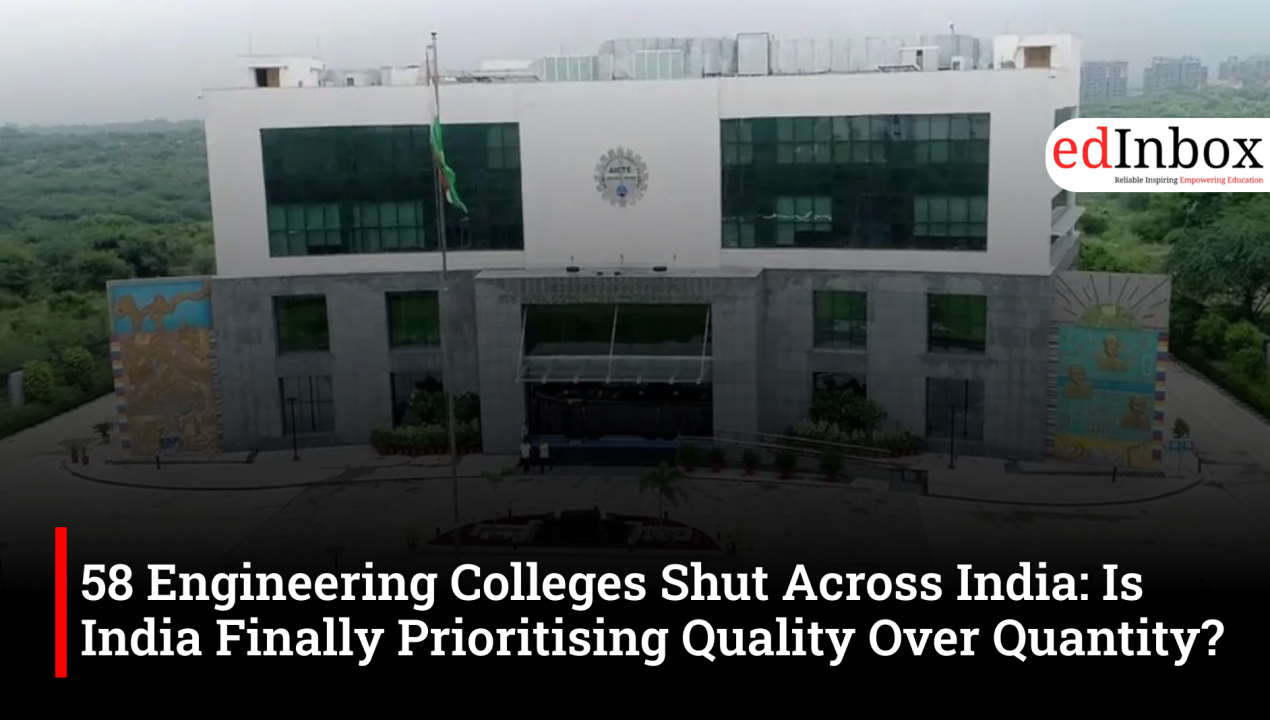
58 Engineering Colleges Shut Across India: Is India Finally Prioritising Quality Over Quantity?
Typography
- Smaller Small Medium Big Bigger
- Default Helvetica Segoe Georgia Times
- Reading Mode