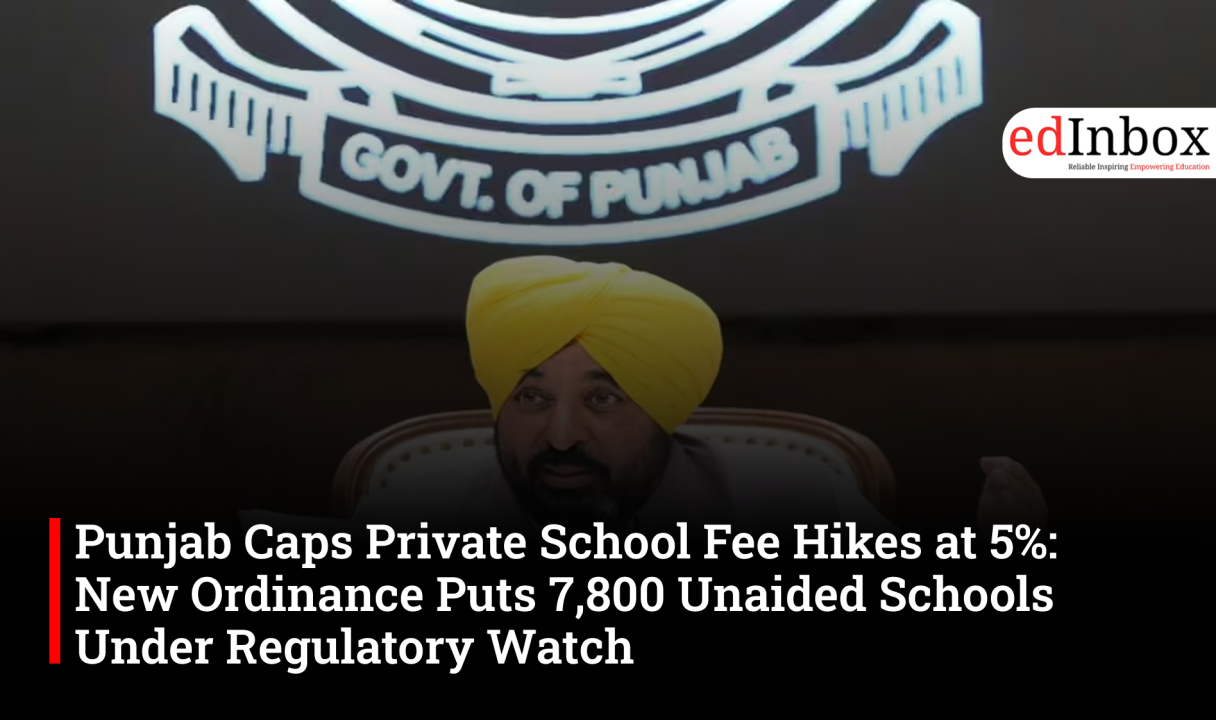
In a major move aimed at controlling rising private school expenses, the Punjab government has introduced a new regulation limiting annual fee increases in unaided educational institutions to 5 per cent.
Punjab Governor Gulab Chand Kataria has given assent to the Punjab Regulation of Fees of Unaided Educational Institutions (Amendment) Ordinance, 2026, allowing authorities to regulate fee hikes, including charges related to tuition, transportation and building facilities.
The move is expected to impact nearly 7,800 private unaided schools across the state, serving around 32 lakh students.
Punjab Private Schools to Face Fee Audit
Under the new ordinance, private schools will have to submit detailed fee-related information through a dedicated government portal within the next 10 days.
District-level regulatory committees headed by deputy commissioners will examine the submitted data and review fee increases implemented over the past four years.
The committees will complete the audit process within 90 days and determine whether schools have exceeded the permitted fee limits.
Schools May Have to Refund Excess Fees
Punjab Chief Minister Bhagwant Mann said the government would take strict action against institutions that violate the new fee rules.
He said schools that increased fees beyond the permitted limit would have to return the excess amount collected from parents.
“If any school has increased the fee by over 15 per cent in the past three years, the excess amount will have to be refunded to the parents,” Mann said.
The government has also announced penalties for repeated violations:
First violation: Fine of ₹50,000
Second violation: Fine of ₹1 lakh
Third violation: Possible de-recognition or withdrawal of affiliation
Government Says Ordinance Will Prevent Commercialisation of Education
The Punjab government said the regulation aims to prevent education from becoming a commercial activity and ensure that quality schooling remains affordable for families.
Mann said parents should not face arbitrary fee increases and that private educational institutions must maintain transparency in their financial practices.
He added that the ordinance would provide stronger protection to students and parents while creating a clear regulatory framework for private schools.
What Counts as School Fee Under the New Rules?
The ordinance states that any amount collected from parents — regardless of the name or category under which it is charged — will be treated as part of the school fee.
This means schools may not avoid regulation by collecting money through separate charges or different accounts.
Supreme Court Guidelines Cited by Punjab Government
The state government referred to Supreme Court observations regarding private educational institutions, stating that schools cannot operate as profit-making entities in the name of providing education.
Officials said the new framework is designed to improve accountability and ensure that fee collection remains transparent.
Private Schools Express Concern Over Regulation
The ordinance has triggered debate among education stakeholders, with private school managements likely to raise concerns about operational costs, inflation, infrastructure expenses and maintaining educational standards.
School associations have often argued that fee structures need flexibility to cover rising costs, including teacher salaries, technology upgrades and campus maintenance.
A Major Shift in India’s Private School Fee Regulation
Punjab’s decision marks one of the strongest attempts by a state government to directly regulate private school fee increases.
With millions of students enrolled in private unaided schools, the issue of affordable education has become a key concern for parents across India.
The success of the policy will depend on how effectively fee audits are conducted, how transparently schools submit financial data and whether the regulation can balance parental affordability with the need for schools to maintain quality education.
For families, the ordinance could bring greater predictability in school expenses, while for private institutions, it introduces a stricter accountability framework.
Punjab Caps Private School Fee Hikes at 5%: New Ordinance Puts 7,800 Unaided Schools Under Regulatory Watch
Typography
- Smaller Small Medium Big Bigger
- Default Helvetica Segoe Georgia Times
- Reading Mode