
The Karnataka Department of School Education and Literacy is considering the introduction of state-level assessment examinations for students of Classes 5, 7, 8 and 9 to evaluate learning outcomes and improve academic performance across schools.
The proposal comes nearly two years after the state government faced a legal setback in the Supreme Court over its attempt to conduct board examinations for students in lower classes. To address the concerns raised in the earlier case, the department is now exploring a revised framework under which the tests would be conducted as assessment examinations rather than board examinations.
According to officials, the primary objective of the proposed assessments is to measure students' learning levels and identify academic gaps without declaring students as failed. The initiative is aimed at strengthening the quality of school education by providing educators with a clearer understanding of students' strengths and areas requiring additional support.
The move follows growing concerns over declining learning outcomes among school students. Several educational studies have indicated that many students in higher classes continue to struggle with basic concepts taught in earlier grades, prompting the Education Department to explore systematic evaluation methods to monitor academic progress.
Under the proposed model, the Karnataka School Examination and Assessment Board would prepare standardised question papers and distribute them to schools across the state. The answer scripts are expected to be evaluated at the taluk level, ensuring uniform assessment while providing district-wise insights into student performance.
Education officials believe the assessment system will help schools identify students who require remedial support, monitor subject-wise learning deficiencies and implement targeted interventions to improve educational outcomes. The examinations are also expected to provide valuable data for policymakers to strengthen teaching practices and curriculum implementation.
The proposal follows the Karnataka government's unsuccessful attempt in 2024 to introduce board examinations for Classes 5, 8, 9 and 11. That decision was challenged by private schools and parents, who raised concerns over increased academic pressure on young students.
The matter eventually reached the Supreme Court, which rejected the state's plan to conduct board examinations for the specified classes. The ruling prompted the government to reconsider its approach to student evaluation while ensuring compliance with legal requirements.
Learning from the earlier experience, the Education Department is now examining how the proposed assessment examinations can be introduced under a legally sustainable framework. Discussions are reportedly focused on ensuring that the tests serve as diagnostic tools to improve learning rather than high-stakes examinations that determine promotion or academic progression.
If implemented, the new assessment system could become an important component of Karnataka's efforts to enhance learning outcomes, strengthen classroom teaching and provide students with timely academic support while remaining consistent with judicial guidelines and education policy objectives.
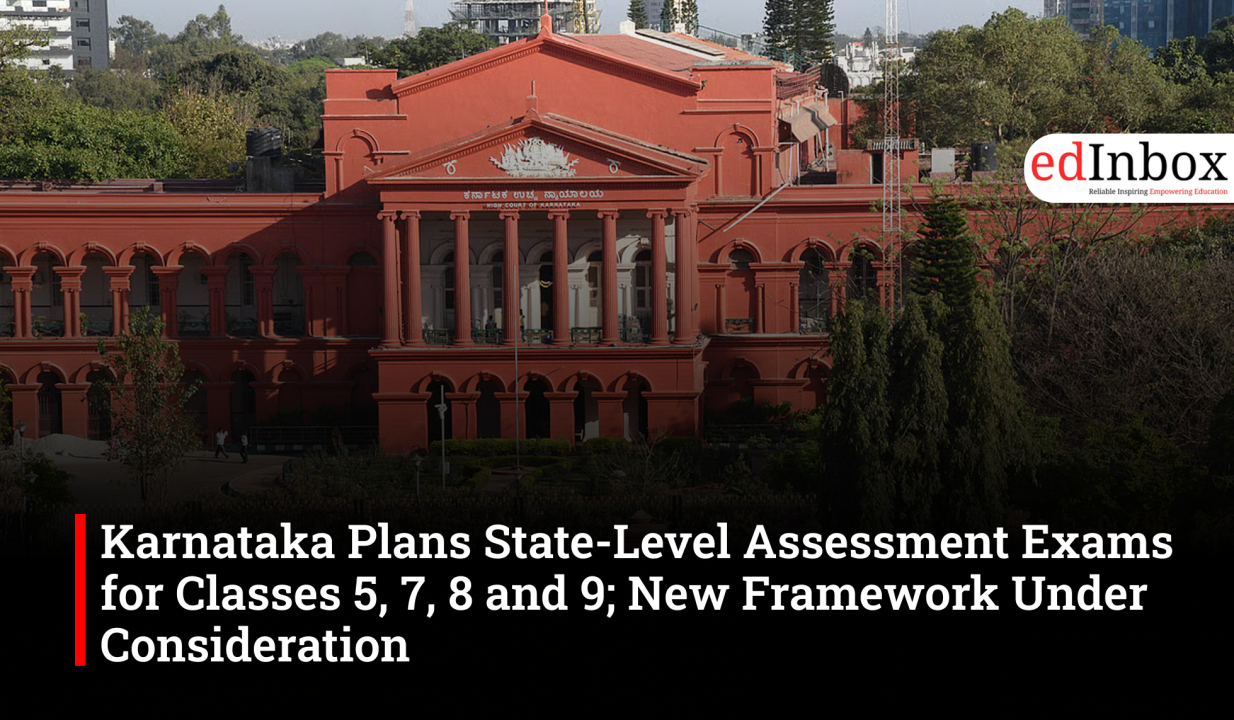
Karnataka Plans State-Level Assessment Exams for Classes 5, 7, 8 and 9; New Framework Under Consideration
Typography
- Smaller Small Medium Big Bigger
- Default Helvetica Segoe Georgia Times
- Reading Mode