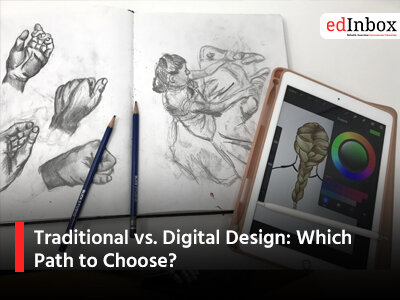
Visual communication is the queen of 2025 and the years to come. From the social media posts, we scroll to the websites to use; everything is about graphic design 

Graphic design is a rising career path that shows no signs of disappearing in the future. The growing demand for digital media has sustained high demand for designers who possess graphic design skills. The design field will experience rapid growth during the next few years, which provides an outstanding opportunity for people who are blessed with creativity.

Graphic designers will evolve as technology advances in order to establish the visual identities that brands and organizations need. Designers in the field have limitless possibilities to create beautiful visual post content as well as develop fresh product packaging solutions.

If art and design together with communication excite you, then graphic design offers the ideal profession because it matches both your creativity and challenges within the field.

Graphic Design: A Dynamic Field

Graphic design exists as a dynamic profession that requires imaginative thinkers who also demonstrate innovation capabilities as well as learning readiness. Graphic designers must stay ahead in their industry since platform technologies emerge on a daily basis.

Controlled by time, the graphic design world sees maximalism at one end and minimalism at the other. Design software that is driven by AI provides the greatest possible means of creative expression.

The Impact of AI on Graphic Designing 

AI will revolutionize this field because it surpasses every conceivable expectation. The future of AI in graphic design stands as a transformative force which enables graphic designers to generate new design concepts while undertaking automated repetitive tasks that were previously impossible to achieve.

But what about the future of graphic design? Will AI replace graphic designers, or will it act like a tool for them? The solution exists between full automation and human involvement. 

The Future of Graphic Design

The upcoming years for graphic design will reveal in what direction the discipline will move. As per experts, it will definitely move towards becoming more popular. Following are the trends and critical developments that have a high impact on the field of graphic design:

  1. Through artificial intelligence integration, design professionals will gain capability to make personalized and efficient design solutions that deliver effective results.
  2. The graphic design sector will notice progressively more critical role of environmentally friendly design methods since ecological concerns garner increasingly more public interest.
  3. Immersion and interactivity are made possible by the integration of augmented reality (AR) and virtual reality (VR) technologies that help graphic designers in designing new experiences.
  4. Team members should possess emotional intelligence together with empathy since graphic designers need to grasp their designs' psychological effects on viewers.

Why Designing is the Best Career Option in 2025?

In the constantly shifting job market, there is one career that emerges as the best because of its creativity, innovation, and thrill: designing. Students who recently completed their 10+2 and are not sure whether their creativity will be respected and valued in this world, Bachelor of Graphic Design, Bachelor of Communication Design, and Bachelor of Visual Communication Design, can be some courses to choose from. 

Additionally, there is scope beyond a bachelor’s degree. People across the world are opting for PG degree in Graphic design, diploma, and many other designing courses just to have a job security and earn while using their creativity to the fullest. Thus, having a degree in this is the best decision for creative students who are confused about their career. 

Earning a Bachelor's in Graphic Design or a Master’s Degree in Graphic Design will pave the way to creative and professional opportunities. Here are the reasons why designing must be at the top of your career wish list:

  • Freedom to be creative: As a designer, you'll be free to express yourself, turn your ideas into reality, and have a tangible influence on the world.
  • Job Security: As digital media increases, more talented designers than ever before are needed. There are going to be numerous jobs for you all over the spectrum, from high-tech and advertising to fashion and entertainment.
  • Variety and Challenge: Design is an ever-changing profession, with new trends, technologies, and challenges unfolding daily. You will never get bored, and you will always learn and develop.
  • Collaboration and Community: You'll collaborate with a variety of individuals, from clients and colleagues to developers and stakeholders. You'll be a member of a dynamic, innovative community that's constantly striving to do better.
  • Competitive Salary: Designers are highly sought after, and therefore they can negotiate competitive salaries and benefits. You will be compensated for your creativity, skills, and dedication.

Career Opportunities

  1. Graphic Designer
  2. UI/UX Designer
  3. Visual Designer
  4. Branding Specialist
  5. Design Consultant
  6. Art Director
  7. Creative Director
  8. Digital Illustrator
  9. Motion Graphics Designer
  10.  Web Designer
  11. AR/VR Designer
  12. UX Researcher
  13. Design Writer
  14. Design Educator
  15. Freelance Graphic Designer

Skills and Knowledge Required

  1. Design Software Proficiency: learn industry-standard design software such as Adobe Creative Cloud.
  2. Design Principle Understanding: Study color theory, typography, composition, and visual storytelling.
  3. Creativity and Problem-Solving Skills: Acquire skills in ideation, concept development, and design execution.
  4. Communication and Collaboration: Become proficient in working effectively with clients, colleagues, and stakeholders.

Pay scale

  • Freshers: ₹25,000 to ₹40,000 monthly.
  • Experienced: ₹50,000 to ₹80,000 monthly.
  • Senior-level positions: 8LPA to 13LPA

Where To Get Started? 

All the students who wish to have a career in graphic design and wish to pursue bachelor’s degree in the same need to appear for an all-India design entrance exam. AIDAT 2025 is your opportunity to enhance your creativity, analytical mind, and design skills and secure your spot in your desired university. By appearing for AIDAT 2025, you won't only be competing against the top design talent in India, but you'll also be creating opportunities for:

  • Best design schools in India
  • Great variety of specializations in design
  • A community of similarly-minded creatives and industry specialists
  • A platform for a prosperous and rewarding design career

Conclusion

A career in graphic design is all about a special blend of creativity, challenges, and opportunities. As an undergraduate or postgraduate student, designing can give you a rewarding and satisfying career where you can express yourself using your gift of creativity, and realize your ambitions. So, appearing for AIDAT 2025 will be a smart way to secure your spot in the top design schools and ensure a bright future ahead. (The registrations are open; you may check the official AIDAT portal from this link: https://aidatexam.com/

In a world where technology tends to be the star of the show, the idea of human-centric design is a valuable reminder of the basic purpose of design: to serve those who occupy the space. Human-centric design is a method that puts people at the center of the design process. It's more than functionality to include the emotional, psychological, and social elements of how people engage with their surroundings. This philosophy accepts that the buildings we work and live in, and the tools we employ, deeply influence our well-being, productivity, and quality of life.

THE EMOTIONAL LAYER OF DESIGN

The query that human-centered design poses is: How do you feel in a space? Considerations such as natural light, openness, and biophilia directly influence mood, productivity, and mental well-being. For example, at one of our projects, the Gulshan Experience Centre, we have incorporated biophilic elements water features, and designed natural light, and tactile materials to achieve an immersive, stress-reducing atmosphere. This is not only about aesthetics; it is about designing a sensory experience that leads to a better quality of life. Such an emotional connection turns spaces into homes, offices into productive spaces, and public spaces into livable community hubs.

It's worth noting that design influences behavior. Spaces with good design can foster positive interaction, enhance well-being, and even teach people about new opportunities. In County 107, one of our residential developments, the combination of large balconies and green roof terraces provides residents with nature access while also maintaining privacy-distinguishing the built and natural worlds. Clever spatial design is all about making organic interactions happen without placing a strict form on it.

THE MATERIALITY OF COMFORT

Material choice is central to human-focused spaces. Touchable surfaces, sound issues, and green materials are no longer add-ons but are now part of the process to develop environments that promote the desired spatial characteristics and interaction. Low-VOC paint, breathable materials and sound panels assist in healthier, more enjoyable interiors, alleviating cognitive strain and improving general well-being.

Nonetheless, doing human-centric design isn't free from challenges. Oftentimes, particularly in the public or business sector, profit tends to come before people. For instance, the back-of-house space of most hotels and business properties tend to get forgotten, influencing staff well-being and consequently business as a whole. Genuine human-centric design takes all users, both in view and out of view, into account.

Urban design is another key challenge and opportunity for human-centered design. As cities expand and develop, designers have to balance personal requirements with shared experiences. This includes the consideration of aspects such as traffic movement, last-mile connectivity and designing convivial public spaces that accommodate various activities and time periods.

AI AND ADAPTIVE SPACES

Human-centered design has to be adaptive in the face of changing societal needs at a fast pace. The COVID-19 pandemic, for example, dramatically shifted our relationship with spaces, highlighting the need for designs that can evolve with changing circumstances. This adaptability extends to considering future needs, ensuring that designs remain relevant and functional over time. With AI-driven adaptability becoming a reality, architecture is shifting from static to responsive. The structures can now analyze user habits and environmental data in real time, modifying lighting, ventilation, and even floor plans accordingly. This is going to be an innovation that will revolutionize city planning. One can envision an office that knows to adjust according to the energy levels of occupants or a dwelling that adjusts the temperature according to day-to-day activities.

The capital city of Madhya Pradesh, Bhopal, is now going to become a new drone technology hub in the nation. The MP government has made a significant step in terms of the extensive use and training of drone technology in the state.

Now the nation's first such School of Excellence will be set up in IISER Bhopal, where training will not only be provided to pilot drones but education will be provided up to their designing, manufacturing, and technical development.

The aim of the government is that this school will not only provide new job opportunities to the youth but also make the state self-sufficient in the sector of drone technology. For this, IISER Bhopal will also receive assistance from large technical institutes like IIT Mumbai, Hyderabad, and Indore. This project will be overseen by the state's Department of Science and Technology itself.

Polytechnic and engineering college students will be specially accommodated in this school. The curriculum will cover drone component making, data analytics, artificial intelligence (AI), based drone software, assembling of drones, repairing and maintenance of drones, flight simulator training, autonomous operation of drones, and application of drones for survey, mapping, and agriculture.

The students not only will be educated within the classroom but also provided with practical experience. To that end, and in addition, the center will emphasize everything from the software to the drone's hardware.

If rumors are to be taken seriously, this school will be significant for social good too. Special training will also be imparted to utilize drone technology for purposes such as agriculture, health, disaster management, and security. The government wants Madhya Pradesh to become the number one state in terms of drone manufacturing and operating in the nation.

This project is going to begin from this year. This school will be completed by the end of 2025.

NID provides professional education programmes at Bachelors and Masters level with five faculty streams and 20 varied design areas. Recently a Ph.D Programme (5 years) has been launched at NID Ahmedabad Campus. NID has developed exchange programmes and continuous pedagogic associations with over 55 foreign institutions. NID has also been actively contributing to the promotion of design.

Having crossed into the 6th decade of design excellence, NID has been functioning as an independent institute under the aegis of the Department of Industrial Policy & Promotion,Ministry of Commerce & Industry, Government of India; in education,applied research, service and advanced training in five faculty streams,Industrial Design, Communication Design, Textile, Apparel & Lifestyle Design, IT Integrated (Experiential) Design and Interdisciplinary Design Studies. NID provides a broad range of design fields while promoting transdisciplinary design projects.NID is a special institution with numerous problem-solving strengths, levels of intellect and a tried and tested creative educational tradition in fostering design skills and establishing standards of design education. The intense building up of the designer's abilities and knowledge through a process of 'hands on-minds on' is what makes the difference.

The overall architecture of NID's programme consists of a blend of theory, skills, design projects and experience in the field complemented by state-of-the-art design studios, skill & innovation labs and the Knowledge Management Centre. Design projects sponsored from industry are incorporated into the class to give real professional exposure. Interdisciplinary study of design in Science and Liberal Arts broadens the students' perspectives and generates overall awareness about issues of our times.

IIT Bombay's IDC School of Design has introduced an e-Postgraduate Diploma in Interaction Design (ePGD IxD) for working professionals. The self-paced program enables students to complete 36 credits within one to three years, with each course providing 6 to 12 credits. The first course, "Design of Interactive Products," starts on-campus on March 17, 2025.

IIT Bombay Introduces e-Postgraduate Diploma in Interaction Design for Working Professionals

The Indian Institute of Technology, Bombay (IIT B) launched the ePostgraduate Diploma in Interaction Design (ePGD IxD) programme today. The ePGD IxD programme has been created for working professionals.

The ePGD IxD is an adaptable, self-paced programme. Students will not have to enroll for the entire programme in advance, but for the courses that they wish to pursue. They receive 6 to 12 credits for each course. After a student accumulates 36 or more credits (by completing 5 to 6 courses), they may use the credits to obtain the ePGD IxD from IIT Bombay. Alternatively, students may transfer the credits to the Academic Bank of Credits and use them elsewhere for other programmes.

"For more than 25 years, IIT Bombay's IDC School of Design has run short courses for working professionals on interaction design and human-computer interaction (HCI). Now it has significantly expanded its curriculum with a postgraduate diploma programme for working professionals," according to an official IIT Bombay statement.

IIT Bombay has incorporated the current Monsoon Course in HCI into the ePGD IxD course with the new title Design of Interactive Products for 12 credits.

The inaugural offering of this course will be offered in-person between March 17 and April 1, 2025, and is currently open for enrolment. In addition to seven other courses, there are numerous options available for students to choose from, including Qualitative Research Methods in Design, Quantitative Research Methods in Design, Human Factors in Interaction Design, Introduction to Virtual and Augmented Reality, Game Design Principles and Practice, Data Visualisation and Theoretical Perspectives in Design.

Some of these courses will be offered in-person, some will be offered online and some will be offered in both modes.

American Donald Norman has lived multiple lives as an educator, industry strategist, consultant, and speaker – all converging towards one thread: design. One who opines that "good design is harder to notice because it fits our needs and is invisible", Norman, 88, can be referred to as the conscience keeper of designers everywhere as they use his benchmark of functionality and common sense to compare their products. So much so, in design jargon, a "Norman door" is any door which is a puzzle to use – do you push, pull, slide, or just wait and open?

Numerous times on advisory boards, such as schools in India, such as the BITS Design School, Mumbai, Norman has traveled to the country and carefully studied people and society. Though his most-well-received book The Design of Everyday Things (DOET, 1988) is on good products, usable products, his new Designed for a Better World (2023) speaks on humanity-focused design. Don Norman Design Award organisation is an opportunity to invite early practitioners and institutions of learning to present socially-significant projects. In this conversation, he discusses the requirement of integrated learning in schools, how to measure the quality of life, and the issue with electric vehicles.

While I was recently in Bangalore, I ran into Sanjay Purohit, whose Centre for Exponential Change is doing small things, but in a manner that affects millions of people. I am going to collaborate with him on scaling the work because education really is the best way. India is dominating in education, not government schools as much, but private schools, which are providing their students liberal education. Students very often don't even know why they are learning, but you set them in a team and get them to do an exciting project. They need to understand finance, technology, art, and history, and interact with various people with various skills, and that, in my opinion, is the correct manner for education

With the constantly changing world of design, three prominent architects and designers have created a name for themselves as pioneers who are pushing the limits and designing spaces that reflect individuality and meaning. Say hello to Vikrant Sharma, Neha Garg, and Kuntal Vyas Aggarwal—leaders who have revolutionized how we see and engage with spaces.

Vikrant Sharma, 40, Co-Founder and Lead Architect, Hivemind Design

The Genesis of Hivemind Design

In October 2012, Vikrant Sharma was setting up his independent architecture practice when he met Gaurav, an experienced design entrepreneur. Their first assignment, redesigning Gaurav's house in Gurgaon, was a resounding success that formed the bedrock of their firm, Hivemind Design. Mandeep came on board a few years later, reinforcing the firm's creative endeavors further.

Design with a Purpose

While working primarily with custom homes, Vikrant and his crew at Hivemind Design believe in crafting the kind of places that build connections. From architecture to interior design and commercial enterprise, they help each project turn into an uncomplicated harmony of form and functionality.

Signature Projects

Two projects remain close to Vikrant's heart after having executed nearly 150: Residence VSD—his first-ever project—and RMD House in New Delhi, the quintessence of bespoke home design.

Today, Hivemind Design is involved in multiple projects such as luxury apartments, farmhouses, and architecture, all undertaken with a contemporary yet natural design style.

Neha Garg, 42, Principal Designer, Studio Jane Designswww.studiojane.in

A Leap of Faith

Neha Garg's transition to design was not conventional. Having studied finance, she took a bold leap 15 years ago and formally began Studio Jane Designs in June 2018. Her company is now synonymous with luxury and bespoke storytelling in residential and hospitality design.

Where Art Meets Design

Neha's strength is in designing upscale spaces that integrate imagination and personal stories. Having worked on over 70 projects herself and having completed over 50 with her team, she continues to redefine luxury interiors.

A Masterwork Inspired by Silk

Her showstopping project, The Silk Route Home in Raipur, reveals her talent in combining materials and textures effortlessly. Employing silk wallpapers in bamboo silk, silk upholstery, and bespoke silk art pieces, she turned a tight space into a sanctuary of subtlety-tinged opulence.

With more than 16 projects under way, ranging from boutique resorts and luxury villas to hybrid building typologies, Neha's current passion is a boutique resort in Karjat—a reflection of her dream of marrying tradition with contemporary sensibilities.

Kuntal Vyas Aggarwal, 41, Founder and Head of Design, Resaiki Interiors and Architecture Design Studio

www.resaiki.com

A Vision Beyond AestheticsResaiki Interiors and Architecture Design Studio was created in 2011 out of Kuntal Vyas Aggarwal's vision that design could be more than just visual. Born out of her first year in design school, Resaiki stands for the philosophy that spaces should have the power to heal the soul, create positive energy, and uplift lives.

The Philosophy of Holistic Design

Kuntal's area of expertise is designing spaces combining Vaastu, color psychology, and holistic healing so that design is not merely about beauty but also about wellness. Resaiki has undertaken over 100 projects in seven cities in India and Nepal across residential, commercial, and institutional designs.

A Space That Flows

Her most beloved project, the AK72 house in Noida, is unique in its open, welcoming design. With smooth entrances and an uninterrupted floor plan, the space exudes fluidity and warmth.

Kuntal is presently designing her own house, Yutori, where she is practicing her philosophy without any boundaries. She is also working on County 107, a luxury residential complex, and a hospital in Pune meant to include spiritual healing.

Her design aesthetic? An effortless blend of luxury, functionality, and spirituality, always revolving around human experience.

Conclusion

These three pioneering designers—Vikrant Sharma, Neha Garg, and Kuntal Vyas Aggarwal—are transforming contemporary design by infusing personal stories, intuitive designs, and holistic philosophies into their work. From minimalist modernism to luxury storytelling to spiritually nourishing spaces, their contributions to the world of design continue to inspire and innovate.

More Articles ...