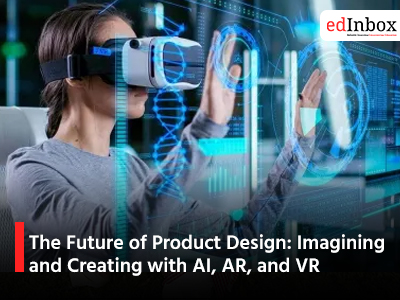
Wearing an AR headset, Associate Professor Alejandro M. Aragón shows how easy and intuitive it is to use the app. With some simple hand movements, the bridge design materializes in augmented reality, and he is able to walk around it and explore it from all sides. The concept of the app struck him when he went to an optimisation conference in 2023, where he heard about the new AR glasses.

Aragón's research is aimed at discovering optimized designs for a broad variety of (meta)materials and structures. One of the main tools in his research is topology optimisation, an iterative algorithm employed to optimise the shape or geometry of an object given a target functionality and certain constraints. This might involve, for example, reducing material consumption or reducing the risk of fracture, depending on the design requirements.

Although it holds promise, topology optimisation remains far from universal. Other complications, such as manufacturability or the inclusion of subjective factors like aesthetics, further complicate the process. New technologies such as AR and VR, Aragón believes, hold the key. 

Together with his previous MSc student Hendrik Jaap Algra, they created ARCADE: Augmented Reality Computational Analysis and Design Environment. ARCADE is an Apple Vision Pro app tailored specifically for "immersed topology optimisation." The design parameters, including the size of the computational domain and boundary conditions (supports and loads), can be controlled by hand gestures. While capable of implementing any kind of boundary conditions, the app includes ones for optimizing a cantilever beam and a bridge – both standard test cases in mechanical engineering. The app then works out an optimized design in real time, instantly visualized within the AR world.The ultimate goal is not merely to present a real design (based on physics), but also to improve the integration of human creativity into the design process.

As per Aragón, the integration of AR and topology optimisation can revolutionise design processes in the future. He will introduce ARCADE at the forthcoming World Congress of Structural and Multidisciplinary Optimisation later this year. The app will also be launched in the Apple Store for visonOS

With the increasing acceptance of the "Design Your Degree" model—a new concept under which students are able to customize their academic career according to their passions and professional ambitions—Indian higher education is in a state of transition. Omar Abdullah, ex-chief minister of Jammu and Kashmir, recently expressed lots of enthusiasm regarding the method, which has garnered more national interest.

Compared to inflexible, conventional degree paths, the "Design Your Degree" model permits students to create their own courses of study across a range of disciplines. This enables them to build a customized academic record that aligns with industry demands, so they can graduate prepared with skills for evolving job markets.

Under this system, students can take courses from multiple disciplines, forming an interdisciplinary educational environment.It is especially useful in today's rapidly evolving workplace, where there is an increasing demand for hybrid skill sets, like the combination of business and technology or the humanities and data analysis.

Long-time promoter of progressive policies in education, Omar Abdullah, praised the "Design Your Degree" idea as skill- and student-centered. He highlighted the fact that such an approach favors innovation, versatility, and learning through experience while the conventional method of education attempts to confine students to predefined study programs.

The increasing popularity of this model indicates how educational systems are transforming to be more student-centered and dynamic. Many institutions across India are also exploring the possibility of applying similar models in order to grant students greater autonomy over learning streams.

Through Abdullah's support, the campaign will be able to gain more traction, enabling policymakers and schools to implement flexible curriculum options into mainstream tertiary education.

Despite the potential of the model, challenges of faculty development, curriculum re-design, and accreditation need to be resolved to ensure that its large-scale implementation becomes a reality. But with right strategies in hand, the "Design Your Degree" model can revolutionize higher education by linking academic education to industry requirements.

With more and more debates surrounding education reforms, everyone is observing how policymakers and universities will embrace this model to reshape the future of Indian higher education.

According to the India Design ID 2025 report, luxury living is characterized by a revolutionary shift, with sustainability, customization, and practical design as the main trends. Luxury homeowners are changing the definition of high-end living by focusing on eco-friendly materials, custom furnishings, and smart technology rather than just luxury.

Sustainability is at the forefront of the green movement that has reached the luxury real estate industry. Beyond aesthetics, homeowners now want energy-efficient design, clever water management systems, and ecological materials. The focus is on reducing environmental impact without compromising style, from solar villas to furniture made from salvaged wood.

Customized environments are replacing the one-size-fits-all luxury of the past. Homeowners today want interiors that showcase their individual preferences and way of life, which includes custom lighting, handcrafted furniture, and artwork. This change stems from the belief that luxury should not just be a show of riches but also an expression of one's individuality.

Luxury homes are increasingly including multipurpose spaces, flexible furniture, and dedicated offices as remote work and hybrid lifestyles become more common. Designers are focusing on layouts that are roomy but functional, allowing for the seamless integration of work and leisure.

One of the standout trends of 2025 is the revival of balconies. As homeowners crave a seamless indoor-outdoor experience, balconies and terraces are being designed as tranquil retreats, complete with green walls, mood lighting, and weather-resistant furniture.

With amenities like yoga studios, meditation rooms, home spas, and cutting-edge air filtration systems, luxury residences are becoming wellness havens. The focus is on holistic well-being, making sure that luxury living improves both physical and emotional health in addition to comfort.

The India Design ID 2025 research highlights the dynamic progression of luxury living, where utility, customisation, and sustainability are the new standards of opulence rather than just passing fads. Luxury is evolving from extravagance to meaningful, conscious living as homeowners look for a closer bond with their living areas

As part of a dramatic shift in educational policy, schools throughout the country are incorporating design thinking for social impact into their curricula. According to a study published in The Hindu, the goal of this new approach is to provide students with the creative, empathetic, and problem-solving abilities necessary to address important social and environmental concerns. Design for Social Impact: An Educationally Transformative Strategy

In a sharp policy change in the education sector, educational institutions across the nation are integrating design thinking for social impact in their curriculum. As a report featured in The Hindu indicates, this new strategy has the objective of putting students in a position to tackle consequential social and environmental issues through innovative creativity, empathy, and problem-solving skills.

Experts think design is more than looks—it's a powerful mechanism for creating social change. Integrating design learning with practical concerns, teachers are equipping students to be community change-makers.

As opposed to the conventional ways of teaching, this model is stakeholder-focused and community-centric. Students are led to confront social issues in a hands-on manner, partnering with policymakers, non-profits, and communities to create sustainable solutions.

This transition is set to transform education into making learning more impactful and goal-directed. Organizations that are implementing this framework are noting that students are getting a better appreciation of actual issues and complexity while acquiring problem-solving experience at the practical level.

This method not only gives students academic advantages but also prepares them for employment in social impact design. Professionals with the ability to combine creativity and social consciousness are in greater demand in fields including human-centered design, sustainability, public health, and urban planning.

As the need for socially conscious design solutions grows, educators are stressing how crucial it is that colleges and institutions prioritize impact-led learning. Incorporating design for social good may be the new education standard that not only determines future professions but also creates a more aware and active generation.

As more education institutions come to appreciate the importance of this process, the trend towards educating people in design for social impact will be a crucial factor in driving a more accountable and creative society.

A game-changing certification program has been introduced to revolutionize the practice of digital experience design. By merging advanced findings from neuroscience and psychology into conventional UI/UX design practices, this breakthrough program enables designers to create natural, interactive, and human-centered interfaces that harmonically synchronize with human cognition and behavior.

Crossing Psychology and Design for Enhanced User Experience

The new course is unique in that it integrates human-centered design principles with neuroscientific concepts. The students will receive deep understanding of the way users engage with digital platforms so that they can develop designs that improve usability, engagement, and accessibility.

Some of the major topics addressed in the program are:

Learning to empathize with users and design solutions that meet actual-world needs. Knowledge of cognitive functions, attention, and emotional triggers to enhance user engagement. Utilizing iterative problem-solving techniques to ideate, prototype, and iterate UI/UX solutions. Applying data-driven methods to test, analyze, and refine user interfaces. 

The course is targeted at design, psychology, neuroscience, and allied field students as well as professionals. Regardless of whether they wish to become UI/UX designers, product managers, or developers, people will have a competitive edge by acquiring knowledge in the science of user interactions.

Upon successful completion, the students will have an industry-validated certification in UI/UX design, with them being top-priority candidates for top technology firms, design houses, and product development teams. As companies increasingly concentrate on user-experience design, certified experts will be more sought after than ever before in an increasingly booming job market. 

As digital systems grow more fluid, intuitive, and psychologically-based, seamless, intuitive, and psychology-driven experiences will form the backbone of successful product design. Through this groundbreaking certification, new and experienced designers can future-proof their careers and become the architects of the next generation of human-centered digital experiences.

The sudden rise of AI-powered apps, mobile-centric design experiences, and immersive technology such as AR and VR transformed the UI/UX sector. The timing for this certification program couldn't have been better as it empowers designers with the skill to deliver user-centric experiences rooted in science-backed design thinking that addresses users' changing demands in the present digital age.

Canva, the widely used design tool, has introduced a collection of India-themed design templates, elements, and fonts that make it simple for users to produce content with great visuals. The new design elements and templates have been developed keeping Indian aesthetics and culture in mind, facilitating it for users to design pieces of content that resonate well with domestic audiences. In addition to that, Canva has added a collection of Indian fonts to its collection so users can provide local flavor to their designs.

With these new features, Canva seeks to enable Indian designers, entrepreneurs, and small business owners to design professional-quality designs without having to possess extensive experience in designing. The simplicity of the platform and the drag-and-drop capabilities ensure that anyone can make beautiful designs, from social media visuals and presentations to marketing materials and websites.

Canva's Indian-specific design elements are now accessible to users, giving them the resources and tools required to develop designs that distinctly represent Indian culture and creativity.

It pictures happy colors, vintage styles, sharp color schemes, and font representing the essence of India—all in a click away! Be it designing Diwali promotion products, wedding cards, startup logotypes, to even crafting a chai cafe handout, Canva's new update ensures that your designs grab local crowds like never before.

For Indian designers, creators, and entrepreneurs, this new update is a complete game-changer. No more fighting with fonts that resemble regional languages or adjusting templates to appear culturally appropriate—Canva has done the heavy lifting for you! Now, your designs can finally reflect the heart and soul of India.

The advent of infrastructural development, green design, and urban planning in the Architecture domain has considerably diversified career options. An architecture graduate has several options to utilize their learning in the most erasable yet dynamic and interdisciplinary professions available, unlike the profession of an architect. 

The oldest but fulfilling career for architecture graduates is becoming an architect. Architects develop plan buildings, spaces, and environments that require a good balance between creativity and technical knowledge to be communicable. In India, the average pay of an architect ranges between ₹4 to 12 lakhs per annum, depending on years of experience and specialization.

Another of the emerging career prospects is that of an urban planner, which detailed forms the shaping and overall organization of the urban realities in regard to networks of transportation, public amenities, and a more sustainable present environment. Urban planners also play a vital role in the picture that future cities will portray by infusing analytical skills, problem-solving abilities, and communication. In India, the average pay for urban planners is about between ₹ 5 and 15 Lakhs per annum, which makes it an attractive option for anyone considering specializing in urban contexts.

Aside from architecture and urban planning, they may also branch out into careers in areas such as interior design and landscape architecture. Interior designers design indoor spaces to be functional and attractive, working closely with their clients to realize their vision, whereas a landscape architect will design parks, gardens, and outdoor spaces that will then be considered part of the urban and residential structure. 

Writing architecture involves something most people would enjoy, as it carries a bit of research with it. Architectural writers report on trends in design, innovation in sustainability, and heritage. This career path also imaginable by individuals can combine their passion for architecture with Journalism Education against the Media.

Every update of technology and sustainability will also unveil specializations such as green building design, heritage conservation, and digital architecture using AI and VR technologies. Therefore, professionals will benefit from adjusting to roles and innovations if they come from different skill sets. 

Design Architecture has no more definition of singularity; it has become more diversified. Whether designing, planning, doing research, or working in a media house, graduates will have numerous opportunities to create successful careers in this ever-advancing progressive industry.

More Articles ...