
When it comes to healthcare, it is commonly believed that for a student from the metrocities, he/she will think of hospitals and colleges in Delhi, Mumbai, Bengaluru, Chennai or Hyderabad. However, all that is changing and soon. Tier-2 and Tier-3 cities are gaining significance for healthcare expansion in the context of India and that is giving rise to greater demand for trained allied healthcare professionals.
For such students who have finished their Class 12 Physics, Chemistry and Biology, but are not sure about taking up MBBS, this is pertinent. Another pathway into the healthcare industry could be through careers in medical laboratory technology, radiology and imaging technology, physiotherapy, optometry, dialysis therapy, operation theatre technology, anaesthesia technology and emergency medical technology.
Reason why Why Allied Healthcare Careers Are Growing Beyond Metro Cities
Doctors and nurses are not the only ones who can run India's healthcare system. There's a larger team of trained professionals involved in every diagnosis, scan, lab test, surgery and rehabilitation.
This is a workforce need that the government has identified. The government of India in March 2026 announced that in the next five years, India aims to recruit an additional 1 lakh allied healthcare professionals, with increasing demand driven by rising technological advancements in healthcare, demographic shifts, and the prevalence of non-communicable diseases. The government singled out certain areas, such as diagnostics, imaging, physiotherapy, emergency care and anaesthesia technology, as areas of increasing demand.
The demand is not restricted to hospitals in the metropolises. The demand for skilled professionals is now spreading to the smaller cities, where healthcare, diagnostic and specialized treatment centers are increasing in number.
What are the Allied Healthcare Courses after 12th?
Several courses related to healthcare are available for science stream students to pursue post Class 12. These vary from one institution to the other and from state to state and include BSc Medical Laboratory Science, BSc Medical Radiology and Imaging Technology, BSc Physiotherapy, BSc Optometry, BSc Anaesthesia and Operation Theatre Tech, Dialysis Therapy, Emergency Medical Tech and other specialised programmes.
For instance, the information provided in current University and Government admission brochures includes programmes in medical laboratory science, radiology & imaging, physiotherapy, optometry, anaesthesia, operation theatre technology and allied programmes.
Eligibility, duration of course, structure of internship, and the application procedure will depend on the university and the programme. So it is advisable to be aware of the updated requirements of the institution prior to applying.
Why Tier-2 and Tier-3 Cities are Contributing in Allied Healthcare?
It doesn't always need to start in the big city for a healthcare career. Indeed, as hospitals, diagnostic centres and other specialist services continue to grow, smaller cities may provide an increasingly valuable setting in which to train and hire healthcare professionals.
This is important for students since they may find that a local allied healthcare program can keep their student expenses down and make it more convenient for them to access the communities they would like to work with later on. Most importantly, it can introduce students to the healthcare needs that exist in large metropolitan hospitals, which are frequently very different from those in small rural hospitals.
As healthcare facilities expand, there is a greater ecosystem that envelops these professionals. Medical imaging technologists might work in hospitals, diagnostic centres or medical imaging firms, and medical lab professionals may work in hospitals, diagnostic labs, blood banks, or pharmaceutical companies or public health agencies.
Choosing an Allied Healthcare Course
For those who love technology and diagnostic equipment, students can consider radiology and imaging. Medical laboratory science is suggested for those who have an interest in laboratory work. For those students who like to work directly with patients and rehabilitate them might consider physiotherapy. For the ones who are interested in surgical surroundings can consider operating theatre and anaesthesia technology. It should not be just the name of the course, but rather the quality of the college, clinical exposure, laboratories, internship opportunities, faculty, hospital tie ups, and the recognition of the programme.
The Bigger Opportunity for Students
India's healthcare growth is presenting a challenge to the workforce, which is far from being addressed by constructing hospitals. A hospital requires skilled staff to run their laboratories, imaging machines, operating theatres, emergency care units and rehabilitation programs.
Hence, allied health education requires more attention from the students from Tier-2 and Tier-3 cities. It's not just about securing a career in health care. It is to become a part of the workforce which enables the accessibility, efficiency and technology-based health delivery system for India.
Now that the students have reached the class 12th stage, the dilemma of a healthcare career does not need to be confined to MBBS or No MBBS. There is a vast scope of healthcare careers out there and the next generation of healthcare professionals may be more likely to be from the non-metro cities of India.
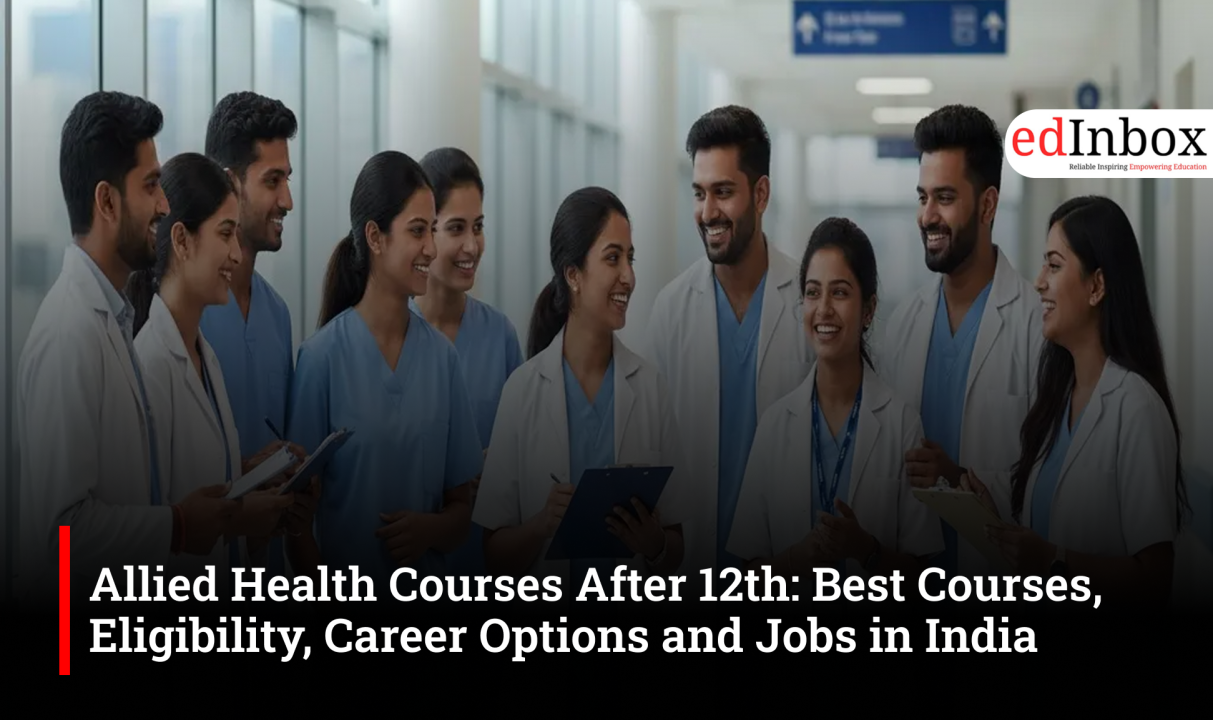
Allied Health Courses After 12th: Best Courses, Eligibility, Career Options and Jobs in India
Typography
- Smaller Small Medium Big Bigger
- Default Helvetica Segoe Georgia Times
- Reading Mode