
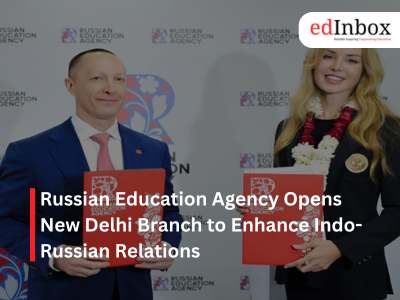
On December 4, 2025, a joint initiative by Synergy Corporation and Innopraktika called the Russia Education Agency opened its first branch in New Delhi. The launch falls during the state visit of Russian President Vladimir Putin to India, hence signaling deepened bilateral educational and cultural ties between the two nations. It also bills itself as a much-needed connecting bridge, offering Indian students access to Russian higher education, in fields of emerging demand such as medicine, IT, and engineering.
The New Delhi office acts as a one-stop support for aspiring students, including personalized counseling on the selection of universities and programs, admission processes, visa support, preparation of documentation, and cultural orientation to help them make a hassle-free adaptation in Russia. The leadership of the agency is likely to facilitate more than 10,000 Indian students in Russian universities next year, adding to the legacy of Soviet-era education that created Indian goodwill ambassadors.
The head of Synergy Corporation, Vadim Lobov, termed the opening a "very important day" and said that new frontiers of collaboration would be opened during the visit by Putin. He underlined the importance of establishing people-to-people links through effective access to possibilities of study in Russia, job opportunities, and professional skills. First Deputy CEO of Innopraktika, Natalia Popova, underlined that Russian-educated Indians could be integrated into innovation ecosystems for developing high-tech ties between the countries.
Further expansions will see the opening of branches in Mumbai and Chennai by 2026, along with collaborations with Indian schools in Russian language courses and other events promoting cultural exchange. In fact, the maiden "Bridge of Friendship: Russia and India" session organized by the agency drew in over 1,000 Delhi high school students, while plans are afoot for its national rollout. This initiative fits within broader frameworks like India's SPARC and GIAN programs and Russia's ITEC scholarships, hence showing robust academic exchange.
The opening of its branch shows the surging interest in top Russian programs and has facilitated pathways for Indian youth to receive global exposure. It thus nurtures future leaders by fostering cross-cultural understanding to consolidate long-lasting relationships between India and Russia.
Russian Education Agency Opens New Delhi Branch to Enhance Indo-Russian Relations
Typography
- Smaller Small Medium Big Bigger
- Default Helvetica Segoe Georgia Times
- Reading Mode