
It is the excitement that normally comes with the decision to pursue higher education abroad. Many Indian students feel that they are embarking on a new life that they had hitherto only experienced remotely, but never personally. Neeharika, the Master of Science in Business Analytics student at Durham University in the United Kingdom, encapsulates her transformation with the words that come across as "déjà vu" to so many others: “It is that moment you realize your life now has two homes and two versions of you.” The phrase accurately captures the journey that all the students face who leave home for something greater.
Neeharika’s is a “suite case that refused to close,” friends trying not to cry, and parents spouting reminders that she had memorized in her sleep. At the airport, she felt “torn between two opposite emotions. One part of her was scared to leave behind all she had known. Another part of her was thrilled with the prospect of discovering who she could become." This contrasted feeling follows her on her plane.
Lesson for the aspiring student: The first thing you have to learn is moving away from home, and that is something more than relocation, it’s transformation of oneself. Both preparations are geared towards equipping you with more stable expectations when you embark on the process.
Entrance to the quieter world
As Neeharka settled into the UK, the first culture shock did not relate to climate either. "The first thing that struck me wasn’t the cold. It was the quietness. The lack of pressure cooker whistles in the kitchen, no honking of rickshaws outside, no calls from across the balcony.” The strangeness of this quietness made it feel even more far off than when he left his homeland.
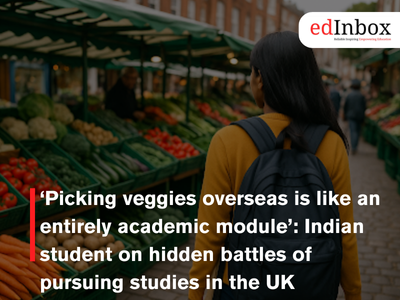
The first experiences in a foreign land are always one of getting used to. According to her, “It was like learning to walk again. Every single thing in life was different. The mode of transportation, the food, the accents, even the way people smiled.” Doing grocery shopping was a weekly struggle. According to her, “Deciding which veggies to choose in a foreign land was like a whole semester course nobody told me about.” It is in these kinds of small struggles that the first education for independence is achieved.
Students planning to study abroad, or even those just considering it, might find that they believe that the most significant challenges will lie in their academic pursuits. However, it's the small things in life that will teach you far too much as well.
Learning to navigate these small transitions in life without judging yourself is, in fact, one of the earliest activities you undertake as you claim your independence.
Learning within a system that expects more from you
Life at university brought a whole new range of adjustments. It came with a different teaching method: the skills and responsibilities of carrying a student's education were placed in their hands. Her routine included a pattern that will seem very familiar to international students: cooking in the morning, attending lectures, and in some cases socializing and pulling late nighters. “Assignments were tougher, conversations were more open and ended with every class having students from different countries with different perspectives.” Some days she could feel invincible, while on other days she felt clueless. "Both were equally significant in making me."
So, for the benefit of future students, this is worth sharing. Trust me, you won't always feel like you're capable enough. The education patterns there are totally self-managing, and it takes some time to adjust to it, though. Feeling lost is not the end; it's just a process that every international student has to go through.
Identify individuals who transform into a home.
There were also changes that came from her personal connections. She had assumed that making friends would not come easy if she moved abroad. However, she found that people just seemed to show up when she needed them the most. There was the friend that she met in classes whom she had asked if she could sit with because they came from the same country. There was also another friend who called her out of the blue because the sky is beautiful outside, and she said, ‘Aurora outside! Come now!’ There was also another friend who is equally keen on visiting all the Harry Potter sites that were shot.
These friendships, she asserts, were no coincidence, and they formed the foundation of the network of support and encouragement which saw her through homesickness, deadlines, and long nights. “You don’t simply find a community living in another country. You create one, bit by bit, memory by memory,” she has come to realize.
Then too, there is something in it for those students who may fear the loneliness of the halls. Community does not simply appear out of thin air on the first day of school. It begins to evolve, through experiences, through conversations. Aspiring students must have faith in the process.
The Real Rhythm of Student Life Abroad
Being a foreign student can be romanticized, but this girl shows what it’s been like to be one. It means being awoken at odd hours of the night, having to cook because there's no choice, budgeting to the last penny, doing your laundry and carrying it from floor to floor in your residence, learning while half-asleep. But it's these small things that you hold onto. Walking back to your residence, exhausted from your day, and thinking, "I’m actually doing this. I’m constructing a life overseas." These, she asserts, are the highlights of studying abroad that will not appear on the highlight reel that students will look back on, because “The reality is that life is made up of everyday moments, not just the extraordinary ones, and it’s not always easy.” For students wishing to go abroad, she offers this balance to keep in perspective, “The reality is that life is made up of everyday moments, not just the extraordinary ones, and it’s not always easy.” Growth in silence “Growth is not loud or dramatic,” she says. “It is slow, subtle and often invisible until the day you look back and realise you have changed in the best possible ways.” It taught her to trust her instincts and understand the concept of resilience.
Her experience within the UK changed her perceptions of home and introduced her to the reality that the world is much bigger and much kinder than what she was brought up to think was her world. This is one of the most important takeaways for students planning to study internationally: growth isn’t immediate. It happens quietly in the background while you are busy adapting and coping and figuring out your universe. It might not seem apparent the first week on or sometimes not within the first month of your adaptation period.
Growth typically reveals itself through small, almost unnoticed incidents. The fact that you have just managed to have a day without having to go back for your smartphone from the bus, or managing to cook a meal that actually contains real flavor. It might seem like small stuff, but trust her, this means that you are establishing yourself within a place that was previously unfamiliar to you. For students planning on heading overseas, it might be good to keep in mind that confidence develops slowly. It means you won’t be rocking up to your destination fully prepared to take on the world; rather, you would’ve prepared yourself for the challenge of living day by day.
The philosophy taken forward:
The question of whether or not the journey is difficult? The straightforward answer is yes. However, when asked if the journey was worth it, she gives a much more passionate “Absolutely yes. Every single day.” As a last piece of advice to people who are on the fence, she suggests, “Your story begins the moment you gather the courage to take that first step.” As a part of her departing advice to people heading overseas, this would perhaps be the most crucial for students to absorb from her experience. The difficult part of the journey would be temporary, and the growth and change that would happen would remain for a lifetime.
‘Picking veggies overseas is like an entirely academic module’: Indian student on hidden battles of pursuing studies in the UK
Typography
- Smaller Small Medium Big Bigger
- Default Helvetica Segoe Georgia Times
- Reading Mode