
A drastic decrease in global aid especially by the United States and major European donors could reverse the progress made over several decades in the fight against infectious diseases and result in 22.6 million more deaths globally by 2030, a new study published in The Lancet Global Health on Tuesday has revealed.
The study, which was peer, reviewed, and led by the Barcelona Institute for Global Health (ISGlobal) in Spain, warns that a fall in official development assistance (ODA) will severely affect 93 low, and middle, income countries, including India It is notable that the estimated death figure comprises a staggering 5.4 million children under five years of age.
Sub Saharan Africa is likely to be the region most affected as there are 38 countries out of the 93 examined which are located there. In Asia, 21 countries including India are vulnerable, followed by 12 in each of Latin America and the Middle East and North Africa. Ten countries in Europe, including Ukraine, may also be impacted.
“Withdrawing this support now would not only reverse hard-won progress but would translate directly into millions of preventable adult and child deaths,” said Davide Rasella, Coordinator of the study and ICREA Research Professor at ISGlobal. “Budget decisions made today in donor countries will have irreversible consequences for millions of people for years to come.”
The research points out that Official Development Assistance (ODA) had a vital influence during 2002 and 2021 when the global under- five mortality rate dropped by 39 per cent, deaths from HIV/AIDS went down by 70 per cent, and fatalities caused by malaria and nutritional deficiencies declined by 56 per cent. These achievements were made in the countries where about 75 per cent of the world's population live.
In 2024, international aid went down for the first time in six years as the US, UK, France, and Germany considerably cut their donations, a fall which has not happened for almost three decades.
Researchers developed two scenarios and estimated the associated risks from 2025 to 2030. A moderate defunding scenario, with aid decreasing at 10.6 per cent per year, may result in 9.4 million unnecessary deaths. Among the fatalities will be 2.5 million children under five. If the aid budgets are slashed seriously, a defunding scenario with a $32 billion cut from 2024 to 2025, it could lead to over 22.6 million deaths including 5.4 million children under five.
These results reveal the huge ethical price of using a zero sum perspective for global aid, stated Dr. Rajiv J. Shah, President of the Rockefeller Foundation that backed the research. “They are an urgent call to action to prevent avoidable human suffering.”
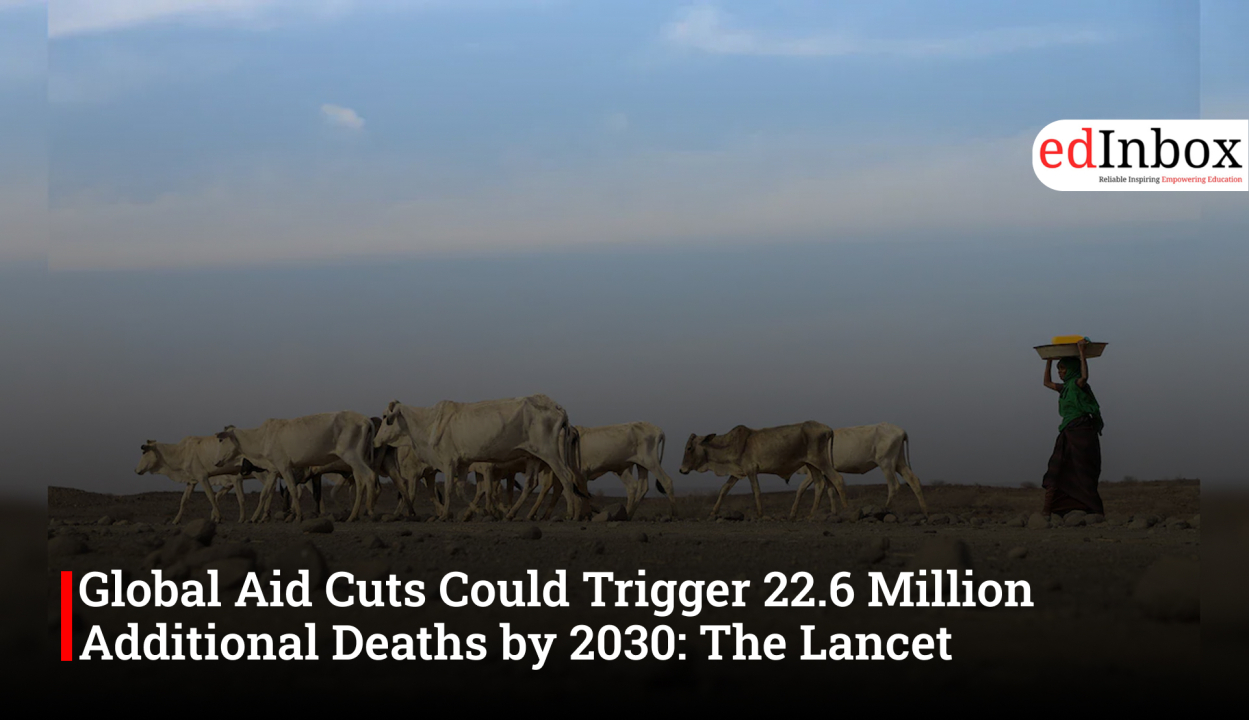
Global Aid Cuts Could Trigger 22.6 Million Additional Deaths by 2030: The Lancet
Typography
- Smaller Small Medium Big Bigger
- Default Helvetica Segoe Georgia Times
- Reading Mode