
As global discussions around hantavirus continue to grow online, health experts are urging people to understand the science behind the virus without triggering unnecessary panic. One of the latest voices joining the conversation is Sagan Friant, an assistant professor of anthropology at Pennsylvania State University, who described hantavirus as “a very deadly disease” but stressed that it is not comparable to COVID-19 in the way it spreads.
Friant explained that some hantavirus strains found in the Americas can have fatality rates reaching up to 50 per cent. “About half of the people who get infected could potentially die,” she noted, while clarifying that this represents the higher end of the mortality range. Even so, the fatality risk remains significantly higher than that associated with many common respiratory infections.
What Is Hantavirus?
Hantaviruses are a group of rodent-borne viruses found across different regions of the world. Humans are typically infected through exposure to infected rodent urine, droppings, or saliva.
According to Friant, different strains affect the body differently depending on geography. Hantaviruses found in parts of Europe and Asia generally affect the kidneys, while strains detected in the Americas — including the Andes virus and Sin Nombre virus — primarily attack the lungs and can lead to severe respiratory illness.
The respiratory form of the disease, known as Hantavirus Pulmonary Syndrome (HPS), can rapidly become life-threatening if not treated early.
Why Scientists Are Watching The Andes Virus Closely
What has drawn particular scientific attention is the behaviour of one strain known as the Andes virus. Unlike most hantaviruses, which generally spread only from rodents to humans, the Andes strain has shown rare evidence of human-to-human transmission.
Friant explained that humans are usually considered a “dead-end host,” meaning the virus typically does not continue spreading once a person is infected. However, the Andes virus is considered a rare exception.
“That is what makes this different from what we have seen before,” she said while discussing recent concerns surrounding possible transmission in close-contact settings.
According to Friant, a reported outbreak linked to a cruise ship raised concerns because passengers were living in prolonged close proximity — an environment that may have allowed sustained transmission.
“We never expected for a hantavirus to get on a cruise ship,” she said, adding that the virus is not believed to spread casually through brief interactions like COVID-19 or influenza.
Long Incubation Period Increasing Anxiety
Another factor contributing to public concern is the virus’s unusually long incubation period.
Friant explained that while many respiratory infections show symptoms within a few days, hantavirus symptoms can take anywhere from one to eight weeks to appear after exposure.
“That means these people need to be monitored for about two months,” she said.
The extended waiting period can create emotional stress for individuals who fear exposure, while also making it more difficult for public health officials to track and contain potential outbreaks.
However, Friant emphasised that infected individuals are generally not believed to transmit the virus unless they are actively symptomatic.
Why Experts Say This Is Not Another Pandemic
As comparisons with the early days of COVID-19 spread across social media, experts are cautioning against drawing direct parallels.
Friant stressed that hantavirus behaves very differently from highly contagious respiratory viruses such as SARS-CoV-2. The virus typically requires prolonged and close exposure for transmission, particularly in the rare cases involving the Andes strain.
Scientists continue to monitor outbreaks carefully, especially in regions where rodent exposure is common. However, experts say the current evidence does not suggest a rapidly spreading global pandemic scenario similar to COVID-19.
Instead, public health messaging remains focused on awareness, rodent control, early diagnosis, and reducing unnecessary fear while continuing scientific monitoring of rare transmission events.
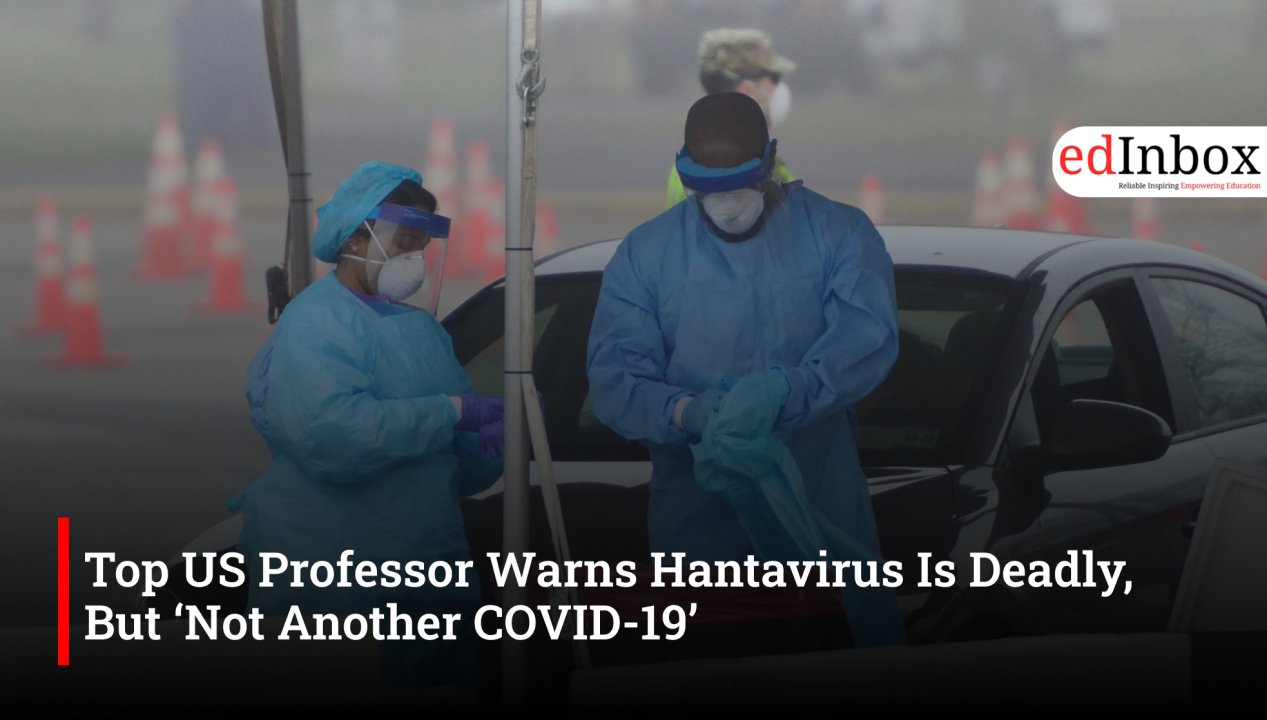
Top US Professor Warns Hantavirus Is Deadly, But ‘Not Another COVID-19’
Typography
- Smaller Small Medium Big Bigger
- Default Helvetica Segoe Georgia Times
- Reading Mode