
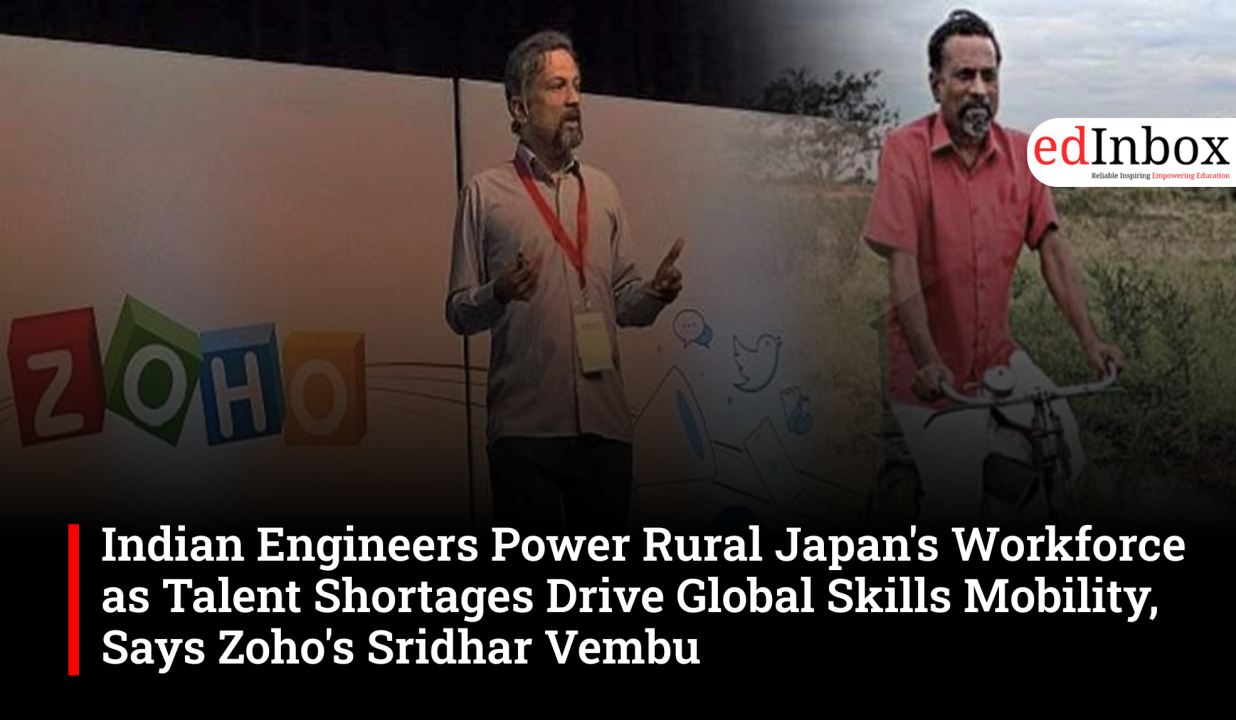
The growing presence of Indian engineers in rural Japan underscores a broader global trend of cross-border talent mobility, as ageing economies increasingly rely on skilled international professionals to address workforce shortages, according to Zoho co-founder Sridhar Vembu.
Sharing observations from a recent visit to Japan's Wakayama Prefecture, Vembu highlighted how Indian engineering graduates are playing an important role in supporting advanced manufacturing industries located far from the country's major metropolitan centres.
Rural Japan Turns to Global Talent
Wakayama Prefecture, located more than 100 kilometres from Osaka and home to nearly 900,000 residents, is facing the demographic challenges common across much of rural Japan. A shrinking and ageing population has made it increasingly difficult for local industries to recruit and retain skilled professionals.
In a post on X, Vembu noted that a growing number of Indian engineers are now working in the region, helping companies overcome talent shortages while sustaining industrial competitiveness.
The trend reflects Japan's broader efforts to attract international skilled workers as it responds to long-term labour market pressures and demographic decline.
Advanced Manufacturing Beyond Urban Hubs
During his industrial tour, Vembu visited several globally competitive manufacturing companies operating from rural Wakayama, including firms producing industrial inkjet printers, electrostatic discharge (ESD) testing equipment, and medical technologies.
One manufacturing facility, he observed, was situated alongside agricultural fields—an example of how high-tech production can coexist with rural landscapes.
The visit challenged conventional assumptions that innovation ecosystems must be concentrated in large cities, demonstrating that advanced research, engineering, and manufacturing can thrive in regional locations with the right industrial capabilities.
Implications for Global Engineering Education
Vembu's observations highlight the increasing international demand for engineering graduates, particularly in countries experiencing demographic transitions and skilled labour shortages.
For higher education institutions, the trend reinforces the growing importance of preparing graduates with globally relevant technical skills, cross-cultural competencies, and the flexibility to work across international markets.
As countries compete for highly skilled professionals, engineering education is becoming an increasingly global enterprise, with graduates contributing to innovation ecosystems far beyond their home countries.
A Model for Regional Economic Development
Beyond workforce mobility, Vembu argued that Wakayama demonstrates how rural regions can successfully host world-class industries without relying on large urban centres.
The companies he visited have chosen to remain in rural Japan while maintaining international competitiveness, suggesting that strategic investment in technology, innovation, and talent can enable regional economies to flourish.
His observations contribute to the broader conversation on decentralised economic development, highlighting how global talent and advanced manufacturing can work together to revitalise rural communities while addressing critical workforce challenges.
Indian Engineers Power Rural Japan's Workforce as Talent Shortages Drive Global Skills Mobility, Says Zoho's Sridhar Vembu
Typography
- Smaller Small Medium Big Bigger
- Default Helvetica Segoe Georgia Times
- Reading Mode