It's yet another Indian moment of pride with Japteg Singh Bamrah, a bright young lad from Jammu, winning the much sought-after HonorsGradU 2025 Scholarship in the US. The scholarship offers the 'Build a Better Future' award and a $15,000 academic as well as innovative endeavor sponsoring scholarship.

Of the total grant fund, $10,000 will be allocated as funding to take Bamrah straight to US college and $5,000 for continued work on his life-changing invention—the Solar Mech Engine. The invention has been greeted as being a giant leap forward in the search for renewable energy technologies.

Bamrah's journey towards achieving this has been a journey of relentless hard work and scientific curiosity. Bamrah's device, worked out in collaboration with senior scientist Nasir Ul Rasheed at CSIR-Indian Institute of Integrative Medicine (IIIM), Jammu, is based on electromagnetic induction to achieve effective energy conversion. Fascinatingly, the Solar Mech Engine is a reversible heat pump as well, thus broadening its scope of use in practical applications.

The innovation was already making waves last year when it was found in the CSIR Jigyasa Hackathon 2024, where Bamrah proved his mettle in applying theoretical knowledge to reality in resolving problems.

Referring to the scholarship, the experts further added that the HonorsGradU program is highly competitive in nature, which is committed to finding and sponsoring such candidates who are academically good and are ready to work on sustainable projects. Bamrah's success indicates more world focus towards the Indian students' role in making science and sustainability.

The scholarship is not just a personal success for me but also an easy benchmark" said Bamrah.

While Bamrah begins his college years in the US, the next stage of his project would be in scaling and perfecting the Solar Mech Engine, which will take his dream of green energy a step further towards its fulfillment.

This victory is being hailed far and wide, both as an individual achievement as well as an inspiring demonstration of the zeal for innovation that dominates young Indian minds.

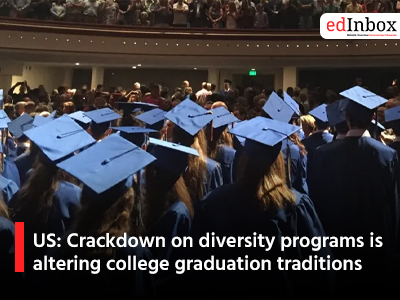
Austin Kissinger, a first-generation college student himself, was looking forward to sharing his graduation with other students in the same category who encouraged each other throughout the University of Kentucky. Historically, Kentucky first-generation college students select a member of the faculty with whom to walk during a distinct ceremony. The university last month canceled the ceremony, along with other convocations celebrating Black and LGBTQ+ students, out of deference to the Trump administration's attempt at restricting diversity, equity and inclusion programs.

Student groups threw a party together off campus - away from school - but Kissinger said the decision left some students such as himself feeling forsaken.

"It's stealing our celebration, like you're stopping us from celebrating who we want to celebrate," Kissinger, a First Generation Student Organisation senior and university president, said. "You're stopping us from being representative of what we do here at the university."

President Donald Trump's pressure that any program treating students differently by race be scaled back has brought affinity graduation ceremonies under fresh scrutiny. The ceremonies have been a way of building community and celebrating underrepresented students' achievements and unique experiences for decades.

The vast majority of affinity ceremonies will continue as usual across the country, with colleges demanding that the events comply with new guidelines.

A few colleges are, however, backing away from support. Harvard University is one of them and is battling the Trump administration in court over requests for change involving campus activism and campus diversity. Although they sued the administration in response to some of its initiatives to impose change on campus, Harvard told students that it was no longer providing funding, personnel or space for affinity celebrations, according to the Harvard Crimson student newspaper.

Some colleges shift to comply with Trump administration directive

At the University of Kentucky, spokesman Jay Blanton said the top commencement honors will be awarded to all students. He said the university cut others to comply with the law and "how we think it's being interpreted by the administration."

"Our students' success and support is something that is a guiding principle and mission that means the world to us. Everything that we do on this campus, we do with that as our objective," Blanton said. "Meanwhile, we do think we have to follow the law and are doing so here."

Across the country, schools have been under increasing pressure to get in line behind Trump's agenda, as it has already suspended billions of dollars' worth of grants at Harvard, Columbia University and other universities because they have not done sufficiently to combat antisemitism.

The Education Department directed colleges to stay away from DEI in a "Dear Colleague" letter issued in February 2023. In it, a 2023 Supreme Court decision opposing racial preferences in college admissions also applied to such items as hiring, scholarships and graduation ceremonies. The administration claimed American schools have been discriminating against students, including white and Asian American students.

"In a humiliating flashback to a previous, more wicked era in the life of this country, many American colleges and universities actually encourage racial segregation at commencement and in residence halls and other buildings," the letter read, signed by Craig Trainor, acting assistant secretary for civil rights in the Education Department.

The tradition dates back to segregation times in some schools, but organizers of today's Black commencements argue they are a way of marking the accomplishment of racially mixed student bodies that for years had gone unremarked. "Lavender graduations," marking LGBTQ+ students and dating back to a time two decades or more ago when many were not welcomed by their families, are also standard on most colleges.

For students who are first-generation college attendees, it is simple to get lost or have no idea where to go in order to seek help, Kissinger explained. At Kentucky, he said that he felt most of the time like he was the one on whom rested the burden to get it all done by himself. The affinity ceremony, he explained, was a nod to strength and pride in that they made it to graduation.

With convocations cancelled, alternative means of upholding traditions are sought

Maricopa County Community Colleges in Arizona cancelled all its special interest and cultural convocations, citing in a statement "enforcement priorities" directed by the US Education Department. But the Salt River Pima-Maricopa Indian Community came forward to organize a convocation ceremony for American Indian graduates.

"While we are greatly disappointed by the cancellation of convocation ceremonies for minority students, we believe it is important that we as a community celebrate our graduates and their families," said community President Martin Harvier in a statement.

Ohio University's Black alumni weekend was organized by Aaron Thomas to take place this spring after the event was canceled by the university so that it would coincide with a state prohibition on DEI, which is a copy of the federal requirement. Thomas, whose production company is located just off the university campus in Athens, Ohio, had planned to sponsor an alumni barbecue before the mayor's office, nonprofits and restaurants pooled their resources to help host the weekend of activities.

Among the colleges that have affinity events planned in upcoming weeks is California State University, Long Beach, which continues to hold its celebration of Pacific Islander and Cambodian students, among others, in accordance with the administration's policy because they are inclusive.

"Our students are looking forward to these celebrations, which are inclusive and consistent with the Department of Education guidance," spokesman Jim Milbury said.

On its website, a posting after information about the cultural observances acknowledges the changing college culture:

"Particularly as federal immigration policies evolve, there is a concern that agents and officers of US immigration enforcement agencies will make visits to university campuses across the country," it says. "While we have no word of any planned visit to our campus, we share this information."

The highly globalized world today has seen English as the lingua franca that mediates communication, commerce, and cultural exchange all over the world. English, with an estimated 1.5 billion speakers, is the most spoken language in the world, says Ethnologue. The fact that the language already appears on the list of institutions of higher learning, commerce, and international diplomacy says a lot about its use as a vehicle of personal and professional growth.

As English seeps into increasingly wider realms of existence, the need for genuine and normal language testing ability tests has expanded manifold. The International English Language Testing System (IELTS) is a power today that makes world fortunes. It is no longer a test - it is the pass to opportunity, which unlocks doors to educational and professional opportunities, and cultural integration on a global scale.

In a world of English speakers that brings people together across borders, IELTS is more than just a test of language. "It's a key driver of global mobility, education, and personal growth," says IDP Education's Regional Director - South Asia, Canada and LATAM, Piyush Kumar.

ENSURING STUDENTS WITH GLOBAL ASPIRATIONS

For overseas students who would like to study overseas, IELTS is the key to their dream. It is accepted by more than 12,000 institutions worldwide, from colleges and universities to professional bodies. IELTS tests the students' required skills of listening, reading, writing, and speaking in order to ensure that they possess the necessary skills. It is also accepted in 140 nations, and more than 3,400 institutions in the United States of America accept IELTS scores.

Millions of professionals and students sit for IELTS each year. It is not an exam to them-it's the ticket to international success. Preparation goes beyond the classroom. Students are assured of speaking, working, and making a difference in various settings too. In short, IELTS provides them with the vocabulary arsenal to succeed and navigate in new settings and build a generation of internationally effective citizens.

IELTS also facilitates career advancement. Many organizations demand the requirement of IELTS results in order to work or relocate to English speaking nations. Test structure also enhances the acquisition of everyday language usage skills that play an essential part in professional careers, such as successful communication, listening, and persuasive writing.

Also, the 'Listening' component of the IELTS features varying accents and the 'Speaking' component tests the English ability that individuals from varying regions use. IELTS is considered as a norm for assessing an applicant's preparedness to work under various cultural stresses and contribute towards international projects with success by most of the organizations.

BRIDGING CULTURAL AND SOCIAL GAPS

Apart from study and employment, IELTS also facilitates social interaction and cultural exchange. In working in the community or establishing real relationships with members of host culture, integration and belonging depend on communication skills.

SUPPORTING LIFELONG LEARNING

The advantage of the IELTS test lasts much longer than the duration of its conduct. IELTS preparation is based on critical thinking, time management, and adaptability. These are the skills essential in our contemporary globalised economy, where one has to keep upskilling and learning to adapt just to remain relevant.

With the mobility and interconnectedness of the world today, IELTS is the key to international achievement. It opens doors to international education for students, leads professional aspirants to career success, and paves the way to cultural assimilation for migrants in search of new horizons.

IELTS is neither a test nor a test-taking affair but a life-changing journey that forges tomorrow's citizens of the globe - citizens who can span bridges, make connections, and forge even brighter horizons for the world.

Deloitte India has officially denied reports of any such internship program, calling them “completely false and misleading.” The Big Four consulting giant issued a strong warning on LinkedIn, urging jobseekers and students to be cautious about fake job postings floating around online.

“Lately, news reports falsely claiming to advertise internship opportunities at Deloitte have been doing the rounds,” the post stated. “We advise all candidates to be vigilant and verify the authenticity of any such listings.”

To help candidates avoid falling for scams, Deloitte shared official links where verified internship and job openings can be found:

Deloitte India Careers

Deloitte India (US Offices)

This warning comes amid a surge of fraudulent job postings on social media and third-party platforms promising high-paying internships in top corporate firms, often luring in unsuspecting students and freshers.

While Deloitte does offer real internship opportunities, they emphasize that all such openings are only announced through their verified channels. The company further clarified that its internships are structured around practical exposure, real-time challenges, mentorship, and professional development — not on viral promises of inflated stipends.

Describing its internship environment, Deloitte states: “Interns at Deloitte gain real-world experience while being mentored and contributing to meaningful projects. It’s a gateway for young professionals to explore consulting, analytics, and corporate innovation.”

Bottom line: If you’re eyeing an internship at Deloitte, don’t fall for the hype. Always cross-check with official sources — because if it sounds too good to be true, it probably is.

As exam results are being declared all over India, a fresh batch of scholarship scams is in the news as it is targeting students and their families. The scams exploit the aspirations of students to be awarded scholarships to pursue higher studies.

A report released by the Ministry of Minority Affairs found that of 1,572 minority institutions that had been probed, 830 were fake or non-functional and comprised about 53% of the total.  This resulted in the diversion of Rs 144.83 crore in five years, funds meant for minority students' education.

What Is a Scholarship Scam?

Scholarship scams are fraudulent techniques where scammers impersonate valid organizations providing financial assistance. They can establish phone sites or email messages that offer scholarships, seek personal information, application fees, or bank account information. Once they obtain this information, they can utilize it for identity theft or financial exploitation.

A closer examination of the scholarship applications for 2022-2023 revealed that among the 25.5 lakh applicants, more than 6.7 lakh did not exist. Biometric verification procedures revealed that only 30% of the renewal applicants were real, and the remaining huge majority proved to be bogus beneficiaries taking advantage of the system.

Major Scholarship Scams Exposed

There have been many big scholarship scams which have recently been emerging online which calls for an effective system to resist their operations. Let us see about a couple of recent scholarship scams.

Minority Scholarship Scam

A government investigation showed that nearly 53% of the colleges under the minority scholarship scheme were 'phantom' institutions, which resulted in a scam of Rs144.83 crore.

Himachal Pradesh Scam

Enforcement Directorate (ED) and Central Bureau of Investigation (CBI) officials have been reported to be involved in a Rs 250 crore fraud. Funds that were to be transferred to scholarships for Scheduled Caste (SC), Scheduled Tribe (ST), and Other Backward Class (OBC) students were reported to be routed out by the officials. 

Properties worth Rs18.27 crore have been made obsolete in the context of this case.

Tripura Incident

Tripura government is registering FIRs against 34 students on suspicion of their being involved in fraudulent income certificates that have been provided to avail scholarships under post-matric.

Education inflation is pushing students toward scholarship scamming, says Director and Professor Jaipuria Institute of Management Dr Deepankar Chakrabarti.

He averred, "Societal progress, personal aspiration, and economic growth have all been coupled together to lead to a position where professional development is flourishing but with an extremely hefty price." 

Scholarship impersonators lure students with fictitious scholarships or admission lottery programs and proceed to scam them by getting them to send their bank information or pay mysterious fees.

"Gullibility proves costly for all concerned at the cost of credibility loss and the threat of punishment by the state," he went on, invoking greater awareness and vigilance.

Government Response To These Scholarship Scams

Grateful to these ominous incidents, the government of India has enacted a few actions:

Investigations By CBI: The Ministry of Minority Affairs forwarded the issue to the Central Bureau of Investigation (CBI) to inquire about the minority scholarship scam.

Digital Authentication: The government is imposing tighter authentication procedures on institutions which desire to apply for scholarships, e.g., physical authentication of facilities and student population.

Public Awareness Campaigns: There is an ongoing campaign for educating parents and students on how to recognize and steer clear of scholarship scams. This involves bringing to the forefront typical red flags such as unsolicited letters, requesting upfront fees, and no apparent eligibility criteria.

While parents and students are going through the post-exam period, they need to be cautious not to fall victims to scholarship scams. They need to be cautious and aware so that they do not fall victims to them.

West Bengal government believes in offering monetary aid to economically backward but meritorious students under the Swami Vivekananda Merit Cum Means Scholarship Scheme. With a view to lessening the burden of education, the scheme grants scholarships on a yearly basis to the beneficiary students from various levels of academics.

Key Scheme Features:

Eligibility:

The students must be domicile students of West Bengal.

Eligible to students of regular courses for Class 11 and 12, undergraduate, postgraduate, M.Phil, and Ph.D. courses in recognized colleges.

Academic records: 60% marks at undergraduate level and 50% marks at postgraduate level of candidates.

Annual total family income should not be more than ₹2,50,000.

Scholarship Amounts:

Higher Secondary: ₹12,000 per annum

Undergraduate Courses:

Arts and Commerce: ₹12,000 per annum

Science: ₹18,000 per annum

Postgraduate Courses:

Arts and Commerce: ₹24,000 per annum

Science: ₹30,000 per annum

Engineering and Medical Courses: ₹60,000 per annum

They are able to renew their scholarship annually if they maintain a good academic record and score an exam in the first attempt.

The state government, in its recent overhaul of the scholarship scheme, has increased the number of beneficiaries and the number of scholarships to benefit a larger proportion of deserving students. Officials have made it clear that the scheme is in line with the administration's plans not to allow even a deserving student to fall behind because of financial problems.

In another twist, the Calcutta High Court has sought detailed report on how many students have been given the Swami Vivekananda scholarships, evidencing judicial keenness to ensure the scheme is working and open. 

The Swami Vivekananda Merit Cum Means Scholarship continues to be an important support scheme, which allows thousands of West Bengal students to avail of higher studies and fulfill their scholastic ambitions.

The Tennessee Department of Education has published the Education Freedom Scholarship (EFS) Program student application checklist and encourages interested families to begin gathering required documents to apply once the application goes live in May.

The department will announce the opening date of the program in the coming weeks. The checklist for Education Freedom Scholarships, Tennessee's groundbreaking universal school choice program, is available on line at https://www.tn.gov/content/dam/tn/education/efs/EFS_ApplicationChecklist.pdf.

For the first time, Tennessee parents in nearly 95 counties will be able to enroll their child in the school of their choice, regardless of income level or ZIP code," Gov. Bill Lee said. "Near 200 schools have already indicated interest in participating in the Education Freedom Scholarship program, and I have complete confidence in the Tennessee Department of Education's ability to accept applications and offer excellent educational choices for parents next school year."

Interested Tennessee schools and families also are encouraged to sign up for periodic email reminders and prepare early for the 2025-26 school year by reviewing the most recent list of schools planning to participate, which accounts for 198 eligible schools. The department also still encourages interested and eligible schools to express their plans to participate.

"At the department, we are working hard to have the resources available to families so that they are prepared and informed when the application window opens later this spring," said Tennessee Commissioner of Education Lizzette Reynolds. "Having parents at the center of their child's education is essential, and I encourage all interested Tennessee families to remain engaged, sign up for our newsletter, and prepare when the application window opens."

Background

During the General Assembly's legislative session in January, lawmakers passed the Tennessee Education Freedom Act, and Lee signed the landmark legislation to establish the state's universal school choice program into law on Feb. 12.

The State Board of Education held a special called meeting on March 20 to discuss the Education Freedom Scholarship Act emergency rules, which further explain the law, define terms, and establish processes and procedures for the scholarships. During the meeting, the emergency rules received a unanimous positive recommendation, another major step in the process of implementation. The emergency rules will remain effective for 180 days while the department and State Board of Education move to issue permanent rules.

For additional information regarding the EFS Program and to receive other materials, visit the EFS webpage. Category I, II, or III schools interested in participating in the EFS Program can contact This email address is being protected from spambots. You need JavaScript enabled to view it..

More Articles ...