
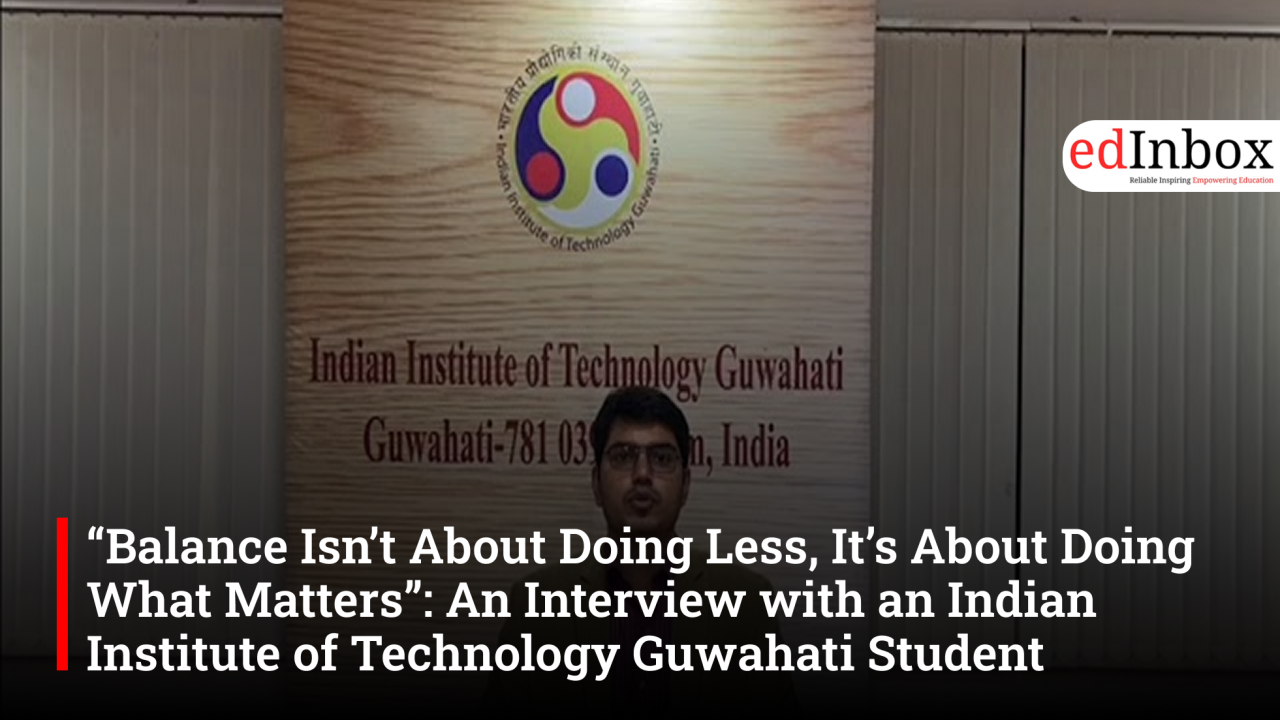
In a candid conversation, a 19-year-old sophomore pursuing Data Science and AI shares how he balances a CPI above 8.5 with an active presence in campus clubs, competitions, and creative pursuits.
Q: You’ve managed to maintain a CPI above 8.5 while being active in multiple clubs. How do you strike that balance?
A: It comes down to clarity and structure. I don’t try to do everything at once. I prioritise what matters each week—academics always come first, but I make sure to leave room for activities that genuinely interest me. Once you enjoy what you’re doing, it stops feeling like a burden.Q: Tell us about your involvement in extracurricular activities.
A: I’m part of dramatics, debating, photography, and filmmaking clubs. I also had the opportunity to represent IIT Guwahati at the Inter IIT Cultural Meet, which was a great experience. These activities helped me explore sides of myself I didn’t really get to during school.Q: What does a typical day in your life look like?
A: Mornings are usually for classes, followed by labs in the afternoon. I also attend NCC sessions on some days. Evenings are reserved for club work, meetings, or events in the hostel. If I have time, I work on personal creative projects or just spend time with friends—it helps me reset.Q: You participated in a 51-hour filmmaking challenge. How did that fit into your academic schedule?
A: It was intense, but that’s what made it exciting. I planned my academic work in advance so I could fully commit to the challenge. It taught me a lot about teamwork and managing pressure—skills that are useful even in academics.Q: Do you think this balance is unique to you, or is it part of a larger IIT culture?
A: I think it’s definitely part of the larger culture. At IITs, including Indian Institutes of Technology, you’re constantly exposed to different opportunities. The peer group is very motivating, and professors are supportive if you’re genuinely trying to learn and grow.Q: What advice would you give to students who struggle to manage academics and extracurriculars?
A: Start small and stay consistent. Don’t overload yourself. Find what you enjoy and build your schedule around it. Also, don’t underestimate the value of taking breaks—mental balance is just as important as productivity.Q: How do you see this experience shaping your future?
A: It’s helping me become more adaptable. Beyond technical skills, I’m learning communication, creativity, and time management. I think these will be just as important in any career I choose.
“Balance Isn’t About Doing Less, It’s About Doing What Matters”: An Interview with an Indian Institute of Technology Guwahati Student
Typography
- Smaller Small Medium Big Bigger
- Default Helvetica Segoe Georgia Times
- Reading Mode